
Products
-
101 An introduction to cannabis consumption
-

How to identify and avoid buying moldy weed
-

What's in bong water?
-

Do medical marijuana patients pay taxes on cannabis?
-

The basics of CO2 extraction
-

What is a spliff?
-

What does "dank" mean?
-

How live resin is made
-

How shatter is made
-

What is kief and how to use it
-

Cannabis etiquette: expert advice on consuming consciously
-

The many uses of hemp
-

How much does weed degrade from air and heat?
-

What is shake?
-

How much does cannabis cost?
-

How many grams are in a quarter of weed?
-

How many grams are in a pound of weed?
-

How many grams are in an ounce of weed?
-
How many ounces are in a pound of weed?
-

What is cannabis flower and how do you consume it?
-

What are cannabis vapes and how do you use them?
-

What are cannabis edibles and how do you consume them?
-

Are synthetic weed and synthetic cannabinoids the same?
-
What does marijuana smell like?
-

What is clean green certified?
-

Is vaping MCT oil dangerous?
-

Do edibles go bad?
-

What is an infused pre-roll?
-

How long do edible effects last?
-

Heavy metals in cannabis: what to look for and how to avoid them
-

How to order weed on weedmaps
-

Understanding potency in THCA pre-rolls: Stability, storage, and conversion rates
-

What are temple balls and how do you make them?
-

Dry sift hash: What it is, how it's made, and why it's back
-

What is a hash hole?
-

How to travel with your weed gear
-

Why voltage matters in cannabis vape pens: Thermal degradation vs. flavor preservation
-

Why percolator bongs hit smoother: a deep dive into cannabis filtration technology
-

The best cannabis concentrates for beginners
-

The different types of solventless concentrates: rosin, ice water hash, and more
-

How to store live rosin for optimal freshness and potency
-

What is live resin? A beginner's guide to this premium cannabis concentrate
-

Live rosin jam and the importance of fresh frozen flower
-

Building a headstash: How to select, store, and preserve high-quality cannabis flower
-

The process behind live resin diamonds: From extraction to perfection
-

The role of whipping in creating live resin badder: A deep dive
-

How live resin sauce Is made: The extraction process explained
-

Why live resin sugar Is a flavor lover's dream
-

How to smoke a joint without harshness: Temperature, puff technique, and filtration
-

Do CBN gummies make you sleepy? What the research says about cannabinol
-

What to know before you buy THCA online: potency, stability, and shipping considerations
-

Best THCa Flower Strains for Relaxation: 2026
-

THCA edibles vs THC Edibles: chemical differences and metabolic pathways
-

How to read a cannabis COA
-

How to dab rosin like a pro: best dab rigs, e-rigs, and quartz bangers explained
-

How moon rocks are made: concentrate coating, kief adhesion, and potency engineering
-

How to read a COA before you buy: interpreting cannabinoid percentages and terpene data
-

Disposable vapes vs. vape cartridges: understanding the differences in cannabis vape technology
-

Cannabis edibles demystified: how THC infused foods deliver long-lasting effects
-

Microdosing edibles: how small doses of THC work
-

Dab pen vs dab rig: what's the difference?
-
-
Guides A guide to consuming cannabis in all its forms
-

From hive to high: why cannabis honey delivers THC differently than standard edibles
-

Weed slang: slang terms for cannabis flower
-

How to make space cakes
-

Hashish 101: What is hash and how to smoke it
-

Calculating THC dosage of homemade edibles
-

What is weed tea and how do you make it?
-

How to make weed brownies
-

How to make edibles: A beginner's guide
-

THC dosage: How much should you take?
-

How to make an apple bong (aka apple pipe)
-

How to smoke wax
-

A recipe for how to make firecrackers
-

How to make slow cooker cannabutter
-
Edibles vs. smoking: how consumption methods affect your experience
-

How to make green dragon tincture
-

How to inhale weed without going overboard
-

How to make a gravity bong
-

How to get a medical marijuana card online
-

How to roll a cross joint
-

How to rehydrate weed
-

How to vape weed
-

Keys to decarbing weed
-

What is a blunt and how to roll one
-

How to pack a bowl
-

How to conserve your weed
-

How to make cannabutter for edibles: A step-by-step guide
-

The complete guide to weed measurements and prices
-

How to keep weed fresh
-

How to make rosin
-

Alternative cannabis products
-

What is charas and how do you make it?
-

How to make hash
-

How to use hemp wick
-

How to make a pumpkin bong
-

How to make weed gummies: A step-by-step guide
-

How to get rid of weed smell
-

What is a rose blunt and how do I roll one?
-

How to make pot cookies
-

How to make joint art
-

How to take low-temp dabs
-
How to light a joint
-

How to microdose cannabis
-

Can you smoke roach weed?
-

The basics of ethanol extraction
-

How many milligrams of THC are in a joint?
-
The basics of hydrocarbon extraction
-

How to make a cannabis tincture
-

How to make your own CBD balm
-

How to make weed chocolates
-

Decarboxylation explained with temperature charts
-

How to spot counterfeit vapes and other products
-

How to make edibles using concentrates
-

What to do when your vape pen cartridge has no airflow
-

How to season a nail
-

How to clean a bubbler
-

Does weed go bad? The ultimate guide to old cannabis
-

How to use a joint roller in 7 steps
-

How to make a homemade bong
-

How to make dabs
-

How to make cannabis oil
-
-
Gear Everything you want to know about gear for cannabis consumption
-

A guide to storage essentials for your cannabis gear
-

How to clean a quartz banger
-

How to use a bong
-

How glass pipes are made
-

How to use a dab rig
-

What is a sploof and how to make one
-

How bongs are made
-

How to grind weed without a grinder
-

How to clean a grinder
-

A beginner's guide to glass attachments, bong attachments, ash catchers, percolators, smoking accessories, cannabis gear upgrades,
-

A beginner's guide to functional glass: choosing, using, and appreciating the art of smoke
-

What you need to know about dab tools
-

Bongs vs dab rigs: get to know your cannabis gear
-

How to clean a dab rig
-

How to clean a bong
-

How to clean a pipe
-

How to build a water bottle bong
-

How to choose the perfect bong bowl piece
-

Chillums explained: How to use a chillum
-

Everything you need to know about the Puffco Plus
-

What is a 510-thread battery?
-

The evolution of smoking pipes: from clay to glass
-

Electric vs traditional dab rigs: which is right for you?
-

The evolution of vaporizers
-

Cannabis vape pens as aerosol systems: temperature, particle size, and delivery efficiency
-

One hitters: how they work, how to use them, and why they're popular
-

Sealed vs swappable: the real tradeoffs between pod systems and cartridges
-

That metallic hit: why your vape tastes metallic and what's causing it
-

What is a blinker vape? Meaning, how long it lasts, and whether it's worth it
-
-
What's the difference? Compare and contrast cannabis products
-

What's the difference between hemp and marijuana?
-

Weed vape pens vs smoking: Differences in combustion, flavor, and cannabinoid delivery
-

Kief vs. hash: What's the difference?
-

Live resin vs. live rosin: What's the difference?
-

Spliff vs. joint: What's the difference?
-

Vaping vs. smoking weed: What's the difference?
-

Wax pen vs. dab pen vs. vape pen: what's the difference?
-

Live rosin carts vs live resin carts: what actually separates them
-

Live resin carts vs distillate carts: Differences in flavor, effects, and chemical profile
-
510 cartridges vs pod systems: differences in compatibility, power control, and experience
-

Live sauce vs live resin: what's the difference and which should you choose?
-

Liquid diamonds vs live resin: what's the difference?
-

NYC Diesel vs Sour Diesel: how these two classics really compare
-

OG Kush vs Sour Diesel: how the two classics actually differ
-
-
FAQ A method that's been a tradition amongst Jamaicans and members of the Rastafarian culture since the early 1970s, the “steam chalice” is another way to consume cannabis you may have never heard of before.

Image lightbox
Learn more about this method and its cultural significance, and understand how to honor the tradition of the steam chalice.
What is a steam chalice?
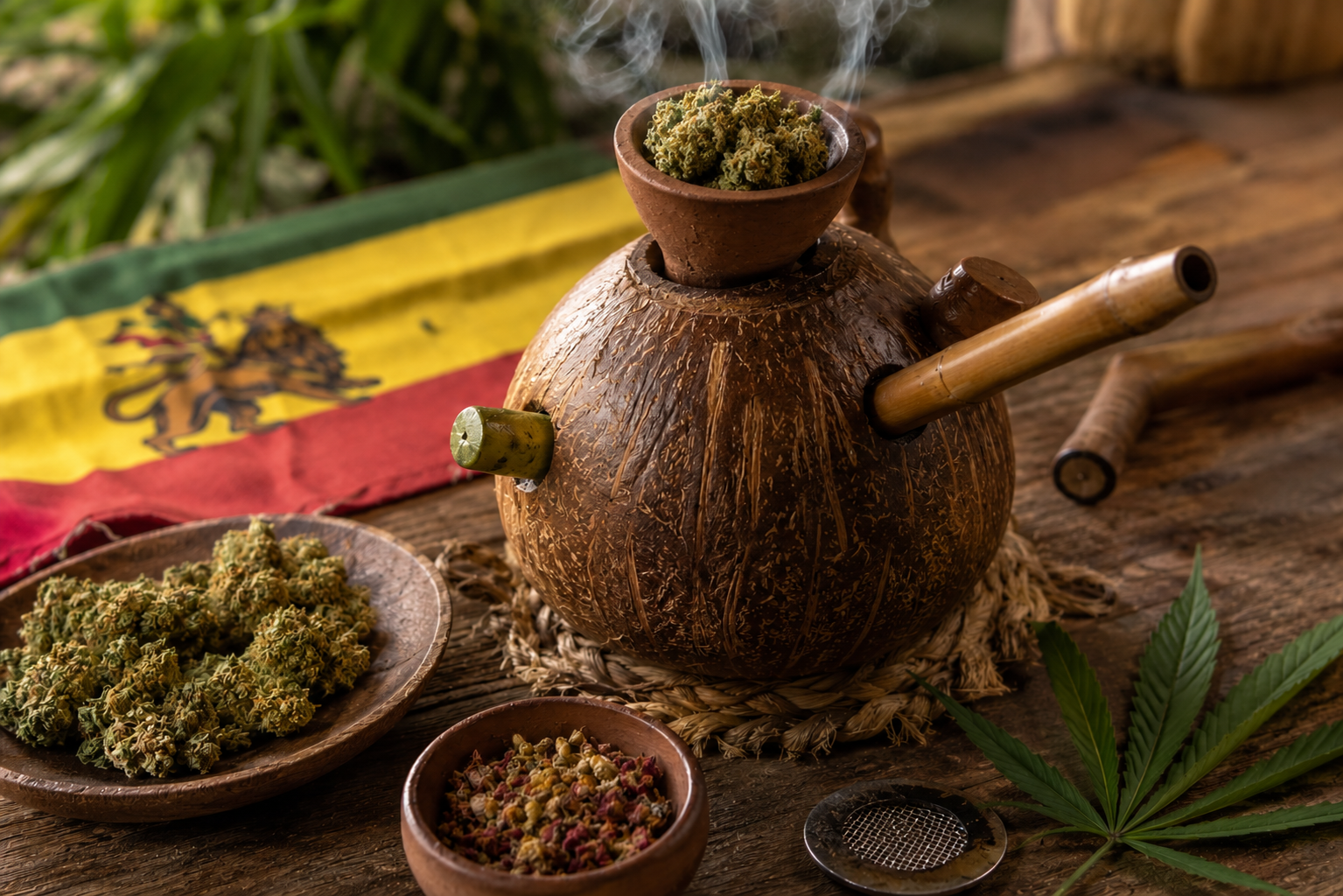
A steam chalice is a type of cannabis consumption device. It acts like a vaporizer in that it heats (steams) your weed to activate the cannabis compounds versus burning them through combustion with a flame.
The steam chalice uses no electricity and only organic components. It plays a central role in Jamaican/Rastafarian culture.
Rastafari is a religious movement of Jamaican origin holding that Black people are the chosen people, that Emperor Haile Selassie of Ethiopia was the Messiah, and that Black people will eventually return to their African roots.
Rastafarians follow strict codes of ethics and conduct that include wearing dreadlocks, smoking cannabis, rejecting Western medicine, and adhering to a diet that excludes pork, shellfish, and milk.
How to make a steam chalice
A steam chalice's four main components are the base (coconut), stem (bamboo tube), cutchie (bowl), and gritty (bowl screen).
You'll need a few other materials or tools to use the steam chalice. This video offers tips on using a steam chalice, and this video by IrieChalice offers a visual guide on making one.
Materials
- One coconut
- Bamboo stick (or a hose)
- Clay cutchie
- Clay gritty
- Beeswax
- Drill and drill bits
- Screwdriver
Step 1: Drill three holes in the coconut
Drill three holes in the coconut:
- One is the largest for your bamboo mouthpiece to inhale steam/vapor located at the top of the coconut
- One for the cutchie (bowl), where you'll hold your herbs
- One acts as a carb for manipulating airflow and clearing your coconut
The base of a steam chalice is the coconut, and the name of the base is called the chalice.
Step 2: Dig out the coconut fruit from the holes
You can do this with a screwdriver or drill bit. Be careful not to break the coconut.
Step 3: Insert the cutchie and downstem into the holes
You'll need to buy a cutchie, which can be found on Etsy.
Once you have a hole for the cutchie, add it to the coconut. You can seal it with beeswax to make it permanent or leave it a bit loose to remove the cutchie and clean it after each use.
Once you've inserted the cutchie, do the same with the bamboo downstem or plastic hose. Go the bamboo route if you want to keep it classic.
Step 4: Insert the gritty into your cutchie
You will also need to purchase a gritty (bowl screen).
Insert your gritty into the middle of your cutchie to prevent the herbs from being sucked into the chalice. It acts the same way as a bowl screen.
How to use a steam chalice
Now that you've created your steam chalice, here's how to use it.
Materials
- A steam chalice
- Cannabis flower
- Optional herbs
- Hot coals
- Small torch
Step 1: Fill coconut with water
Fill your coconut with water — about halfway.
Step 2: Load up the cutchie with herb
Grind it down or drop a whole nug straight in — however you load it, the chalice doesn't judge.
Note that you don't have to fill it all the way and can use a little herb for a quick, easy sesh. Add non-cannabis herbs to boost flavor and experience; orange peels, rosemary, and rose petals are great options for steaming.
Remove the cutchie from your chalice to insert herbs unless it's permanently connected to the base.
Step 3: Add coals on top of the herb
Add unheated coals at the top of your herbs, then take your small torch and hit the coals until they're burning red hot.
You can also hold the coals with clamps and use the torch to heat them (like a hookah). Torch them in a circular motion to distribute the heat evenly, then blow on the coals to get them up to temperature. Avoid hitting the sides of your cutchie with direct flame as you don't want to crack it.
Once the coals are cooking, insert the cutchie back into the chalice.
Step 4: Inhale
Inhale the vapor from the bamboo mouthpiece/hose. Hit it a few times slowly to get the steam rolling.
As a custom, Rastafarians usually wrap a hand around the top of the mouthpiece to inhale vapor through their “fist tunnel.”
Step 5: Clean out the cutchie
When done with a chalice session, clean the device after every use.
- Pour the water out
- Blow air through the downstem/mouthpiece to loosen the herbs
- Wipe all vaporized herbs out of the cutchie
- Sit all the device's parts aside separately to dry since you don't want moisture building in the components and generating fungi
Pros and cons of using a steam chalice
Using a steam chalice is a Rastafarian practice, and any consumption with the device needs to consider that respect.
Pros
The pros of using a steam chalice include:
- Health consciousness due to the inhalation of steam over smoke
- It gets you really high
- It doesn't burn off cannabis compounds
- Comes with cultural and historical context in terms of cannabis consumption
Whatever pros you associate with vaporizing weed through methods like using a Volcano or hitting a G-Pen Dash+ also apply to using a steam chalice.
Cons
There aren't many cons to using a steam chalice — the biggest is that you simply have to make or buy the device. Outside of that, you aren't going to deal with many negatives. It's considered a healthier way of smoking weed.
Bottom line
With cannabis consumption in Jamaican culture, it's all about a “health is wealth" type of lifestyle. Using a steam chalice versus methods like smoking pipes, joints, and blunts is considered the healthiest and most natural consumption method.
Featured image courtesy of Louis Hansel on Unsplash
The information contained in this site is provided for informational purposes only, and should not be construed as medical or legal advice.