 Photo by: Photo by: Gina Coleman/Weedmaps
Image lightbox

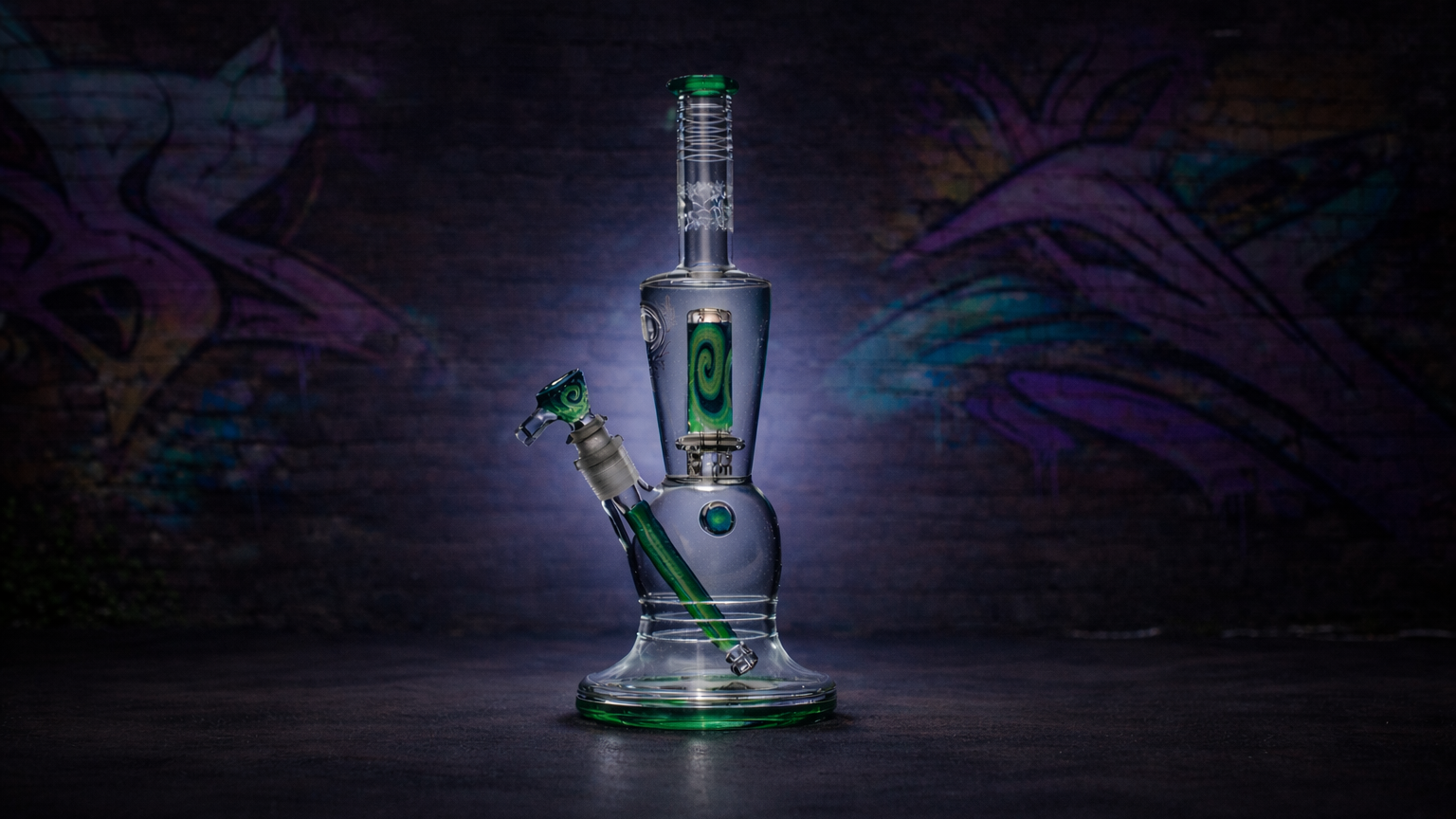
A percolator bong (often called a “perc bong”) is a water pipe designed with one or more internal glass structures that diffuse weed smoke into smaller bubbles.
This added diffusion cools the smoke more quickly and filters out harsh particles, resulting in lower temperatures, cleaner hits, and reduced throat irritation with every pull.
Percolator bongs deliver smoother hits by breaking smoke into fine bubbles as it passes through water-filled filtration chambers. Multi-percolator designs force smoke through water multiple times for even greater cooling and filtration.
Compared to other consumption methods—dry pipes, joints, or basic straight-tube bongs — percolator bongs provide significantly more diffusion and cooling, making each hit less harsh on the throat and lungs.
Percolator bongs hit smoother than basic, non-filtered smoking methods, such as:
- Dry pipes & bowls → no water filtration
- Joints & blunts → hot, unfiltered smoke
- Basic bongs (no percs) → single-stage water cooling
- Straight tubes → minimal diffusion
Understanding how percolation works can make a big difference when choosing the right bong. Small details, such as hole size, chamber layout, and the number of filtration stages, can significantly enhance the smoothness of the draw.
The science behind percolator filtration
When you light up flower and inhale through a percolator bong, the smoke passes through a diffusion feature designed to cool and condition it before inhalation.
A percolator itself is not inherently multi-stage, it's a single diffusion element that breaks smoke into smaller bubbles to improve airflow and smoothness.
Multi-stage filtration only occurs when a bong uses multiple percolators in sequence, such as a tree perc followed by a honeycomb or showerhead.
At the percolator level, smoothness comes from three core mechanisms:
- Smoke diffusion (breaking smoke into smaller bubbles)
- Temperature reduction (increased contact with water)
- Partial particle filtration (trapping ash and debris)
How does water break smoke into smaller particles?
- Smoke diffusion: A percolator breaks smoke into smaller bubbles, increasing surface area and dispersing harsh, dense clouds
- Cooling effect: More contact with water cools hot smoke faster, reducing throat irritation
- Partial filtration: Water helps trap ash, tar, and other particles before they're inhaled
Single vs. multi-stage filtration
- A single percolator provides one level of diffusion and cooling
- Multi-stage bongs use multiple percolators in sequence for added filtration
More bubbles mean cooler, smoother hits — with a minor tradeoff in potency from the additional filtration.
How water diffusion reduces harshness

Image lightbox

When you light up, combustion creates high smoke temperatures. That superheated smoke carries ash particles and other byproducts that irritate your throat and lungs on contact.
Water diffusion addresses this problem through temperature control and humidity.
Temperature control
Hot smoke cools significantly when forced through water. As smoke bubbles break apart in the percolator chamber, thousands of tiny bubbles create a massive surface area for heat transfer. Each bubble acts like a miniature cooling system, dropping smoke temperature before it reaches your lungs.
By lowering smoke temperature, percolators reduce the harsh burn that often triggers coughing, making each hit easier on the throat and lungs. The tradeoff is that water filtration also removes small amounts of cannabinoids and terpenes along with tar and ash.
Moisture supports respiratory comfort
Dry smoke can irritate the throat and lungs, often triggering cough reflexes that cut a session short. Water diffusion adds moisture to each hit, bringing the smoke closer to what your body is used to.
That added humidity helps eliminate the dry, scratchy feel that makes larger hits uncomfortable. Cooler, well-hydrated smoke feels smoother and more natural, letting the flower's flavor come through without harsh aftereffects.
Combined, these effects are why percolator bongs remain a go-to choice for experienced users.
Choosing a quality percolator
Not all percolator bongs deliver the same smooth hit.
The difference comes down to specific design elements that control how effectively smoke gets filtered and cooled. The engineering details — chamber design, water level, and diffusion patterns — are what set average pieces apart from exceptional ones.
Chamber size and water level
Effective water volume varies by design, not by fluid ounces. Most percolators work best with minimal water, just enough to activate diffusion without adding drag.
What to look for instead of measurements:
- Water should fully engage the percolator holes or arms
- Bubbling should feel smooth, not resistant
- Splashback usually means there's too much water
Chamber shape matters too. Wider chambers give bubbles more room to rise and cool before moving on, resulting in smoother, less restricted draws.
Hole size and diffusion pattern
Percolator holes control bubble size, which directly affects how smoke cools and filters.
In general:
- Smaller holes create finer bubbles and more surface area
- Larger holes create fewer bubbles with less cooling
- Even spacing helps prevent airflow interference
Quality percolators have consistently sized, evenly spaced holes. While some variation exists in hand-blown pieces, uniform hole patterns typically provide the most reliable diffusion.
Single vs. multi-stage filtration
Using more than one percolator adds filtration in stages, but more isn't always better.
A practical rule of thumb:
- One percolator = basic diffusion and cooling
- Two percolators = smoother hits without heavy drag
- Three or more = diminishing returns for most users
Spacing matters. Each stage needs room for bubbles to settle before hitting the next percolator, or airflow can suffer.
Glass thickness and temperature stability
Thicker glass (5-7mm) provides better impact resistance and durability for daily use. While thicker glass doesn't meaningfully affect smoke cooling—water temperature is what matters—it does offer peace of mind during cleaning and handling.
What thickness means in practice:
- 5-7mm: Good balance of durability and weight
- 7-9mm: Maximum durability but noticeably heavier
- Beyond 9mm: Mostly adds weight and cost without practical benefits
High-quality borosilicate glass also matters. It handles temperature swings better, making cleaning and back-to-back sessions less stressful for the piece.

Bottom line
Dialing in percolator filtration lays the foundation for smoother sessions, but the flower you pair it with makes all the difference. The right strain lets your percolator do its job, delivering cleaner hits and fuller flavor.
Order flower and other cannabis products for pickup for delivery from a dispensary near you.