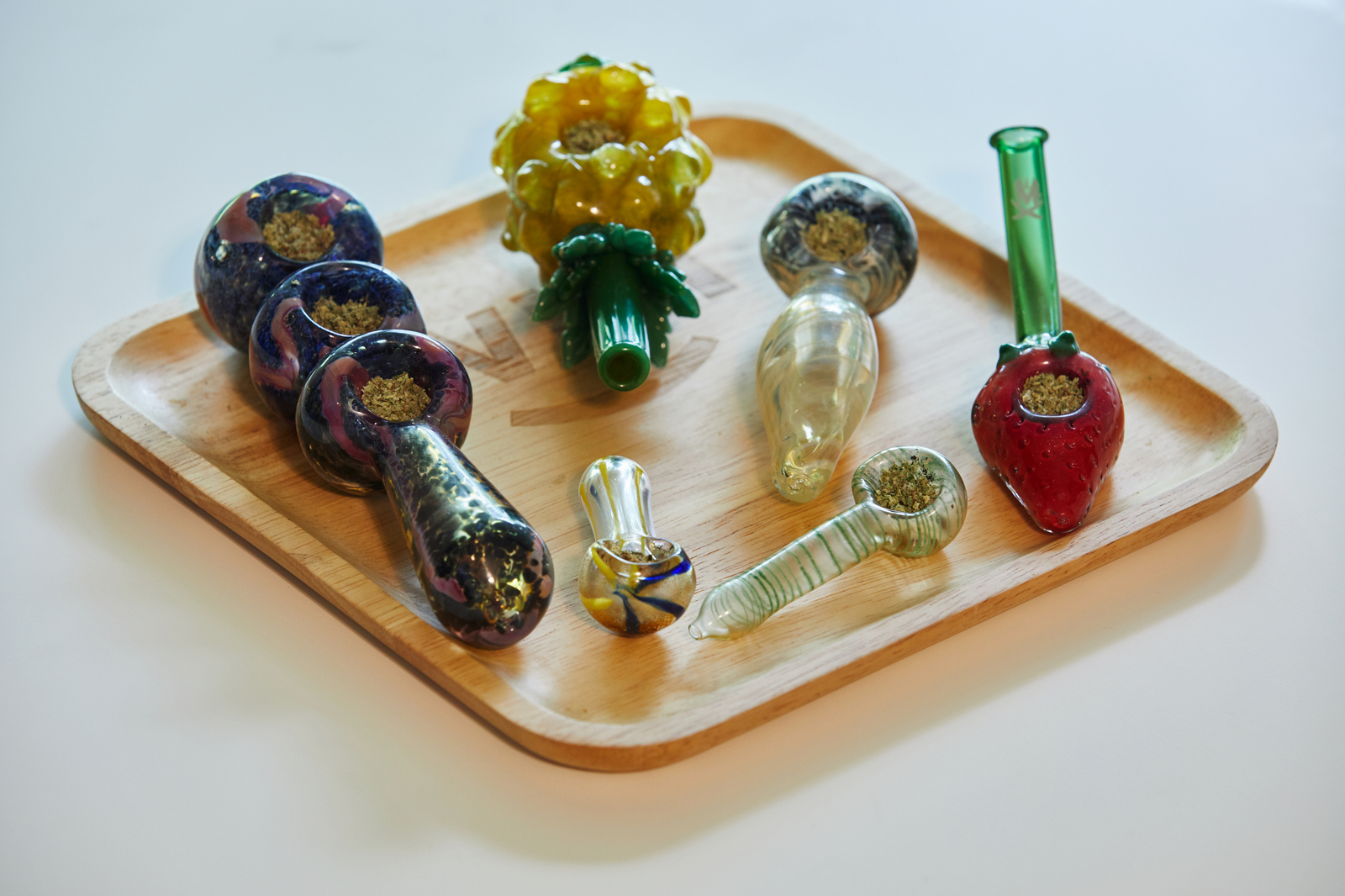
Choosing the right weed pipe comes down to how the material and design affect airflow, heat, and flavor. Glass, metal, and wood pipes each perform differently—shaping whether your hit tastes clean or gets muted before it even reaches you.
 Photo by: Gina Coleman/Weedmaps
Image lightbox

Most smoking pipes look simple—but the way they handle airflow is the difference between a clean hit and one that lands harsh.
Early pipes focused on function. Modern pipes control airflow, regulate heat, and preserve flavor. These changes determine how smoothly a pipe pulls, how evenly the flower burns, and how much flavor comes through.
Understanding how pipes evolved explains why certain materials and designs still dominate today.
Early pipe designs
The earliest pipes were made from clay, wood, or stone — materials that were easy to shape and widely available. Flavor wasn't the priority—getting smoke from point A to point B was.
Clay pipes became common because they were inexpensive and easy to produce. They delivered a direct smoking experience, but heat transfer was less controlled, which often led to hotter, harsher hits.
At this stage, pipes prioritized basic function over airflow control or flavor preservation.
The shift to more durable materials
As designs evolved, materials like metal and carved wood became more widely used.
These materials improved durability and allowed for more variation in shape, which began to influence airflow and draw resistance. However, they often introduced additional flavor from the material itself, especially with repeated use and heat exposure.
Durability improved, but flavor clarity remained inconsistent.
The rise of glass pipes

Image lightbox

Glass pipes preserve flavor by remaining neutral under heat.
Unlike metal or wood, glass remains largely inert under heat, which preserves the natural flavor of cannabis. It also allows for more precise shaping, which improves airflow and burn consistency.
Design elements like carb holes, smoother internal pathways, and more refined bowl shapes became standard as glassblowing advanced. These features give users direct control over airflow and combustion.
How modern pipe design improves the experience

Image lightbox

Modern pipes are built around airflow and heat control.
A properly shaped bowl supports even combustion, while a well-placed carb hole regulates airflow during a hit. Internal pathways are designed to reduce restriction, which creates a smoother draw.
These details eliminate many of the issues found in older designs, including uneven burns and harsh smoke.
Common types of smoking pipes
Several pipe styles remain widely used, each built around the same core design.
Spoon pipes prioritize simplicity and direct airflow. Bubblers add water filtration, which cools smoke and reduces harshness. Chillums and one-hitters offer a more minimal design with fast, direct combustion.
Each variation changes how smoke moves through the pipe and how the hit feels.
How material affects flavor and airflow
Material directly affects both flavor and airflow.
Glass preserves flavor by remaining neutral under heat. Metal and wood introduce additional taste over time, especially as residue builds up and heat cycles repeat.
Airflow depends on how clean and unrestricted the internal pathway is. Smooth, direct pathways produce an easier draw, while narrow or uneven channels create resistance and disrupt combustion.
Choosing the right pipe today
Modern pipe design offers options based on performance, not just preference.
Glass pipes are the best option for preserving flavor and maintaining consistent airflow. Metal and wood prioritize durability and portability but sacrifice some flavor clarity.
Size and shape also affect performance. Smaller pipes produce more direct, concentrated hits, while larger designs allow for more airflow and smoother draws.
Why pipes are still popular
 Photo by: Gina Coleman/Weedmaps
Image lightbox

Pipes remain widely used because they deliver direct, controlled combustion without setup.
They provide immediate feedback — airflow, burn, and flavor are all easy to control with each hit. This simplicity keeps them relevant, even as more complex consumption methods evolve.
The bottom line

Smoking pipes started as simple tools, but modern designs are built to control airflow, heat, and flavor.
Material and structure decide how a pipe actually performs—glass delivers the cleanest flavor and most consistent airflow, while metal and wood trade taste for durability.
If flavor matters, the choice is straightforward. If not, you're choosing durability over experience.
Find cannabis pipes, glass pieces, and accessories on Headie.