Most cannabis products are built around higher doses. Microdosing takes the opposite approach — and for some consumers, that's exactly the point.
 Photo by: Gina Coleman/Weedmaps
Image lightbox

Cannabis potency has increased steadily across most markets, but not everyone consuming it wants more. For some consumers and patients, the goal isn't a stronger effect — it's a more precise one. That's where microdosing comes in.
Microdosing cannabis means taking a significantly smaller amount than a standard dose, often well below what most product labels suggest. The reasoning is grounded in research: for certain effects, smaller amounts of THC may actually work better than larger ones.
Here's what the science shows and how to approach finding your own optimal dose.
What does it mean to microdose cannabis?
Microdosing refers to consuming the lowest amount of a substance that still produces a noticeable therapeutic effect. The concept is most commonly discussed in the context of psychedelics, but it's increasingly applied to cannabis — particularly THC and CBD.
 Photo by: Gina Coleman/Weedmaps
Image lightbox

The idea isn't just about avoiding an unwanted high. It's about working with how cannabis actually interacts with the body at different dose levels.
Research has shown that very small amounts of THC can produce meaningful effects. One clinical trial found that very low THC doses — including around 1 mg — may reduce chronic pain— a fraction of what's found in a standard edible.
Why dose size matters: biphasic effects explained
To understand why microdosing works, it helps to understand biphasic effects. A substance with a biphasic response produces different — sometimes opposite — effects depending on how much is consumed.
Alcohol is a familiar example. At low doses it can increase sociability and energy. At higher doses those same effects reverse, producing sedation and depressed mood. The dose determines the direction.
Cannabis behaves the same way across several of its effects. THC and CBD have both been found to produce dose-dependent biphasic responses, meaning the amount consumed significantly shapes the outcome.
For many of cannabis' effects, a lower dose might be the most effective option.
How THC dose affects anxiety
The relationship between THC and anxiety is one of the most studied and most misunderstood areas of cannabis research. Both effects are real — cannabis can reduce anxiety at one dose and increase it at another.
 Photo by: Gina Coleman/Weedmaps
Image lightbox

Animal studies support this pattern. In one study, mice given low doses of THC spent more time in exposed, open spaces — a behavioral indicator of reduced anxiety. Mice given higher doses showed the opposite, avoiding open areas in a pattern consistent with heightened anxiety.
Human studies reinforce the finding. In a controlled trial involving 42 participants, researchers compared a placebo, a low dose of THC (7.5 mg), and a higher dose (12.5 mg) under stress-inducing conditions. Participants in the low-dose group reported less stress during testing. Those in the higher-dose group reported more.
A separate study examined incarcerated patients diagnosed with PTSD who were given 4 mg of Nabilone, a synthetic compound that mimics THC's mechanism. At that low dose, researchers observed significant improvements in sleep quality, nightmare frequency, overall symptom burden, and chronic pain.
Other effects with dose-dependent responses
Anxiety is not the only area where dose determines direction. Research has documented biphasic THC responses across a range of physiological functions including pain perception, body temperature regulation, appetite, motivational processing, and movement.
CBD shows similar patterns. Dose-dependent biphasic responses have been documented for CBD's effects on pain, sedation, nausea relief, and immune function.
The practical implication: for many of the effects cannabis is most commonly used for, less may produce better results than more.
How to microdose cannabis
 Photo by: Gina Coleman/Weedmaps
Image lightbox

The goal of microdosing is to find the smallest amount that produces a useful effect. Because individual response to cannabis varies significantly based on genetics, tolerance, metabolism, and prior use history, there's no universal starting point — but there are reliable guidelines.
Starting doses by consumption method:
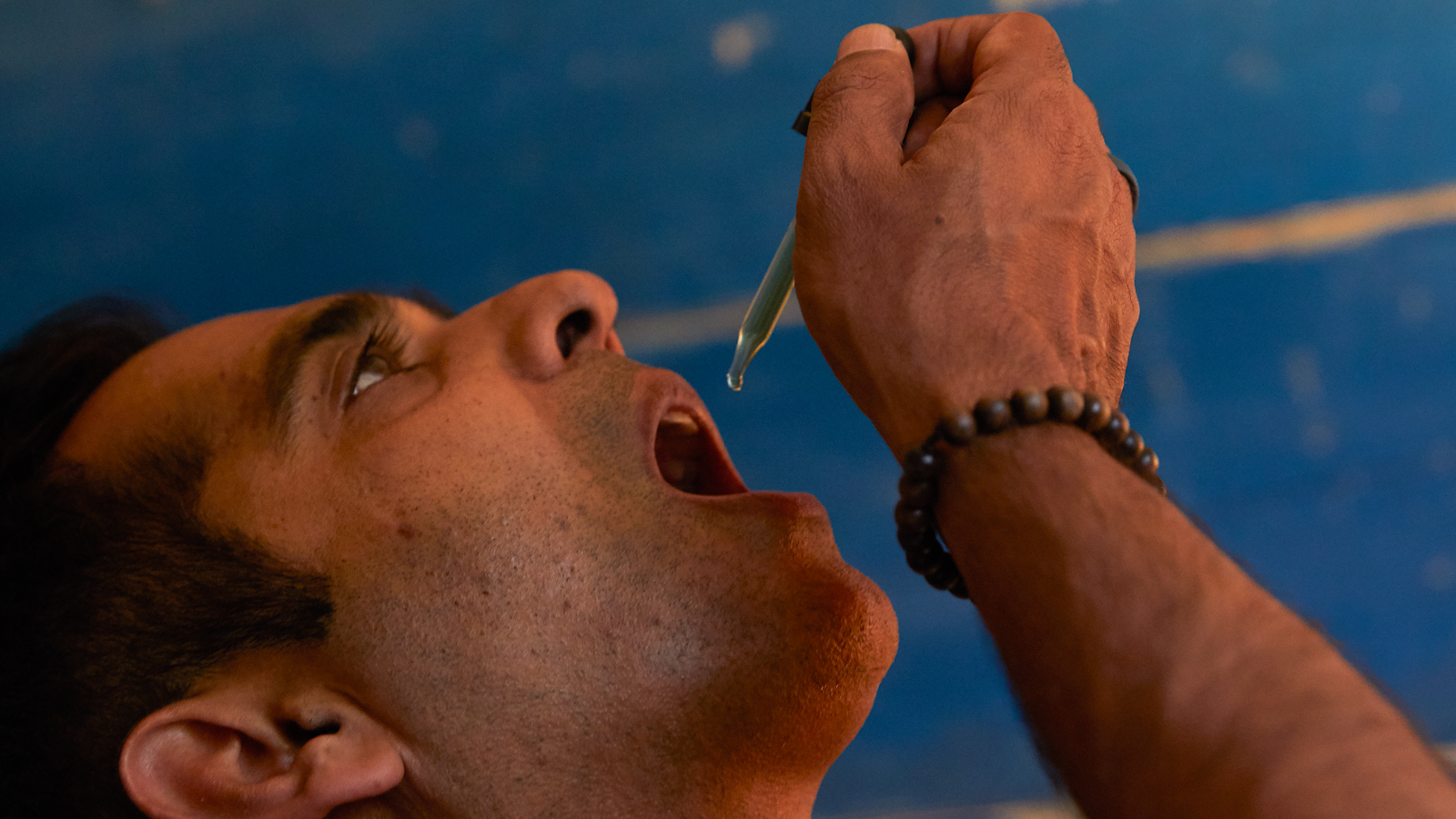
For inhaled methods — smoking or vaping — a single small puff is a reasonable starting point. For edibles or sublingual tinctures, 2.5 mg of THC is the most commonly referenced starting dose for microdosing.
The titration approach:
Start at the lowest possible dose and hold there for several sessions before increasing. If the target symptom improves, stay at that dose. If there's no noticeable effect, increase by the smallest available increment. At the point where negative effects begin to appear — increased anxiety, discomfort, unwanted psychoactivity — step back to the previous dose. That threshold is useful information.
This process is sometimes called titration, and it's the same approach used in clinical cannabis dosing protocols.
When microdosing may not be enough:
Microdosing isn't the right approach for every condition or every person. Some patients require higher doses to manage their symptoms effectively. Research on cannabis and migraines, for example, has found that meaningful relief generally requires doses around 20 mg — well above microdose range. Individual variation also plays a significant role. A therapeutic dose for one person might be 2 mg while another person requires 20 mg to achieve the same effect.
Starting low remains useful even if the optimal dose turns out to be higher. It allows you to move through the dose range methodically rather than guessing.
Where to find low-dose cannabis products
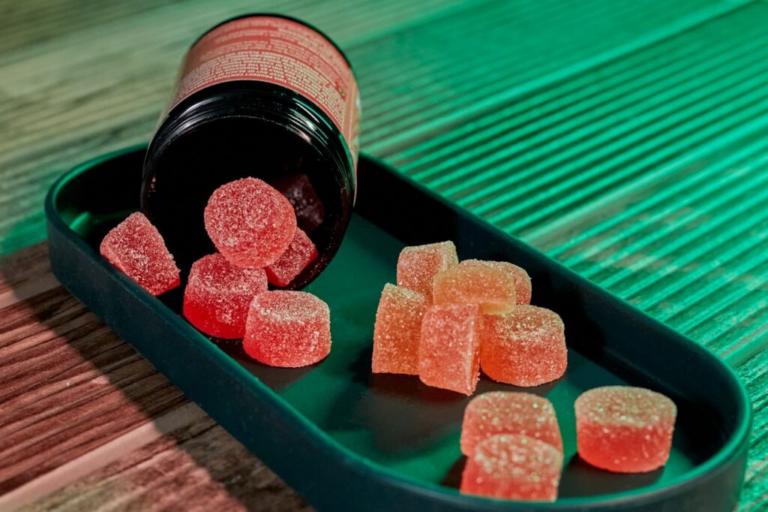
Most dispensaries carry products specifically designed for low-dose consumption, including 2.5 mg and 5 mg edibles, microdose capsules, and low-THC tinctures that allow precise measurement. Some cannabis beverages are also formulated for microdosing, with 2 mg to 5 mg THC per serving.
Weedmaps lets you filter by product type and THC content to find low-dose options at dispensaries near you.
Bottom line: talk to a cannabis-informed practitioner
If you're using cannabis to manage a specific medical condition, working with a practitioner who has experience in cannabinoid medicine is worth considering. Dosing for therapeutic purposes — especially when managing anxiety, pain, sleep, or PTSD — benefits from professional guidance, particularly if cannabis is being used alongside other medications.
Microdosing is a starting point, not a fixed protocol. The goal is finding what works at the lowest effective dose — and that process is different for everyone.