 Photo by: Gina Coleman/Weedmaps
Image lightbox

Live resin diamonds are high-potency THCa crystals that form inside terpene-rich “sauce” made from fresh frozen cannabis. They're created through cold hydrocarbon extraction, careful solvent purging, and a weeks-long crystallization process where THCa separates and solidifies into gem-like structures.
In simple terms: harvest → flash freeze → extract → purge → cure → crystallize → recombine.
If you're trying to understand how fresh frozen flower turns into crystal-clear diamonds and what makes some better than others, you're in the right place. Below, we'll walk through exactly how the process works from frozen plant material to terpene-rich crystal formations.
What are live resin diamonds, really?

Image lightbox

Live resin diamonds are one of the most visually striking forms of cannabis concentrates. They're the result of a deliberate separation process inside a live resin extract, where cannabinoids and terpenes naturally divide into two distinct components.
To understand diamonds, you have to understand the relationship between crystals and sauce.
Diamonds + Sauce — Two parts of the same extract
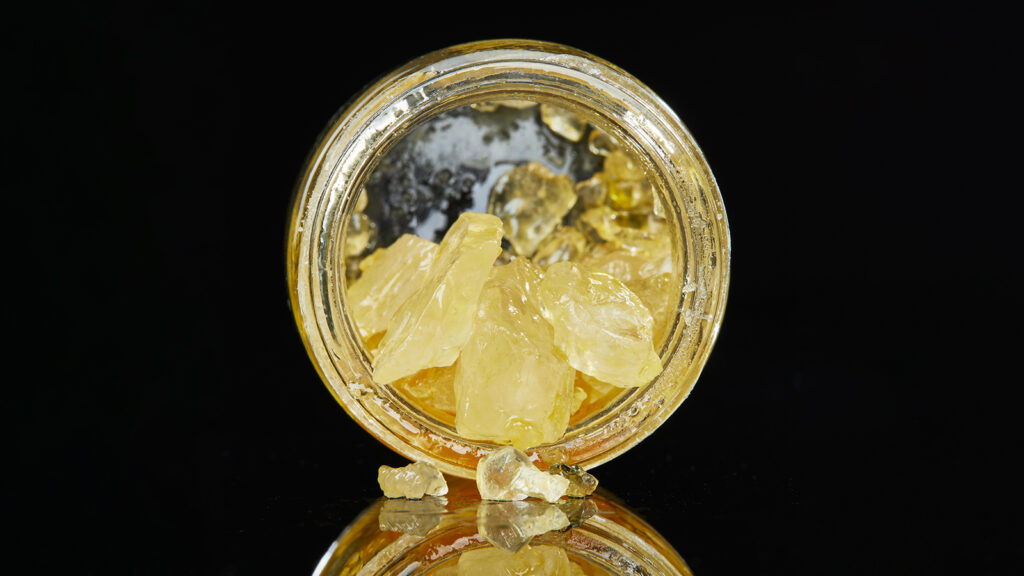
At their core, live resin diamonds are THCa crystals suspended in terpene-rich sauce.
When fresh frozen cannabis is extracted, the resulting oil contains a mixture of cannabinoids (like THCa) and aromatic compounds called terpenes. Under the right conditions (time, pressure, and controlled temperatures) the THCa begins to separate from the liquid and organize into solid crystalline structures.
Those crystals are the “diamonds.”
What's left behind is the terpene-rich liquid layer, often called “sauce.” This sauce contains flavor, aroma, and additional cannabinoids.
Together, they create a balance:
- Diamonds = potency
- Sauce = flavor and strain character
It's important to clarify something here: diamonds are primarily THCa, not THC.
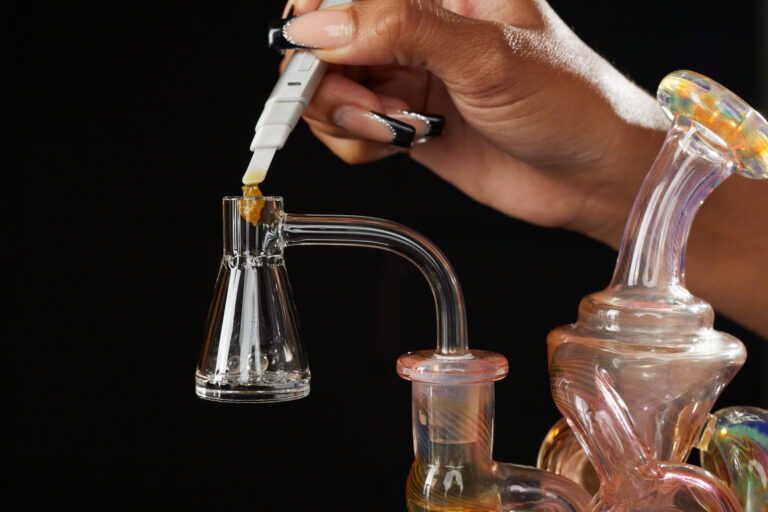
THCa is the acidic precursor to THC and is not psychoactive on its own. It becomes intoxicating only when exposed to heat through dabbing, vaping, or combustion in a process called decarboxylation. That's why diamonds can test extremely high in potency but still require heat to “activate.”
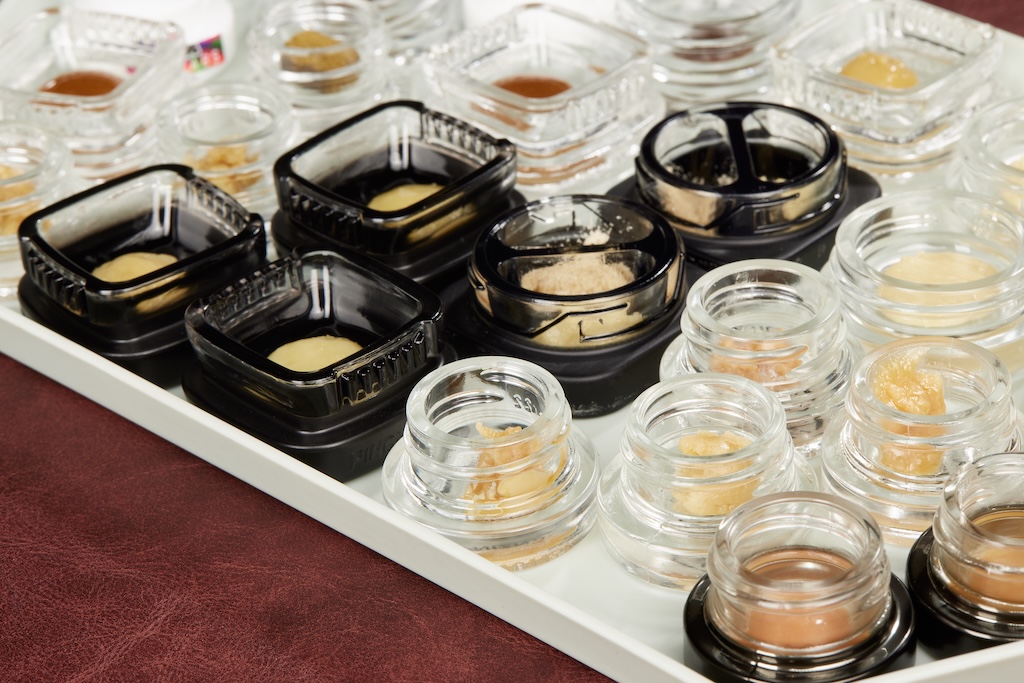
You'll also notice that live resin diamonds are rarely sold completely dry.
While isolated THCa crystals do exist, most products keep diamonds bathed in sauce. That's intentional. The sauce improves flavor, usability, and overall experience. Pure crystals alone can feel one-dimensional without that terpene layer bringing the strain back to life.
Step 1 — Starting with fresh frozen cannabis

Image lightbox

Before diamonds ever form, before jars are sealed or crystals begin to grow, everything hinges on one decision: starting material.
Live resin diamonds begin with fresh frozen cannabis and that choice defines the entire process.
Why fresh frozen is non-negotiable
“Live” refers to cannabis that's harvested and immediately flash-frozen.
The moment a plant is cut, volatile aromatic compounds — especially monoterpenes — begin to evaporate. During drying and curing, those terpenes don't just dissipate; they oxidize and transform. Heat, oxygen, and time alter the chemical profile in ways that can't be reversed.
It's similar to fresh versus dried herbs in cooking — both have value, but fresh basil or cilantro delivers a brighter, more immediate aroma. Fresh cannabis behaves the same way. Flash freezing preserves the plant at harvest, capturing its live terpene expression before significant evaporation or chemical change occurs.
That's why live resin diamonds can taste brighter and more strain-accurate than concentrates made from cured material. The freezing step preserves:
- Volatile monoterpenes
- Minor cannabinoids
- The original aroma of the living plant
In short, fresh frozen is what gives live resin its “fresh” reputation. Without it, you're simply making diamonds from cured resin, which is a different experience entirely.
What happens if the plant isn't fully frozen?
Fresh cannabis is rich in terpenes and water. In fact, a significant portion of the plant's weight is moisture.
If the material isn't extremely cold during extraction, that water can partially thaw and become mobile. When that happens, unwanted moisture can enter the extract. This can affect:
- Clarity
- Separation during crystallization
- Final flavor and consistency
Professional extractors are meticulous about temperature because even small shifts can influence the outcome. “Frozen” means cold enough that plant water stays solid as solvent passes through.
If water is allowed to move with the solvent, it can complicate purification and separation later on.
Does “live resin” mean live plant?
There's often confusion around this term.
Live resin does not mean raw, unprocessed living plants are somehow being extracted in their growing state. It specifically refers to cannabis that was harvested and then immediately frozen to preserve its chemical profile.
The misunderstanding comes from the word “live.” In extraction terminology, “live” simply means the plant material was never dried or cured.
Step 2 — Hydrocarbon extraction (cold, controlled, precise)
Once the cannabis is frozen solid, the next phase is extraction.
Live resin diamonds are typically made using hydrocarbon extraction, a method that allows processors to pull cannabinoids and terpenes efficiently while preserving the fragile compounds that give live resin its signature flavor.
Why hydrocarbons are used
Light hydrocarbons like butane and propane are common in live resin production for a few key reasons:
- Low boiling points make them easier to remove after extraction.
- They're highly effective at dissolving cannabinoids and terpenes.
- Modern systems operate in closed-loop environments, designed for controlled solvent recovery and safety.
The goal is to preserve the full chemical profile of the fresh frozen plant. Compared to harsher or higher-heat methods, hydrocarbons allow processors to maintain the volatile compounds that would otherwise degrade.
When done correctly in licensed facilities, this method produces a terpene-rich extract that's ideal for later crystallization.
Butane vs Propane — Does it matter?
It does.
Both solvents are hydrocarbons, but they behave slightly differently during extraction.
- Butane is highly efficient at pulling cannabinoids like THCa.
- Propane is more effective at capturing lighter, more volatile aromatic compounds, especially certain monoterpenes.
Because of this, many processors use a blend of butane and propane rather than relying on one alone. A blended solvent can create a more terpene-forward extract, which increases the likelihood of forming a rich “sauce” layer later.
Solvent selection, along with temperature and pressure, influences whether the extract trends toward a brittle, shatter-like consistency or a terp-heavy, saucy texture that's ideal for diamond formation.
In other words, the chemistry choices made here ripple forward into the crystallization phase.
Why running it cold changes everything
Temperature control doesn't stop at freezing the plant.
In professional extraction labs, multiple variables are tightly managed:
- Solvent temperature
- Material temperature
- Column temperature
Running the system cold helps preserve delicate terpenes and reduces the extraction of unwanted compounds. It also minimizes the risk of pulling plant water into the extract, which is especially important when working with fresh frozen material.
If temperatures creep too high, you risk:
- Increased terpene loss
- Greater moisture mobility
- Less stable separation later during crystallization
That's why experienced extractors often say colder is better for flavor and structural integrity of the extract.
Because once you've captured cannabinoids and terpenes in solution, the next challenge begins: removing the solvent without sacrificing everything you just preserved.
Step 3 — The Purge: Removing solvents without losing flavor
After extraction, the cannabis oil still contains residual solvent. Before anything can crystallize safely or cleanly, that solvent has to be removed. This stage is called purging, and it's one of the most delicate parts of the entire process.
Done correctly, purging protects both safety and flavor. Done carelessly, it can flatten the terpene profile you worked so hard to preserve.
Why purging is key
Hydrocarbon extraction relies on solvents like butane or propane to dissolve cannabinoids and terpenes. Once extraction is complete, those solvents must be removed to create a clean, consumable product.
Licensed facilities typically use:
- Vacuum ovens
- Controlled, gentle heat
- Reduced atmospheric pressure
Lowering pressure allows solvents to evaporate at lower temperatures, which helps protect sensitive compounds. The goal is to remove residual solvent while preserving the terpene content that gives live resin its character.
Proper purging ensures the final product meets regulatory standards for residual solvents before it ever reaches a dispensary shelf.
The mistake that kills terpenes
Here's where nuance matters.
It's possible to purge too aggressively.
Excessive heat, extended purge times, or spreading the extract into thin slabs can all increase surface area exposure. And when surface area increases, lighter aromatic compounds evaporate more easily.
In simple terms:
- Too much heat = terpene degradation
- Too much time = terpene loss
- Too thin a layer = more evaporation
This is one reason some concentrates lose their bright aroma after processing. Even if the starting material was exceptional, improper purge technique can mute the final result.
The balance is careful: remove the solvent thoroughly without “nuking” the terpenes that define the strain.
Why jar shape matters more than you think
The container used during and after purging can influence what happens next.
Surface area-to-volume ratio plays a quiet but powerful role in both terpene retention and crystal growth. When extract is left in wide, thin layers, more surface is exposed to air, increasing terpene evaporation.
By contrast, deeper jars or walled containers allow the terpene-rich liquid to pool. Reduced surface exposure helps preserve volatile compounds and creates a more stable environment for crystallization.
That pooled environment is important. Diamonds form best when THCa remains suspended in a terpene-rich solution with minimal disturbance. Limiting unnecessary exposure supports both flavor retention and structured crystal growth.
At this point, the extract is clean, terpene-rich, and structurally ready.
Now comes the transformation: turning that uniform oil into distinct crystals and sauce.
Step 4 — The crystallization process (where diamonds form)
This is the stage that turns a terpene-rich extract into something visually striking.
Up to this point, you have a purified, cannabinoid-heavy oil. Now the goal is separation, encouraging THCa to organize itself into solid crystals while terpenes remain in liquid form. This is where chemistry and patience intersect.
How THCa crystallizes
Crystallization happens through a process similar to supersaturation.
In simple terms, the extract contains more dissolved THCa than the terpene solution can permanently hold. Over time, and under the right pressure and temperature conditions, THCa begins separating from the liquid.
Instead of remaining evenly distributed, the molecules start stacking together in structured lattices. Those organized molecular structures are the crystals you see forming at the bottom of the jar.
As THCa solidifies:
- Crystals grow denser and heavier
- They settle downward
- The remaining terpene-rich liquid stays above
No artificial shaping is required. With proper conditions, time does most of the work.
What creates “sauce” instead of shatter?
Not all extracts crystallize into diamonds. Some stay glassy and brittle like shatter. Others turn into sugar or crumble. So what determines whether you get large crystals suspended in sauce?
Several variables influence that outcome:
- Higher terpene concentration
- Solvent blend selection (butane vs propane balance)
- Gentler purge intensity
- Controlled pressure in sealed jars
- Time (often weeks)
When an extract retains more terpene content and isn't over-purged, the THCa has a liquid environment to separate from. That liquid phase becomes the “sauce.”
If purge temperatures are too aggressive or too many volatiles are removed, the extract can set up into a more uniform consistency instead of separating into two layers.
In other words, producing terp-heavy sauce is influenced by extraction temperatures, solvent choice, and how much of the volatile fraction is preserved earlier in the process.
Diamond mining & pressure dynamics
Many producers refer to this stage as “diamond mining.”
After partial purging, the extract is placed into sealed jars. Inside those jars:
- Residual solvent and terpene vapors create internal pressure
- The environment remains rich in dissolved cannabinoids
- THCa begins crystallizing out of solution
As weeks pass, crystals grow larger and settle toward the bottom. The terpene-rich “mother liquor” rises above them, creating that unmistakable two-layer look.
Pressure plays a quiet role here. A sealed environment slows evaporation and helps maintain the conditions needed for orderly crystal growth. Disturbing the jar too often, or exposing the extract prematurely, can interrupt the process.
Bigger diamonds generally mean more time and more stability.
Safe storage during crystallization
During this curing phase, extract is typically stored in:
- Cool
- Dark
- Controlled settings
- Minimal agitation
Professional facilities use contained, ventilated areas designed specifically for extraction workflows. Maintaining proper environmental controls supports both product stability and safety compliance.
Once crystallization is complete, the extract can be carefully opened, separated, and refined. What started as a uniform oil is now two distinct components: structured THCa diamonds and terpene-rich sauce.
Next, those components are handled with intention, because how they're recombined determines the final experience.
Step 5 — Separation & recombination
By the end of crystallization, what began as a uniform extract has clearly divided into two layers. This is where live resin diamonds become visually unmistakable, and where producers decide how the final product will feel, taste, and perform.
When Crystals and Sauce Separate
The separation happens naturally.
As THCa molecules organize into solid crystalline structures, they become denser than the surrounding liquid. Over time:
- Crystals grow heavier
- They settle toward the bottom of the jar
- The terpene-rich liquid remains above
This layered effect is chemistry. The terpene fraction can no longer hold all the dissolved THCa, so the cannabinoid fraction solidifies and separates out.
At this stage, processors can carefully open the jar and isolate the components. The diamonds can be removed from the sauce, further refined if necessary, or prepared for recombination.
Why they're reintroduced
Pure THCa crystals are potent, often extremely potent, but they're not particularly expressive on their own. Without terpenes, the experience can feel sharp but one-dimensional.
That's where sauce comes back in.
Reintroducing terpene-rich sauce restores:
- Strain-specific aroma
- Flavor complexity
- Consumers frequently describe a smoother vape profile
The final product is typically a controlled balance between diamonds and sauce. Too much crystal, and the flavor feels muted. Too much sauce, and potency may feel less concentrated.
When done right, recombination delivers intensity from the diamonds and character from the terpenes.
That balance is why live resin diamonds are rarely sold completely dry, and why the production process doesn't end when the crystals form. The last step is about dialing in the experience.
Why some diamonds stay small (sugar vs. large gems)
Not all live resin diamonds grow into large, glassy chunks. Some remain small and granular, often labeled as “sugar,” while others develop into oversized crystal formations. The difference comes down to conditions.
Several factors influence crystal size:
- THCa concentration: The more THCa present in the extract, the more material is available to crystallize. Higher concentrations tend to support larger crystal growth, assuming other variables are stable.
- Terpene ratio: Terpenes act as the liquid medium that THCa separates from. If the terpene content is too low, the extract may set into a more uniform consistency instead of allowing large crystals to form. A balanced terpene environment supports slower, more defined growth.
- Time allowed to cure: Large diamonds don't form overnight. They require weeks of undisturbed curing. Shorter curing windows typically produce smaller crystals or sugar-like textures.
- Environmental stability: Consistent temperature and pressure matter. Fluctuations can interrupt lattice formation and limit crystal size. Stable conditions allow molecules to organize gradually and predictably.
- Agitation and disruption: Movement disturbs crystal growth. Jars that are frequently handled or opened too early may produce smaller, less structured formations. Patience plays a bigger role than most people realize.
In short, larger diamonds usually signal controlled conditions and extended curing time, while smaller “sugar” crystals often reflect shorter timelines or different terpene balances.
Neither is inherently better, but understanding what influences size helps you recognize the craftsmanship behind the final product.
What actually determines quality?
By now, you know how much precision goes into making live resin diamonds. But when you're standing at a dispensary counter or browsing products online, how can you tell whether that jar reflects careful craftsmanship?
Quality shows up in the details:
Signs of well-made diamonds
- Strong, strain-specific aroma: Because live resin starts with fresh frozen cannabis, the terpene profile should feel bright and expressive. You should notice distinct notes like citrus, gas, pine, and fruit.
- Clean appearance: Diamonds often range from clear to lightly golden. The sauce may appear amber or honey-like. While color alone doesn't define quality, cloudy residue, excessive darkness, or murkiness can indicate processing issues.
- Balanced sauce-to-crystal ratio: Well-formulated live resin diamonds typically contain enough terpene sauce to coat the crystals without drowning them.
- Smooth vapor: When dabbed at appropriate temperatures, high-quality diamonds should feel clean and flavorful. Smoothness often reflects proper purging and terpene preservation.
Red flags
- Weak smell: If the aroma feels muted, terpenes may have been lost during extraction or purge. Fresh frozen input should translate into noticeable fragrance.
- Harshness when heated: Excessive harshness can signal over-purging, improper solvent removal, or degraded terpenes.
- Confusing “live” labeling: If product descriptions don't clearly indicate fresh frozen starting material, it's fair to ask questions. “Live resin” should mean the plant was frozen immediately after harvest, not simply that it's a high-potency concentrate.
- Overly dry crystals: Diamonds sold completely dry may lack the terpene content that gives live resin its character. While isolated THCa has its place, most consumers seeking live resin expect a sauce component.
Understanding what determines quality makes it easier to shop with confidence.
Finding high-quality live resin diamonds near you

Weedmaps helps you discover high-quality live resin diamonds by connecting you with licensed retailers and transparent product listings in your area. You can explore verified brands, review lab-tested potency, and compare options all in one place.
When you know what goes into great diamonds, shopping becomes a lot more intentional. Ready to find quality live resin diamonds near you? Explore what's available on Weedmaps today.