 Photo by: Gina Coleman/Weedmaps
Image lightbox

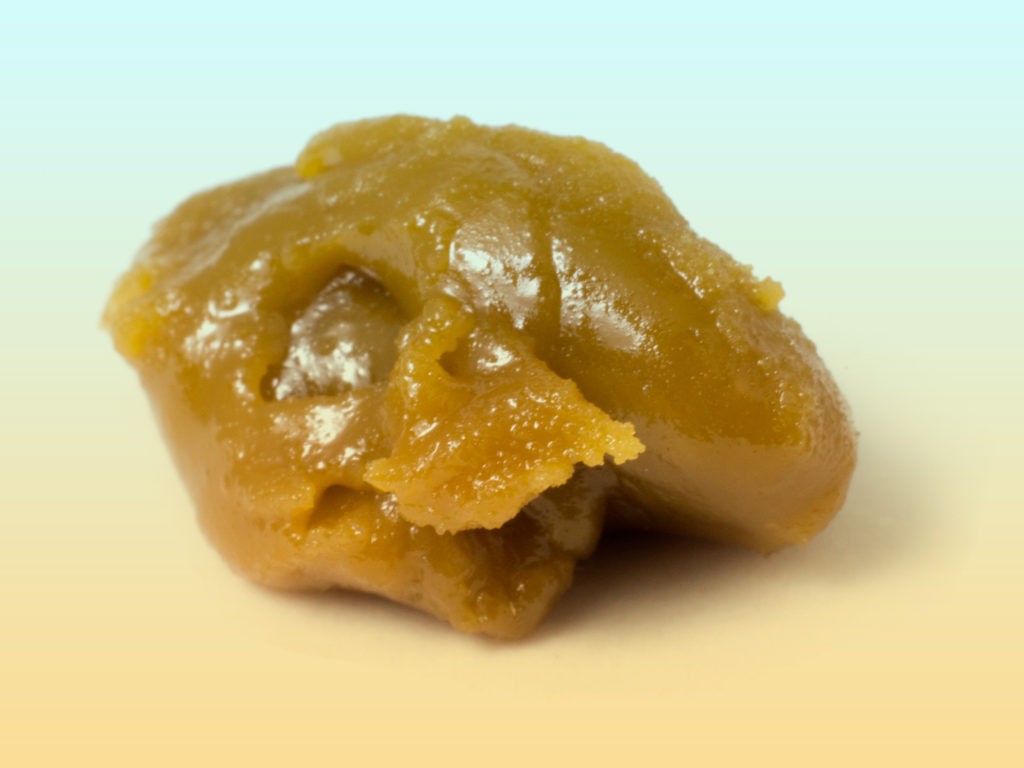
Whipping live resin into badder is a post-extraction mixing process that transforms a glossy, saucy extract into a creamy, stable, cake-batter-like texture. This controlled mixing changes the concentrate's structure, improves consistency, and makes it easier to handle, while slightly increasing air exposure that can affect terpene preservation.
Below, we'll break down exactly what whipping does, how it changes texture and stability, and how it impacts your overall dabbing experience, without overcomplicating the science. If you want the full breakdown, keep reading.
What “whipping” actually means
In live resin badder, whipping refers to controlled agitation that happens after extraction, usually during or just after the purging phase.
Once residual solvents are removed, the extract can be gently stirred to influence its final texture. That movement introduces controlled air exposure, encourages early crystal formation, and shifts the concentrate's internal structure.
It also helps distribute cannabinoids and terpenes more evenly throughout the jar.
What's happening on a microscopic level
When live resin is agitated, more of it comes into contact with air. That increased surface area allows mild oxidation to occur, which contributes to texture changes over time.
At the same time, THCa molecules begin organizing differently.
Instead of remaining in a glossy, syrup-like form, they start forming microscopic crystalline structures. As this happens, the extract transitions from translucent and saucy to opaque and creamy.
That's how glossy resin becomes thick, scoopable badder.
Why colors often lighten
Many consumers notice that whipped live resin appears lighter or more uniform in color. That visual change doesn't automatically mean potency has shifted.
As micro-crystals form and the structure becomes more opaque, light scatters differently across the surface. The result is a softer, lighter appearance.
How whipping changes texture, ctability & consistency
 Photo by: Gina Coleman/Weedmaps
Image lightbox

From live resin sauce to badder
Whipping changes how live resin behaves in your jar.
Instead of separating into layers, like visible crystals sitting in terpene-rich liquid, controlled agitation pulls everything together into one uniform mass. The glossy, loose texture thickens into something denser and more cohesive.
The result is that familiar badder consistency: smooth, scoopable, and consistent from top to bottom.
Stability over time
A whipped badder tends to hold its form better than a fully saucy extract. It's less likely to shift dramatically with minor temperature changes and less prone to separating again after transport or storage.
That stability is part of the appeal.
You open the jar, and it behaves the way you expect. Just keep in mind: more handling and air exposure over time can gradually impact terpene freshness, which is why controlled finishing matters.
Is it just “air makes it fluffy”?
Not quite.
Whipping guides the concentrate into a more stable, workable state.
Think of it less like fluffing and more like setting. The goal is achieving a texture that's easier to handle, portion, and enjoy without constant separation or stickiness.
How whipping impacts flavor & the dabbing experience

Image lightbox

Does whipping reduce terpenes?
This is the question a lot of people really want answered.
Because whipping increases surface area and air exposure, it can contribute to minor terpene loss over time. Terpenes are volatile compounds, meaning they evaporate and degrade more easily than cannabinoids when exposed to oxygen, heat, and light.
But it's not a dramatic, instant drop-off.
It's a tradeoff.
Whipping improves texture and stability, but extended or aggressive agitation can slightly reduce aromatic intensity.
In other words, you're balancing two priorities: maximum flavor preservation vs. maximum consistency and ease of use.
Why some prefer fresh, unwhipped resin
Not everyone wants badder.
Some experienced dabbers prefer live resin in its saucier, fresh-press-like state. The reasoning is simple: less agitation means less air interaction, which can mean a slightly “louder” terpene profile right out of the jar.
Saucy resin can feel more vibrant and aromatic.
It may separate over time, and it can be messier to handle, but for some, that intensity is worth it.
For them, texture takes a back seat to perceived flavor purity.
Why others swear by badder
On the other hand, many consumers prefer whipped live resin badder for practical reasons.
It's easier to scoop. Easier to portion. Less likely to drip or run when the room warms up. And because the cannabinoids and terpenes are more evenly distributed throughout the concentrate, each dab tends to feel consistent from start to finish.
For newer dabbers especially, badder is often more forgiving.
It behaves predictably, doesn't shatter or spill, and makes loading a nail or e-rig feel less like a balancing act.
Should you whip it yourself?
This is where things get personal.
Just because live resin can be whipped into badder doesn't mean it always should be. Whether you whip it yourself depends on what you value more: texture control or maximum freshness.
Why isn't it just sold as badder?
A lot of people wonder: If badder is easier to handle, why not just sell everything that way?
The short answer is preference.
Some people want that fresh, glossy, terp-heavy consistency straight from extraction. Others want something creamy and stable.
Once a producer whips an extract into badder, there's no going back to that original saucy state. So leaving it unwhipped preserves your options.
It's similar to buying whole-bean coffee instead of pre-ground. You can always change the texture later, but you can't reverse it once it's been altered.
Brands often leave that final decision to the consumer because not everyone wants the same experience.
When it makes sense to whip
Whipping might make sense if:
- You're seeing visible separation, like crystalline THCa sitting in terpene-rich liquid.
- You want a thicker, scoopable consistency that's easier to portion.
- You prefer stability and uniformity over chasing the most volatile, intense aroma possible.
If your live resin feels messy, uneven, or unpredictable, whipping can help bring it into a more manageable state.
When you should probably leave it alone
On the other hand, you may not need to touch it at all.
If the texture is already creamy and cohesive, additional agitation won't add much benefit. If the terpene profile is especially loud and aromatic, minimizing air exposure may help preserve that intensity.
And if you genuinely prefer a saucier texture, there's nothing wrong with leaving it as is.
How to whip live resin badder (if you decide to)
If you decide to whip your live resin into badder, the process should be simple and controlled.
Below, we'll walk through the basic tools you need, the correct technique, and the common mistakes to avoid so you can adjust texture without compromising quality.
The tools you need
You don't need much:
- A clean dab tool
- The original airtight jar
- Optional: a heated knife if the texture is extremely sticky or sap-like
That's it.
Avoid overcomplicated gadgets or aggressive mixing tools. The more surface contact and force you introduce, the higher the chance of oxidation or product loss.
Keep it simple and controlled.
The step-by-step process
- Let the resin reach a manageable temperature: If it's too cold, it may resist movement. If it's too warm, it can turn overly sticky.
- Use small, controlled circular motions: Think gentle folding and stirring.
- Watch the visual cues: As you mix, the color may lighten slightly and the consistency will begin thickening. That is your signal that the structure is shifting.
- Stop early: You can always whip more later. You cannot undo overexposure to air.
- Seal the jar: Once you reach the desired texture, close it to limit additional oxygen contact.
The entire process may take minutes, not hours or weeks.
Common beginner mistakes
- Over-whipping: More is not better. Excess agitation increases air exposure and can dull aroma over time.
- Leaving the jar open too long: Air, heat, and light are the real enemies of terpene preservation.
- Using excessive heat: Trying to force texture change with heat can degrade volatile compounds and make the resin harder to handle.
- Whipping before it is ready: If the extract is not responding, it may not need agitation yet. Forcing it will not magically change the structure.
The goal is controlled texture adjustment without compromising quality, especially if you are working with an expensive jar you do not want to experiment on recklessly.
The bottom line
 Photo by: Photo by Gina Coleman/Weedmaps
Image lightbox

Live resin badder is ultimately about choosing the texture and experience that fits your style.
Whipping can make a concentrate creamier, more stable, and easier to handle. Leaving it untouched can preserve a saucier consistency and a slightly brighter terpene expression. Neither is automatically better. It comes down to how you prefer to dab.
If you are ready to find the right consistency for your setup, shop live resin near you on Weedmaps and discover the texture that fits your dab.

FAQ
If it's been in and out of the fridge, is it ruined?
In most cases, no.
Moving live resin badder between cold storage and room temperature does not automatically damage it. Texture may temporarily firm up when cold and soften when warm, but that shift is normal.
What actually causes degradation is prolonged exposure to heat, light, air, or moisture. If you notice a dramatically muted aroma, harsh vapor, or visible moisture inside the jar, that is more concerning than simple temperature cycling.
Otherwise, slight texture changes are expected and reversible.
Will I lose product while whipping?
You can, but only if you are aggressive.
Using large mixing tools, whipping too forcefully, or scraping excessively against jar walls increases surface contact and waste. The concentrate can cling to tools, which makes it feel like it is disappearing.
To minimize loss, use a standard dab tool, make small circular motions, and avoid overworking the extract. Controlled, gentle agitation keeps product where it belongs and limits unnecessary air exposure.
How long does it take to turn into Badder?
There is no universal timer.
Some live resin responds within minutes of light agitation. Other batches may take longer depending on terpene content, starting consistency, and storage conditions.
If the extract is already beginning to thicken, whipping can accelerate the transition. If nothing changes, it may simply not need intervention yet. Texture development depends on the specific batch, not a fixed timeline.