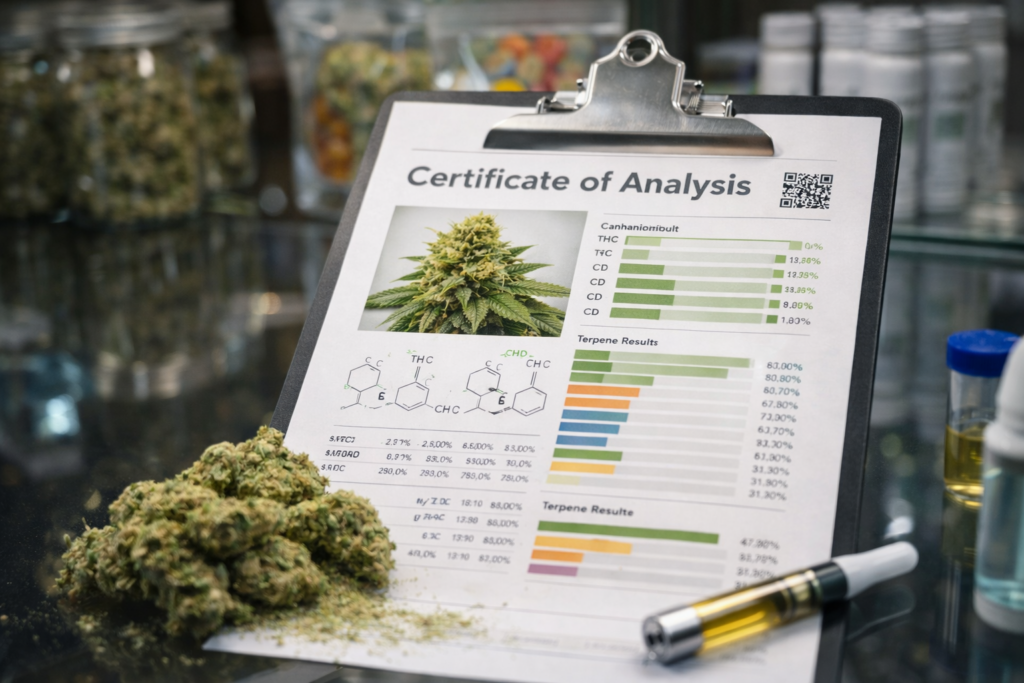
“Top shelf” doesn't mean much: real weed quality comes down to trichomes, terpene preservation, and how well the flower was cultivated and cured.
 Photo by: Gina Coleman/Weedmaps
Image lightbox

Walk into any dispensary and everything good is suddenly “top shelf.” But here's the thing, that label isn't regulated. It's not a standard. It's just a tier someone decided to slap on a jar.
So what actually separates top-shelf buds from mids?
It comes down to what's happening at the microscopic level, and how well that quality survives from the grow to your grinder.
Why “top shelf” doesn't have a fixed meaning
“Top shelf” sounds official, but it's not.
There's no universal grading system. One shop's top shelf could easily pass as mids somewhere else.
That's because:
- tiers are set by the retailer
- pricing influences perception
- branding fills in the gaps
So if you're relying on the label alone, you're guessing.
Cannabis quality starts at the chemical level
Before looks or smell, quality starts with compounds.
Two groups matter most:
- cannabinoids (like THC, CBD)
- terpenes (aroma and flavor compounds)
These are what actually shape how cannabis smells, tastes, and feels.
Everything else, the look, the price, the hype, is just a reflection of how well those compounds were produced and preserved.
Trichomes are where cannabinoids and terpenes are made
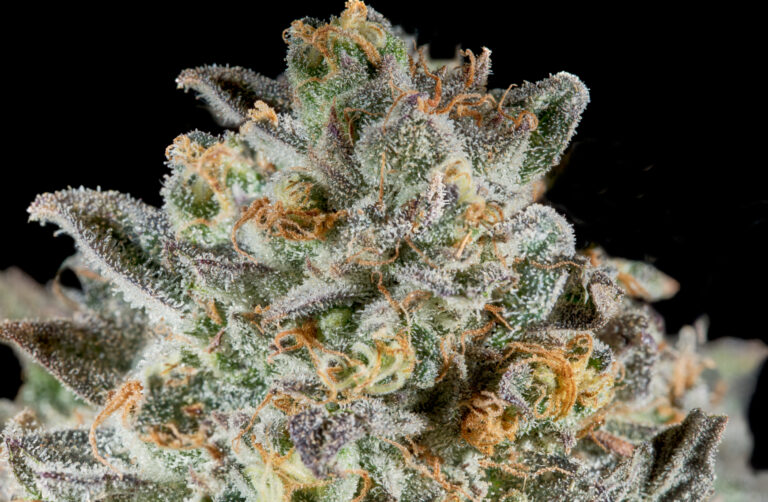
Ripe trichomes are one of the clearest signs of quality flower. These tiny resin glands are where cannabis produces cannabinoids and terpenes.
The more developed and intact the trichomes are, the more chemical potential the flower has.
What matters:
- density → how many trichomes are present
- maturity → whether the trichomes developed fully before harvest
- integrity → whether they've been damaged, dried out, or stripped away during handling
If a bud looks overly smooth or lacks visible resin coverage, there's a good chance some of those trichomes have already degraded or broken off.
Terpene content defines aroma and complexity
When you crack open a jar and it hits you, that's terpenes.
High-quality flower usually has:
- strong, distinct smell
- layered aroma (not just one flat note)
Low-quality flower tends to smell:
- dull
- grassy
- generic
That difference comes down to how many terpene compounds are still present, and how intact they are.
Terpene degradation is where quality starts to fall off
Even great flower can turn into mids if it's not handled right.
Terpenes are fragile. They break down from:
- heat
- light
- oxygen
- time
Once that happens:
- aroma fades
- flavor flattens
- the whole profile feels weaker
This is one of the biggest reasons weed ends up in mids territory, not bad genetics, just lost chemistry.
Curing controls moisture and preserves compounds
After harvest, everything comes down to curing.
Curing is basically controlled drying that:
- locks in moisture balance
- protects cannabinoids and terpenes
If it's done right:
- buds stay slightly sticky
- aroma stays strong
- compounds stay stable
If it's done wrong:
- too dry → terpenes evaporate, flower gets harsh
- too wet → unstable, risk of mold
This step decides whether quality is preserved or wasted.
Cultivation determines what the plant can produce

Image lightbox

You can't fix bad flower after the fact.
Everything starts during the grow:
- light exposure
- nutrients
- environmental control
These directly affect:
- trichome production
- terpene development
- cannabinoid levels
Top shelf weed isn't just “grown well”, it's grown with the conditions dialed in to maximize what the plant can produce in the first place.
Visual traits reflect quality, but don't prove it
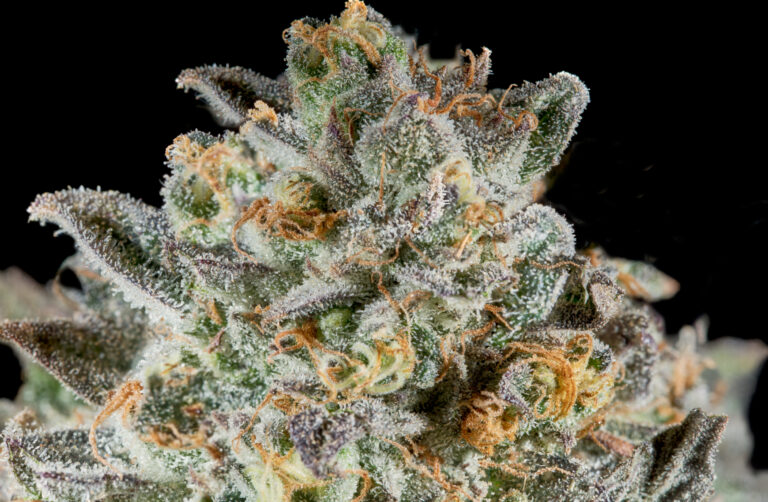
This is where a lot of people get fooled. Quality flower often does look colorful, dense, and coated in visible resin, but appearance alone doesn't guarantee a better experience.
Some flower is bred, trimmed, or photographed to look impressive while lacking terpene retention, proper curing, or strong cannabinoid preservation.
What matters is whether those visual traits actually reflect what's happening chemically inside the flower:
- bright color doesn't guarantee terpene content
- dense buds don't guarantee a proper cure
- visible resin doesn't guarantee ripe, intact trichomes
Some flower looks top shelf but smokes like mids. That disconnect is more common than most labels admit.
THC percentage doesn't define quality
This one gets people the most. High THC doesn't automatically mean better weed.
THC is just one compound. It doesn't tell you:
- terpene content
- freshness
- how well the flower was handled
That's why some high-THC buds feel hollow, while lower-THC flower with rich terpene content can feel stronger, smoother, and more nuanced.
What “mids” actually are
“Mids” refers to flower with lower overall quality caused by breakdown somewhere in the cultivation, curing, handling, or storage process.
Usually, it's one (or more) of these:
- weak trichome production
- terpene loss over time
- poor curing
- rough handling or trimming
- bad storage
The result is flower with reduced aroma, weaker cannabinoid preservation, harsher smoke, and a less refined overall experience.
How quality is maintained (or lost) from harvest to shelf
Quality isn't locked in at harvest. It can still be lost.
Here's where it holds up, or falls apart:
- harvest timing → affects compound maturity
- drying + curing → affects preservation
- trimming + handling → affects trichome integrity
- storage → affects terpene stability
Top-shelf weed is just weed where all of these steps were done right.
Miss one, and you start sliding toward mids.
The bottom line

“Top shelf” doesn't mean much on its own. Real quality comes down to:
- how much the plant produced (trichomes)
- how complex the profile is (terpenes)
- how well it was preserved (curing and storage)
Everything else: price, branding, and shelf placement are secondary.
Once you understand that, it gets a lot easier to spot what's actually worth it… and what's just hype.
Discover top-shelf flower available near you online for pickup or delivery.