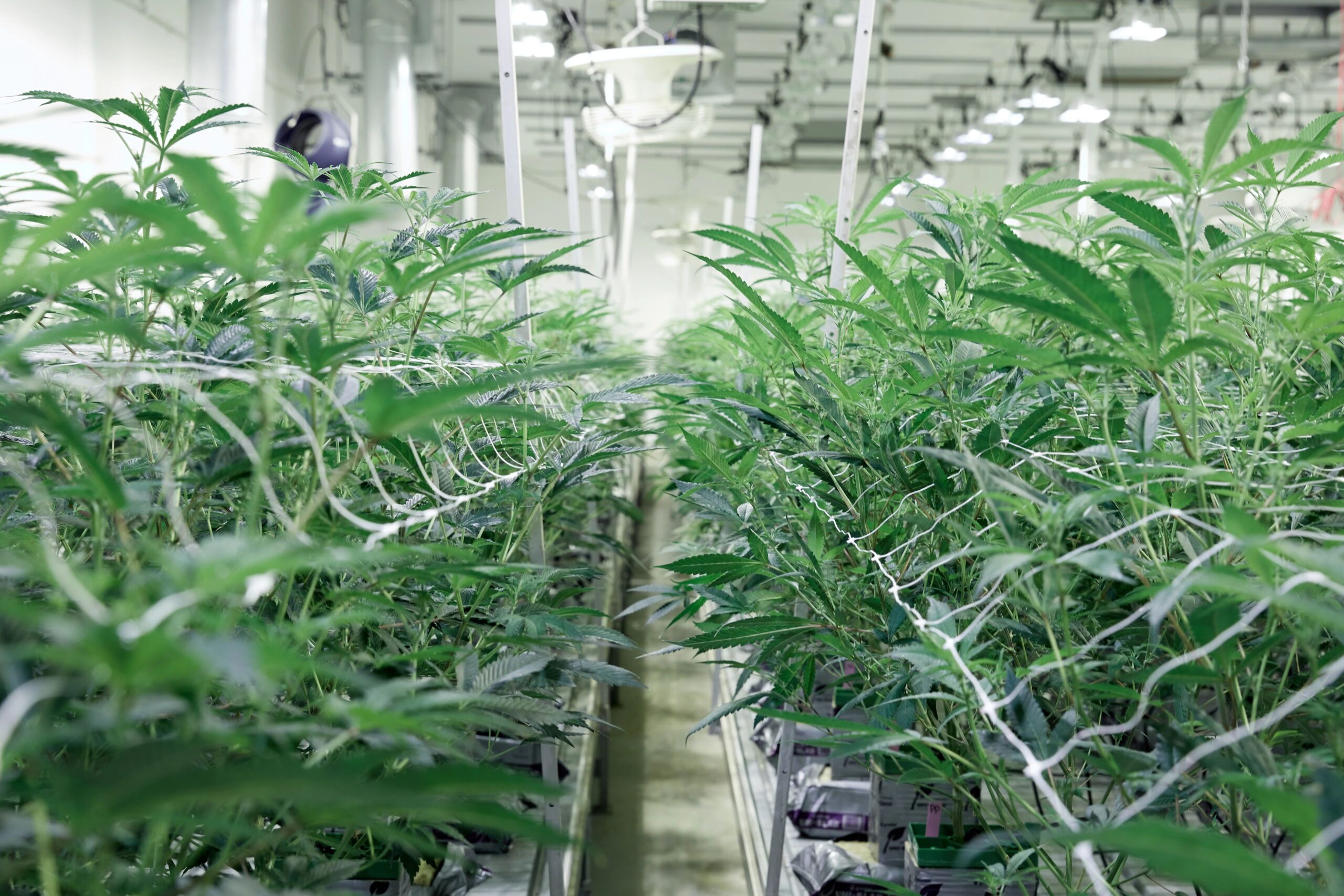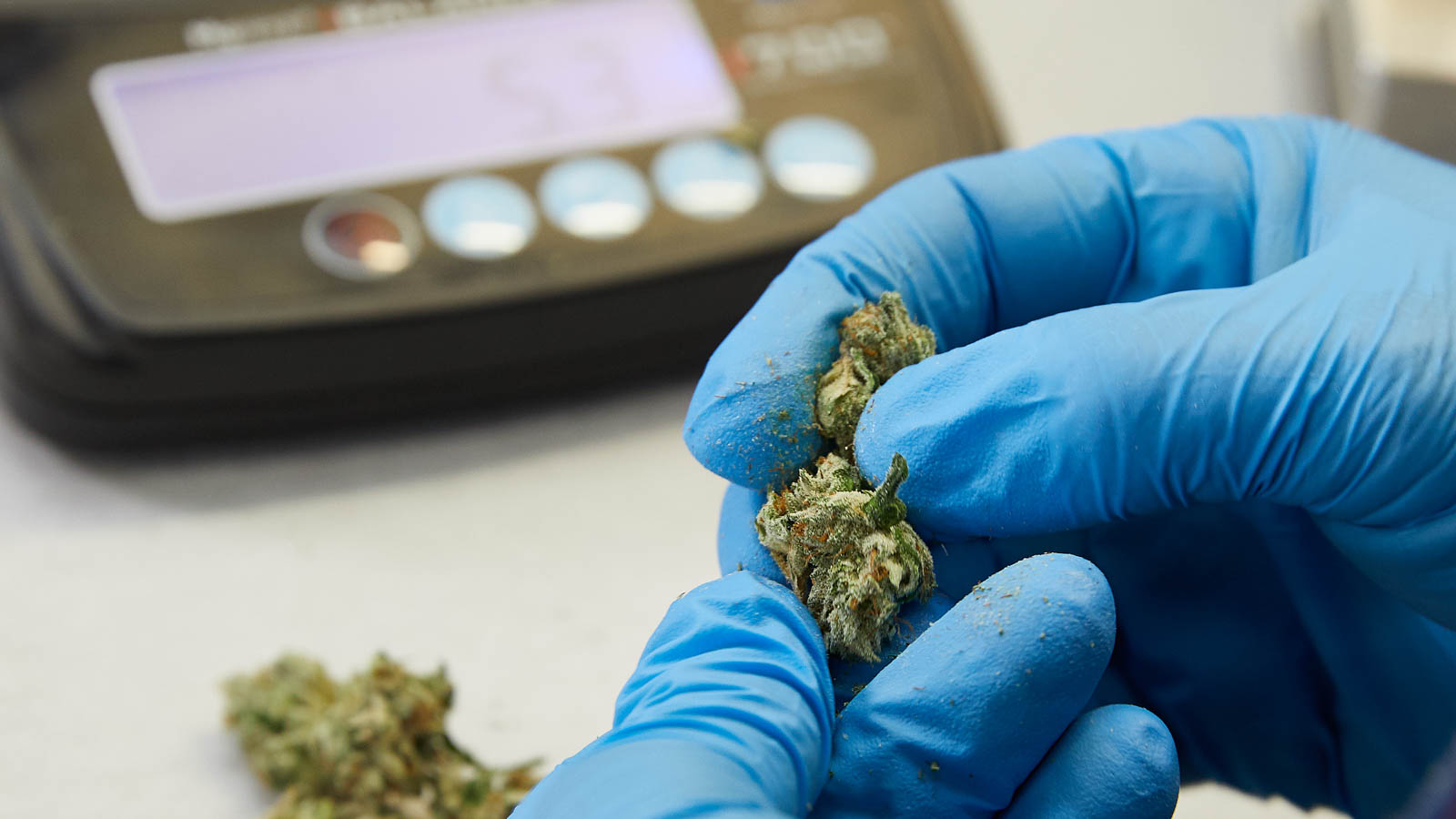
Pesticides in weed can remain present long after cultivation, even when flower looks frosty, smells loud, and tests high in THC. The only reliable way to verify whether weed contains pesticide contamination is through batch-specific lab testing and a readable COA.
 Photo by: Gina Coleman/Weedmaps
Image lightbox

Contaminated cannabis rarely announces itself visually.
The buds can feel sticky. Trichomes can appear fully intact. The aroma can still seem fresh the moment the jar opens.
That is one reason pesticides in weed can be difficult for consumers to identify without laboratory testing.
Pesticide residue is chemistry, not aesthetics. Cannabis can carry contamination on the flower surface, inside plant tissue, or through post-harvest handling without obvious visual warning signs.
Potency and bag appeal tell you how a product presents itself, not whether it passed contamination screening. A flower can test high in THC and still fail pesticide screening, while contamination may remain completely invisible without laboratory analysis.
Why pesticides in weed are difficult to spot
Bag appeal tells you how cannabis looks. It does not tell you what chemistry stayed behind on the flower after cultivation.
Pesticides interact with cannabis differently depending on the type of product used during cultivation.
Some pesticides behave as contact sprays that remain mostly on the outside of the plant. Others become systemic, meaning they move through internal plant tissue alongside water and nutrients. Both create different contamination problems.
Contact pesticides can cling to resin-rich areas because trichomes are naturally sticky and textured. Late-stage spraying can leave residue sitting directly on the same surfaces consumers associate with quality and freshness.
Visual inspection reaches its limits quickly here. The flower may still look perfectly healthy while carrying invisible chemical residue across the outer surface.
Systemic pesticides become even harder to detect because the compounds move inside the plant itself. Once contamination enters the tissue, appearance and aroma become almost useless as verification tools.
A loud nose and heavy trichome coverage can signal quality cultivation, but neither reveals whether pesticide residue is present.
Drying and curing don't remove pesticide residue
Drying and curing improve flower quality, but they are not contamination-removal processes.
Drying and curing change moisture content, chlorophyll breakdown, burn quality, and terpene behavior, but they do not automatically remove pesticide residue or other contaminants.
Some compounds may degrade partially over time. Others remain stable throughout storage and post-harvest handling.
If contamination exists on the flower surface, curing does not necessarily remove it. If contamination exists inside the plant tissue, it remains part of the material itself.
This is where laboratory testing becomes essential. Appearance, aroma, and age cannot reliably confirm whether a product is free of unwanted compounds.
What happens when contaminated cannabis is heated
When cannabis is smoked or vaporized, any residue present can become part of the inhaled smoke or aerosol stream.
Heat can move pesticide compounds from the flower into smoke or aerosol that travels directly into the lungs.
The concern is that inhalation delivers compounds directly through the respiratory system.
The respiratory system absorbs compounds differently than digestion or external contact, which is why small contamination levels still matter operationally even when consumers cannot see or taste them directly.
Combustion also changes chemistry. High temperatures can create breakdown products and chemical interactions that did not exist on the raw flower itself. This is why contamination discussions in cannabis focus so heavily on testing instead of visual inspection.
How concentrates can magnify contamination
Concentrates intensify more than cannabinoids and terpenes. They can intensify contaminants too.
Extraction processes remove a large amount of plant material while preserving compounds that dissolve and carry through the extraction system.
Because concentrates remove much of the plant material while retaining target compounds, contamination that appears minor in flower can become more concentrated in the finished extract.
A low-level issue in flower may become much more noticeable once the material gets refined into vape oil, live resin, or high-potency extracts.
That is why contaminant screening matters so heavily for concentrates and cartridges. The extraction process does not automatically guarantee cleanliness.
How to read the pesticide section of a COA

Image lightbox

THC percentage is often the first number consumers notice, but the pesticide panel may be the more important quality metric.
The Certificate of Analysis is where contamination stops being a guess and starts becoming measurable data. For consumers concerned about pesticides in weed, the COA is the most important document associated with the product. A proper pesticide panel shows which compounds were screened, whether anything was detected, and whether the results stayed below state action limits.
This is where people misunderstand the word “pass.”
A passing COA does not automatically mean zero pesticide residue was found. It simply means the detected levels did not exceed that market's legal threshold.
What "ND" actually means on a cannabis test report
COAs use technical reporting language that can confuse people fast.
“ND” means “not detected above the lab's reporting threshold.” It does not necessarily mean a compound exists at absolute zero concentration. Every laboratory method has detection limits and quantitation limits that determine how small a measurement can be reported confidently.
Understanding laboratory reporting thresholds helps put ND results into context.
The limit of quantitation represents the smallest amount the lab can reliably measure with confidence. A residue level below that threshold may still exist even if the report shows ND.
Then there are action limits, which represent the legal cutoff for failure. A product can technically contain measurable residue while still passing compliance standards if the amount remains below the regulatory threshold.
This is one reason experienced consumers compare detected compounds, reporting thresholds, and action limits instead of reading the COA like a simple green checkmark.
Matching a COA to the correct batch

Image lightbox

A COA only matters if it matches the exact product in your hand.
This is where a lot of verification breaks down.
Consumers often scan a QR code or view a report online without checking whether the batch ID, lot number, or production code actually matches the package they are buying.
If those identifiers do not align, the report may belong to a completely different production run. That breaks the traceability chain immediately.
A legitimate COA should connect directly to the exact product, the exact batch, and the exact testing run tied to that package.
Without batch matching, “lab tested” becomes much harder to verify confidently.
Batch verification also includes checking test dates. Cannabis testing is tied to specific production runs, and older reports may not accurately reflect inventory produced later. A recent COA connected to the exact package in hand provides stronger verification than a generic report attached to a strain name or product category.
THC percentage vs. pesticide testing
Potency tells you how much THC exists in the product. It does not verify cleanliness.
A flower can test at 30% THC and still carry contamination concerns. Meanwhile, a lower-potency product may actually show cleaner screening results and stronger transparency overall.
THC percentage works best as one quality metric rather than the only one. Real product quality also includes testing transparency, batch traceability, contaminant screening, and whether the chemistry actually matches the claims on the label.
Beyond potency and appearance

Pesticide residue can remain on cannabis long after cultivation, curing, packaging, and storage.
The flower may still look frosty. The aroma may still smell loud. The THC percentage may still look impressive. None of those things confirm the product is clean. A batch-specific COA remains the most reliable tool for verifying what screening was performed and what the laboratory actually found.
The pesticide panel helps verify whether contamination screening actually happened, whether measurable residues were detected, and whether the report matches the exact batch being sold.
Understanding how contamination can persist through cultivation, consumption, and extraction helps put greater emphasis on testing transparency rather than appearance alone.
Find lab-tested flower, concentrates, and trusted dispensaries near you on Weedmaps.