Walking into a dispensary, it's easy to be overwhelmed by names like live resin, rosin, full melt, diamonds, and badder. Once you understand what separates them—and what quality actually looks like—you can shop with confidence instead of guessing.
 Photo by: Gina Coleman/Weedmaps
Image lightbox

Whether you're new to cannabis or you've been around it for years, chances are you've already heard of hash. Hash isn't a modern invention. It's one of the oldest forms of cannabis concentrate in existence, refined across centuries long before dab rigs or rosin presses ever entered the picture.
What's changed isn't the plant. It's how we extract from it, dose it, and dial it in for the body we actually have.
This guide walks through the modern era of cannabis concentrates: how potency really works, how to dose with intention, and how to choose the right extract — and the right cultivar — for you.
Why concentrates are reshaping a flower-first market
Cannabis concentrates pack 3–9 times more THC than flower, which is exactly why dosing matters more here than almost anywhere else in cannabis. But this isn't only a story about potency. It's about flavor, and about an entire culture of extraction that has been quietly developing for decades.
Vaping and dabbing have become genuinely convenient ways to consume, but convenience isn't the whole draw. Solventless extraction — rosin, ice water hash — is often considered one of the most honest expressions of the plant available. Nothing but ice, water, heat, and pressure stands between you and the cultivar itself. Ice water hash especially doesn't lie: the quality of the input equals the quality of the hash.
A rice grain-sized dab can deliver effects comparable to roughly half a joint, without the combustion byproducts of smoking. Live rosin specifically preserves terpenes more completely than almost any other extraction method on the market, which is part of why flavor-driven consumers gravitate toward it.
THC isn't the whole story
Most concentrate COAs report potency in the 20–90% THCA range, depending on the category. It's tempting to treat that number as the entire story, but potency alone doesn't tell you how a concentrate will actually feel.
The entourage effect — the way THC, minor cannabinoids, and terpenes work together — matters just as much as raw percentage. Two concentrates with identical THCA numbers can produce completely different experiences depending on their terpene and cannabinoid profile. That's the real argument for chasing flavor and full profile, not just potency on a label.
 Photo by: Courtesy of Sky High Lounge
Image lightbox

Why your COA actually matters
In regulated markets, the Certificate of Analysis is one of the most useful tools a consumer has, and not just for verifying potency.
Everyone's body interacts with cannabis differently. A cultivar that delivers a calming effect for one person can land completely differently for someone else, largely because of how individual endocannabinoid systems respond. A COA showing full cannabinoid and terpene breakdown — not just a THC number — gives you the information to figure out what actually works for you, rather than relying on guesswork or what worked for someone else.
Potency isn't the issue — dosing is
Dosing isn't only about how much you dab. It's also about how you dab it.
Low-temp dabs, roughly 450°F to 520°F, are best for preserving terpenes and flavor, especially with smaller dabs. They give a more nuanced, aromatic experience and are gentler on the lungs. Larger dabs may need slightly higher temps within that range to fully vaporize.
High-temp dabs, above 550-650°F, produce a more intense, immediate effect, but at the cost of flavor. Terpenes degrade and the hit gets harsher. That intensity can also be more than some people want, especially newer consumers.
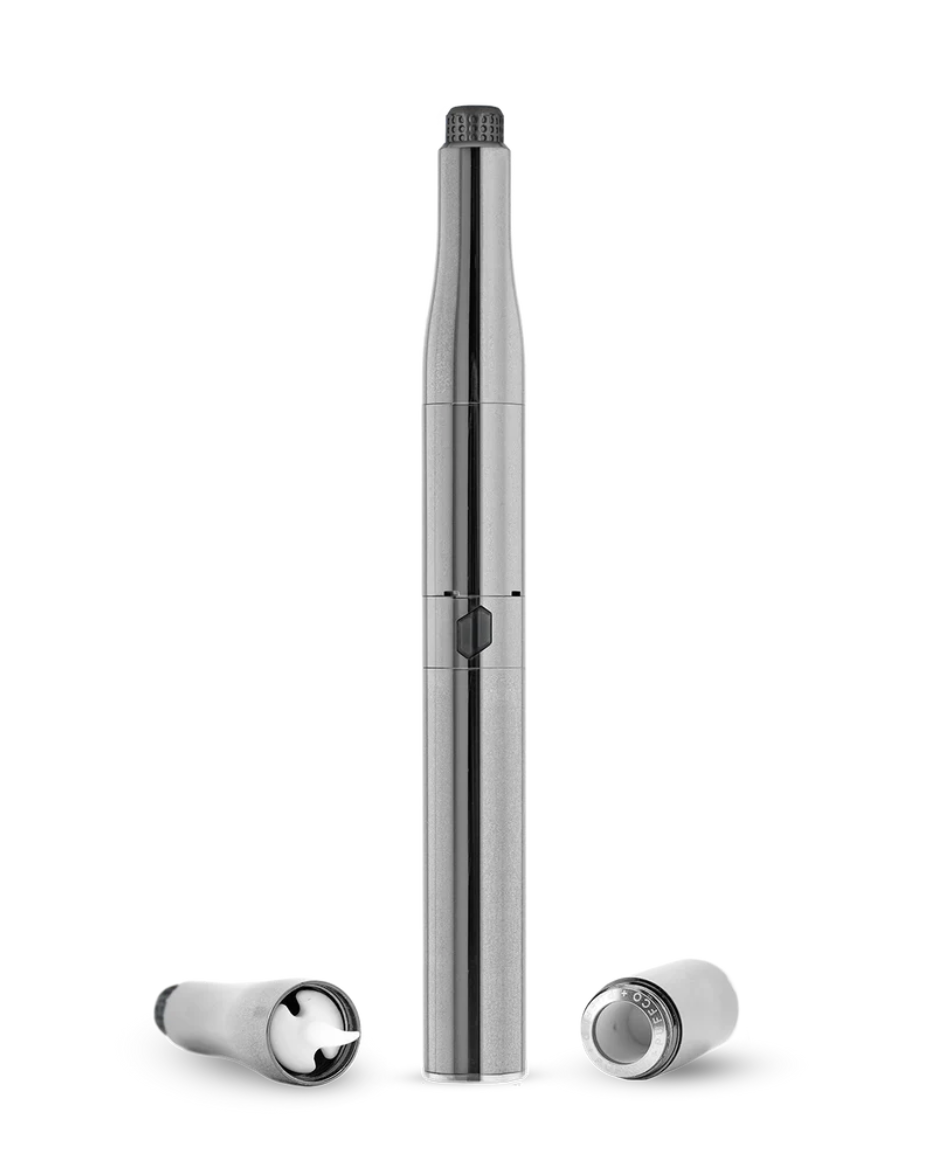
Ideal temperature also depends on the surface you're dabbing on. Ceramic, quartz, and titanium all behave differently, and the same number on a banger versus an e-rig like a Puffco won't feel the same. Start low, go slow, and adjust based on your equipment and desired effect. If you're starting out, especially with rosin or full melt, start low and work your way up as you learn how your body responds. You can always go hotter. You can't get the flavor back once it's burned off.
Micro-dosing concentrates
As concentrates move further into mainstream use, micro-dosing has emerged as a preferred approach for consumers seeking functional, subtle effects rather than full intoxication. A micro-dose with concentrates typically falls between 1–5mg THC, smaller than a rice grain of most extracts. Precision tools like dab scales, measured dab applicators, and low-temperature e-rigs make consistent micro-dosing more achievable than eyeballing portions. Live rosin and full-spectrum live resin are common choices for micro-dosing because terpene complexity tends to make smaller doses feel more complete than the single-note effect of distillate or isolated diamonds.
Solvent vs solventless concentrates: understanding production methods
 Photo by: Gina Coleman/Weedmaps
Image lightbox

The biggest factor determining a concentrate's quality, price, and experience isn't the cultivar alone. It's the extraction method. Production methods fall into two camps: solvent-based extraction, which uses chemical solvents to separate compounds from plant material, and solventless methods that rely on mechanical processes like heat, pressure, water, or agitation.
How solvent-based extraction works
Solvent-based concentrates are cannabis extracts made using chemical solvents, typically butane, propane, ethanol, or CO2, to isolate cannabinoids, terpenes, and other compounds from the plant. The starting material matters as much as the solvent: when fresh-frozen cannabis is used, the result is live resin, prized for its rich terpene profile. When dried flower or trim is used instead, the result is usually just labeled resin, or named by texture, like shatter, badder, or crumble.
Butane and propane extraction create shatter, wax, badder, sauce, and live resin. These solvents strip terpenes and cannabinoids efficiently, but the process requires professional equipment to safely purge residual solvent.
CO2 extraction uses pressurized carbon dioxide and leaves no chemical residue, though standard CO2 processes can yield less terpene-rich results than hydrocarbon extraction.
Ethanol extraction works well for large-scale production and creates distillates typically testing between 85–95% THC.
Solventless methods preserve natural profiles
 Photo by: Gina Coleman/Weedmaps
Image lightbox

Solventless concentrates are made without chemical solvents, using only heat, pressure, water, screens, or agitation to separate trichomes from the rest of the plant. The result is a clean, terpene-rich product that honors the plant's full expression. It's worth noting that not all solventless products are technically extracts in the strict sense. Ice water hash and dry sift are mechanical separations rather than extractions.
Rosin is made by applying heat and pressure to flower, ice water hash, or dry sift, compressing the material to squeeze out resinous oil almost instantly. Kief generally doesn't have enough oil content to press into rosin. Live rosin specifically is pressed from ice water hash made from fresh-frozen cannabis. It is not pressed directly from fresh-frozen flower, which yields an unusable mix of dark water and oil rather than a smokable product.
Ice water hash uses ice water and agitation to separate trichome heads from plant material, filtered through fine mesh screens. Quality ranges widely and is informally graded one to six stars. Full melt refers to the top tier: the cleanest, most intact trichome heads, which vaporize completely at low temperature and leave little to no residue. Ice water hash itself isn't ancient. Dry sift is one of the oldest concentrate forms in existence, predating it by centuries.
Dry sift involves screening dried cannabis through fine mesh to collect trichome heads without water. It's distinct from kief: kief is a lower grade, typically what collects in a grinder screen, full of plant contamination, while dry sift, especially static dry sift, can be extremely high quality, including full melt grade.
Live resin vs. live rosin
 Photo by: Gina Coleman/Weedmaps
Image lightbox

What's the difference between live resin and live rosin? Both start from fresh-frozen cannabis to preserve terpenes, but the process diverges sharply from there. Live resin uses hydrocarbon solvents to strip cannabinoids and terpenes directly from the plant, producing aromatic concentrates in a range of textures, including sauce, badder, sugar, and diamonds-in-sauce. Live rosin uses no solvents at all. Fresh-frozen cannabis is first processed into ice water hash, then pressed with heat and pressure into rosin.
Live rosin is generally considered the more craft-driven, labor-intensive option and commands a higher price as a result. Live resin, while extracted with solvents, can deliver excellent quality and higher yields even from mid-grade starting material. It's not strictly "lesser," just a different process with different tradeoffs. Potency between the two is comparable, typically 70–85% THCA, with top-tier hash rosin lots exceeding 90%.
Major concentrate categories
 Photo by: Gina Coleman/Weedmaps
Image lightbox

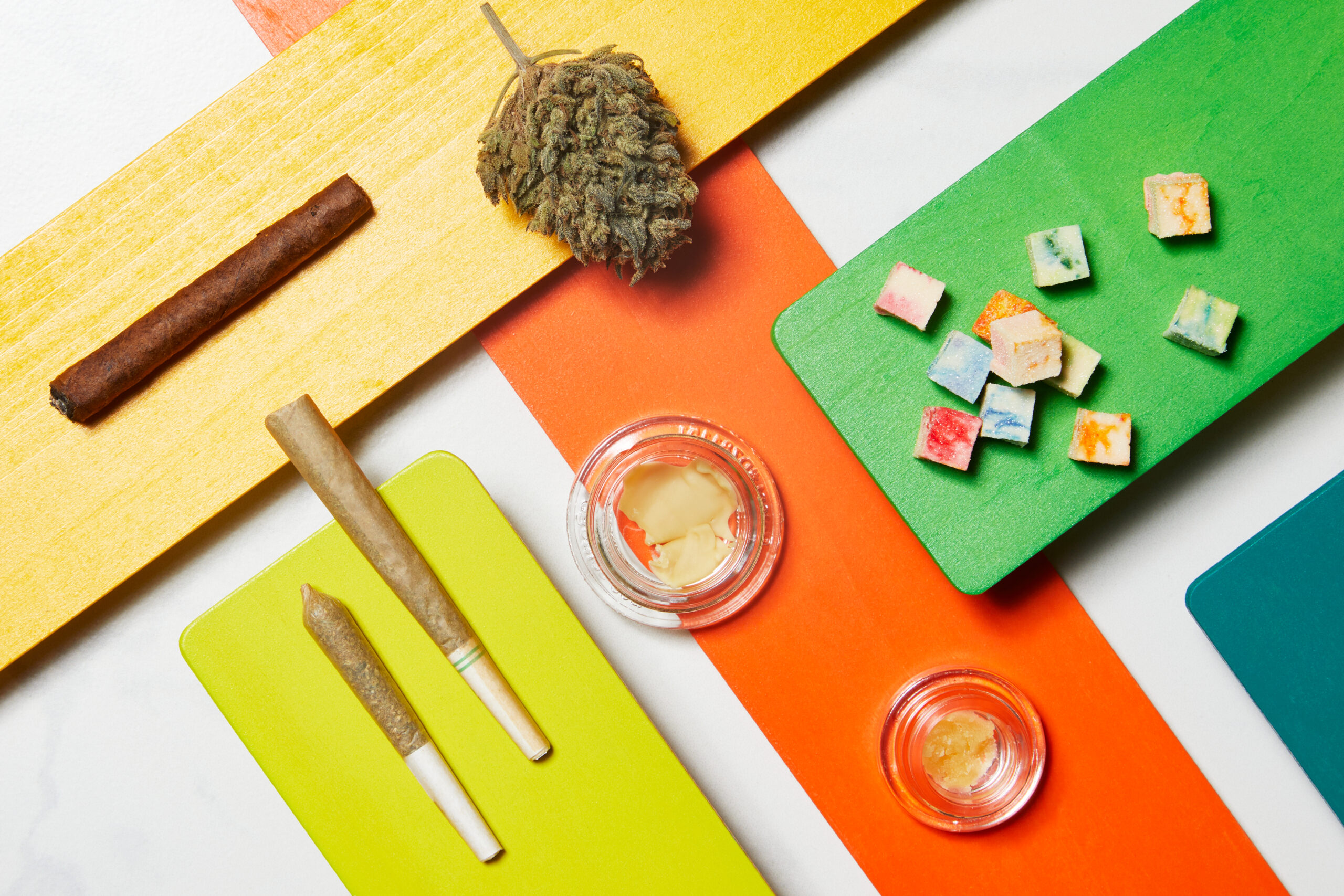
Cannabis concentrates come in distinct textures and consistencies, each shaped by its extraction method. Those differences affect potency, terpene retention, handling, and how the product performs in real use. Knowing what separates them makes shopping smarter and dosing more precise.
Shatter
Shatter is a solvent-based concentrate known for its brittle, glass-like consistency, made using hydrocarbons and purged under vacuum and low heat into a translucent, stable sheet. Color ranges from amber to pale yellow and should remain clear and consistent. Avoid anything cloudy or spotted. THCA typically tests 70–90% with relatively low terpene retention. Its rigid structure makes portioning easy, though warmth makes it sticky and harder to manage. It generally stores well at room temperature short-term.
Wax and budder
Wax has a soft, crumbly texture, while badder is whipped into a smooth, batter-like consistency. Both start as hydrocarbon extracts, fresh-frozen or cured, and the badder texture is reached one of two ways: whipping the concentrate during the purge, or letting it cure into a wax first and whipping it afterward. Color can run golden, amber, or browner depending on oxidation of the starting material, which isn't automatically a quality issue. THCA typically falls 60–80%. Medium-term storage in the fridge, long-term in the freezer, and avoid silicone containers.
Live resin
Extracted from fresh-frozen cannabis rather than dried flower, live resin preserves more of the plant's original terpene profile, resulting in a sticky, sauce-like concentrate with pronounced aroma. THCA typically falls 60–80%, but terpene retention drives the actual experience more than the number does. It commands a higher price because fresh-frozen material requires stricter handling from harvest through extraction.
Crumble
Crumble has a dry, honeycomb-like structure that breaks apart easily, purged at lower temperatures with agitation. THC levels typically range 60–90%, varying by strain, extraction method, and the terpene and cannabinoid profile of the starting material. Potency has far more to do with chemotype and process than outdated indica or sativa labeling. It can be vac-sealed and frozen for long-term storage. Avoid silicone.
Sugar and sauce
Sauce is a mix of high-terpene extract and isolated THCA crystals, prized for rich flavor and strong effects. It can be made from fresh-frozen material, creating live sauce, or from cured material. Live rosin sauce is the solventless version: fresh-frozen cannabis processed into ice water hash, pressed into rosin, then separated into THCA and terpene fractions. THCA ranges 60–85%. Short-term storage works in a cool, dark glass jar, medium-term in the fridge, and long-term vac-sealed in the freezer. Moisture contamination from opening a cold jar too fast, not the freezer itself, is what causes mold risk.
Rosin
Rosin is solventless, made by compressing flower, ice water hash, or dry sift under heat and pressure to squeeze out resinous oil. Color should run golden to light brown with a smooth, butter-like consistency. Green coloring or an oxidized look signals contaminated or lower-quality starting material. Rosin is a direct testament to cultivation quality: solventless extraction requires premium input material with nowhere to hide flaws. THCA typically tests 60–80%.
- Fresh press rosin is consumed shortly after pressing, prized for its glossy, translucent look, like fresh-squeezed orange juice. It must be stored in the freezer to maintain that translucent quality. Left at room temperature, it begins to cloud and cake naturally as it cures, which isn't a flaw but the start of the curing process, and it can even be whipped by hand into a batter consistency once fully cured. A hot knife tool helps manage stickiness when dabbing fresh press.
- Cold cure rosin is sealed in jars and stored cool and dark, around 50–70°F, for days to weeks after pressing, allowing cannabinoids and terpenes to homogenize into a soft, scoopable badder consistency. Texture varies by strain. Some cultivars, like Zkittlez and its crosses, run naturally goopy and wet, which isn't a defect on its own. Dried-out texture is more likely a storage issue.
- Rosin jam is notably the most shelf-stable rosin format at room temperature, though not every cultivar produces good jam. Fruity, sweet strains tend to shine here.
Ice water hash (bubble hash)
Ice water hash separates trichome heads from the plant using ice water and agitation, filtered through micron screens. Quality varies widely and is graded informally on a one-to-six star scale. Full melt is the top tier: the cleanest, most intact trichome heads, vaporizing completely at low temperature with minimal residue. THCA ranges roughly 40–70% depending on refinement. Color should avoid green, but darker shades, especially in pressed forms like temple ball, aren't automatically a quality issue. Full melt ice water hash must always be stored in the freezer. At room temperature it will melt and degrade, a common cause of returned product at dispensaries. Lower grades can be stored short-term at room temp, medium-term in the fridge, long-term vac-sealed in the freezer.
Temple ball and pressed hash are the same product: rounded, polished spheres of pressed ice water hash or dry sift. In traditional hashmaking regions like Nepal and India, "temple ball" historically refers to aged charas, but in the modern hash scene it's used more broadly, with "pressed hash" being the more accurate umbrella term. Known for shelf stability and a press-to-activate process that develops flavor and potency over time, popularized in modern hash culture by Frenchy Cannoli. Often consumed rolled into joints or spliffs. A simple quality check: hold a flame briefly to the hash. High-quality, oil-rich hash will bubble and melt rather than catch fire immediately.
Piattella is a post-processing method applied to six-star full melt ice water hash, made from either freeze-dried or air-dried resin, then cold-cured in sealed containers over weeks to months. The result is a shelf-stable, creamy, dabbable cured hash with enhanced flavor. Color is strain-dependent, ranging from golden to yellow to purple, and should never run green.
Distillate
Distillate is a refined oil stripped down to isolated cannabinoids, typically testing 85–95% THC, with little to no native terpenes unless reintroduced afterward. It's common in vape cartridges and edibles, prioritizing potency and versatility over flavor complexity.
THCA Diamonds
THCA diamonds are crystalline structures of nearly pure THCA, typically testing 95–99% potency. They're produced through a heat cure, not a cold cure: freshly pressed rosin is sealed in a glass jar and heated to roughly 180–200°F for 15 to 30 minutes. As the rosin decarboxylates, it releases CO2 inside the sealed jar, and the resulting pressure combined with heat encourages THCA to separate and crystallize. On their own, diamonds deliver a clean, potent, low-flavor effect. Paired with sauce or live resin terpenes, known as diamonds-in-sauce, they gain aromatic complexity. Dosing should start smaller than with live resin or rosin given the potency ceiling. Short- to medium-term storage works in an airtight container in the fridge, long-term vac-sealed in the freezer, opened only once fully thawed and no longer "sweating," to avoid moisture contamination.
Kief and dry sift
Kief is the lowest grade in this category, typically what collects in a grinder screen, carrying significant plant contamination. Dry sift is a different, often much higher-quality product: trichome heads screened directly from dried flower without water, with static dry sift capable of reaching full melt quality when done with sufficiently clean starting material. Kief and dry sift aren't interchangeable terms. They represent very different quality tiers.

Image lightbox

What to look for when shopping concentrates
Every legal concentrate should come with a Certificate of Analysis showing cannabinoid percentages and contamination testing. Check that the batch number matches your product, the testing date is reasonably recent, the lab is state-licensed, and that pesticide, residual solvent, heavy metal, and microbial testing are included. Missing or incomplete lab results are an immediate red flag.
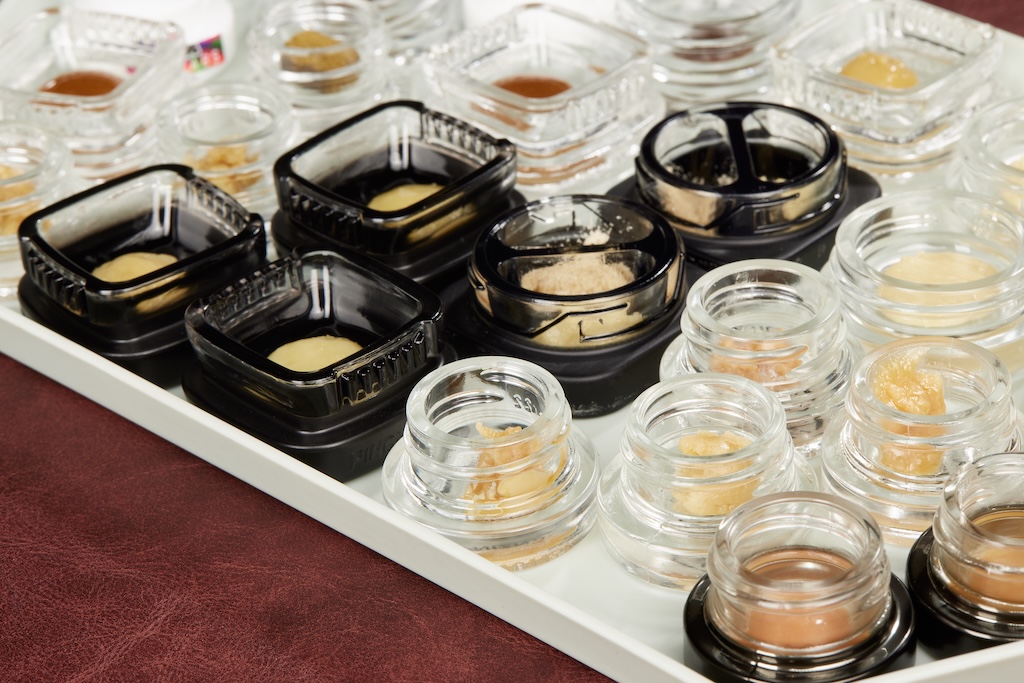
Visual cues matter too. Shatter should be translucent amber to pale yellow with consistent color throughout, avoiding dark spots or cloudiness. Live resin and sauce should show bright, vibrant color from pale yellow to deep amber, with consistent texture and no unintended separation. Rosin and live rosin should run golden to light brown, smooth and butter-like, avoiding green (a sign of plant contamination) or a grainy texture. Ice water hash should avoid green specifically, though darker tones from curing or pressing aren't automatically a defect. Badder and wax should have consistent color and texture, with no dark patches.
In 2026, single-strain and single-source concentrates have become a meaningful quality signal. Generic "hybrid" or "indica" labels tell you little about terpene profile or expected effect. Strain-labeled concentrates that disclose the specific cultivar, the source farm, and a COA with terpene percentages alongside cannabinoid content give you far more predictive information than potency alone.
Storing your concentrates properly
Storage needs vary by product, but a few rules hold across nearly all solventless and solvent-based concentrates. Short-term storage works at room temperature in a cool, dark, airtight glass container; avoid silicone, which can degrade quality and isn't ideal for terpene-rich products. Medium-term storage belongs in the refrigerator. Long-term storage belongs in the freezer, ideally vacuum-sealed in glass or sealed in a ziplock to prevent freezer burn.
For anything coming out of the freezer, whether full melt ice water hash, fresh press rosin, or diamonds, the thaw matters as much as the freeze. Let the container come to room temperature fully before opening. Opening a jar while it's still cold and "sweating" introduces moisture, which degrades quality and can introduce contamination. Wait until condensation has fully evaporated, then open.
Start your concentrate journey smart
 Photo by: Gina Coleman
Image lightbox

Cannabis concentrates deliver potent, efficient, and flavor-forward effects once you understand the fundamentals: extraction method shapes flavor and purity, dosing is about temperature as much as amount, and visual and lab-tested quality signals tell you what you're actually buying before you commit to a dab. Whether you gravitate toward solvent-based concentrates for affordability and consistency or solventless options for preserved terpene profiles and craft production, let the COA, and your own body's response, guide what's right for you.
Find trusted dispensaries, verified lab results, and detailed concentrate menus — all in one place. Explore concentrate selections on Weedmaps and shop with confidence.