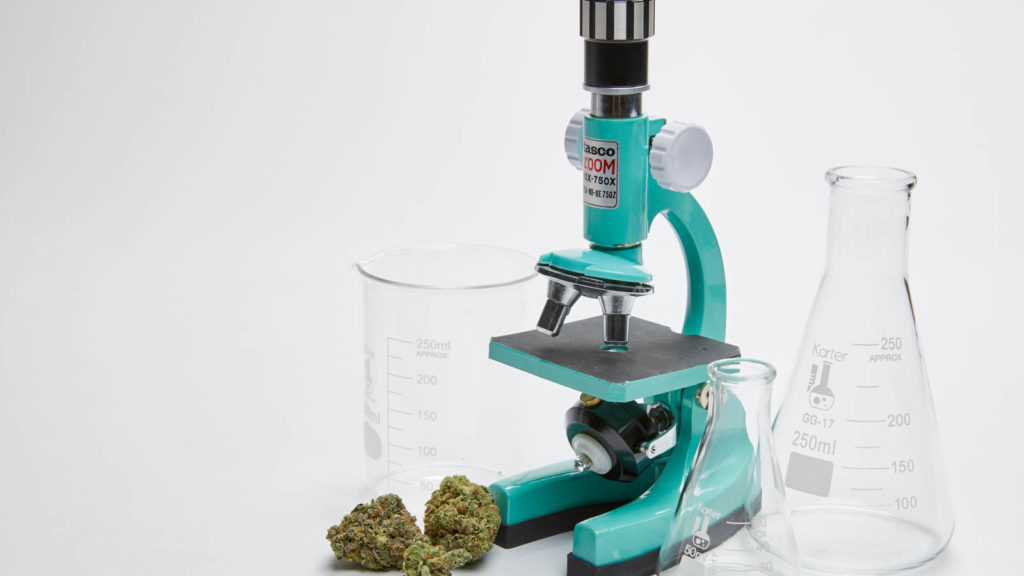
A cannabis COA can reveal far more than THC percentage. Missing contaminant panels, recycled batch reports, inflated potency claims, and weak lab data are often easier to spot than most consumers realize once you know where to look.
 Photo by: Gina Coleman/Weedmaps
Image lightbox

Most shoppers glance at THC percentage and move on. That is exactly where bad products want your attention.
A certificate of analysis should prove three things: the product matches the batch, the batch passed the right safety tests, and the numbers make chemical sense. When any of those pieces break down, the report stops being verification and starts becoming marketing.
Start with the batch number
Before you read THC, terpenes, or anything else, match the COA to the product in your hand. The batch or lot number on the jar should match the COA exactly. Not the same strain name. Not the same product line. Exact batch.
Producers run multiple batches of the same cultivar constantly, and one live resin extraction can test very differently from the next depending on:
- starting material
- extraction conditions
- storage
- terpene preservation
If a product is using a recycled COA from an older run, every number on that page is already suspect.
The product format should match, too. If the package says live resin badder but the COA lists flower, generic plant material, or an unspecified sample type, that is not a harmless paperwork issue. Flower, concentrates, edibles, and vape oils are different matrices, and labs do not evaluate them the same way.
The test date also matters. A “fresh drop” backed by an eight-month-old COA is not fresh documentation. Terpene-heavy products continue changing in storage, especially once heat, oxygen, and light get involved.
Missing contaminant panels are the real red flag
Potency sells the product. Contaminant testing is where trust either holds together or falls apart.
A useful COA should include screening for:
- residual solvents
- pesticides
- heavy metals
- microbial contamination
Some states and product categories also require mycotoxin testing.
Residual solvent testing matters especially for hydrocarbon extracts like live resin, badder, sauce, or shatter. If butane or propane were used during extraction, the COA should show measured results, usually in ppm, instead of hiding behind a generic “PASS” stamp.
Pass/fail alone gives consumers almost no visibility into:
- what solvents were tested
- what levels were detected
- how close the sample landed to legal limits
Pesticides and heavy metals deserve the same scrutiny.
Cannabis is a bioaccumulator, meaning it can absorb compounds from soil, nutrients, and environmental exposure. Extraction can concentrate those unwanted compounds alongside cannabinoids and terpenes, which is why missing contaminant panels matter even more in concentrates.
Concentrates are not automatically clean
 Photo by: Gina Coleman/Weedmaps
Image lightbox

Processing does not magically erase contamination risk.
Solventless concentrates can carry microbial concerns from poorly handled or contaminated starting material. Solvent-based extraction may reduce or kill many biological organisms during processing, but it does not remove pesticides or heavy metals. In some cases, extraction can concentrate them.
A complete microbial panel should include:
- yeast and mold counts
- Salmonella screening
- E. coli screening
- Aspergillus screening where required
Some reports also include mycotoxin testing because certain fungi can leave toxic compounds behind even after the organism itself is gone.
If the microbial section looks unusually thin, partial testing may be getting presented as comprehensive testing.
Those are not the same thing.
Some THC claims don't add up
A terpene-heavy live resin should not resemble distillate on paper.
Live resin often tests lower in THC than highly refined distillate because more of the product's total mass comes from preserved terpenes and other non-cannabinoid compounds. That does not mean the product is weak. It means the chemistry is different.
So when a concentrate claims:
- extremely high THC
- massive terpene preservation
- full-spectrum extraction
All at the same time, something is not adding up.
Terpenes dilute cannabinoid percentage by mass fraction. You can preserve a rich aromatic profile or refine toward near-pure cannabinoids, but a single gram cannot maximize both infinitely at the same time.
Neat-looking potency numbers can be another clue. If products repeatedly land at perfect figures like 85%, 90%, or 95%, selective reporting, aggressive rounding, or lab shopping become more plausible explanations than perfectly repeatable chemistry.
Terpene panels should back up terpene claims
If a concentrate markets itself as live, loud, full-spectrum, or strain-specific, the COA should show terpene data.
A real terpene panel lists individual compounds with measured percentages attached:
- Limonene
- Myrcene
- Beta-caryophyllene
- Pinene
- Linalool
- Terpinolene
That data helps verify whether the product actually carries the aromatic profile being advertised.
A premium concentrate should not need marketing copy to explain what the terpene panel already proves.
THCA math should be visible
 Photo by: Gina Coleman/Weedmaps
Image lightbox

Total THC is not magic. It is calculated.
Most flower and many concentrates contain THCA along with delta-9 THC. Labs estimate total THC using this formula:
Total THC = delta-9 THC + (THCA × 0.877)
That 0.877 conversion factor matters because THCA does not convert to THC at a perfect 1:1 ratio by weight during decarboxylation.
A clean COA should list:
- THCA
- Delta-9 THC
- Total THC
separately.
If the report only shows one giant THC number with no breakdown, there is no way to verify how the calculation was performed.
A trustworthy report shows the math. A sketchy one hides the calculator.
The lab should look verifiable
A COA is only as trustworthy as the lab behind it. Legitimate labs put their credentials on the report itself, not buried in a footnote or missing entirely: ISO/IEC 17025 accreditation, licensing information, lab identification, report date, sample ID, and testing methods.
Formatting inconsistencies matter too. A sloppy, inconsistent report is often the first sign something's off before you even get to the numbers.
Real lab reports usually look boring because they are generated through standardized systems. Random font changes, strange decimal formatting, broken alignment, inconsistent spacing, or pasted-looking values can all signal manual editing.
Science paperwork is not supposed to look exciting. That is the point.
Reviews can expose chemistry that doesn't match the jar
Consumer feedback cannot replace lab testing, but it can expose disconnects between the report and the real-world product.
If a COA claims strong terpene preservation while verified reviews consistently describe the product as muted, dry, stale, or flavorless, something is not lining up.
The same goes for concentrates posting massive potency numbers but repeatedly getting described as weak, flat, or short-lived.
One bad review proves nothing. Consistent patterns are harder to ignore.
The fine print is the trust test

A clean COA does more than flash a giant THC percentage. It verifies the batch, identifies the product format, shows complete contaminant testing, explains the potency calculations, and comes from a lab that can actually be verified.
Missing panels, stale test dates, mismatched batch numbers, hidden THCA math, vague pass/fail results, and suspicious potency claims are not tiny paperwork quirks. They are warning signs. Big THC numbers are easy to print. Clean, verifiable testing is harder to fake.
Compare lab-tested flower, concentrates, and vape carts available for pickup or delivery on Weedmaps