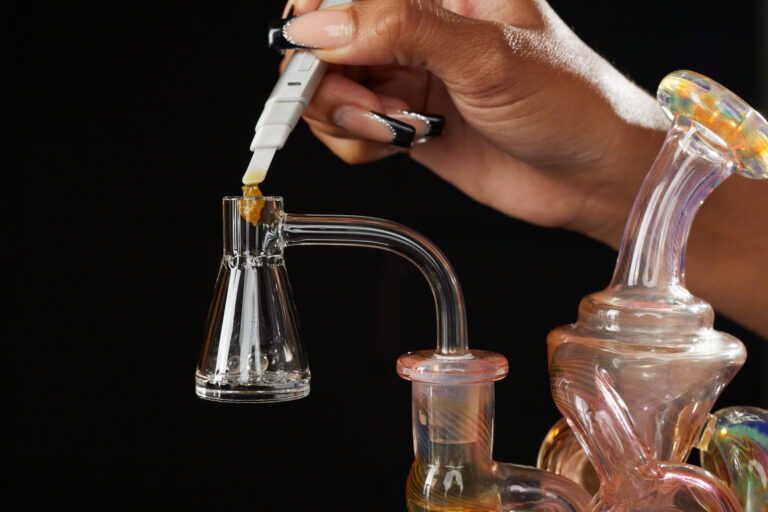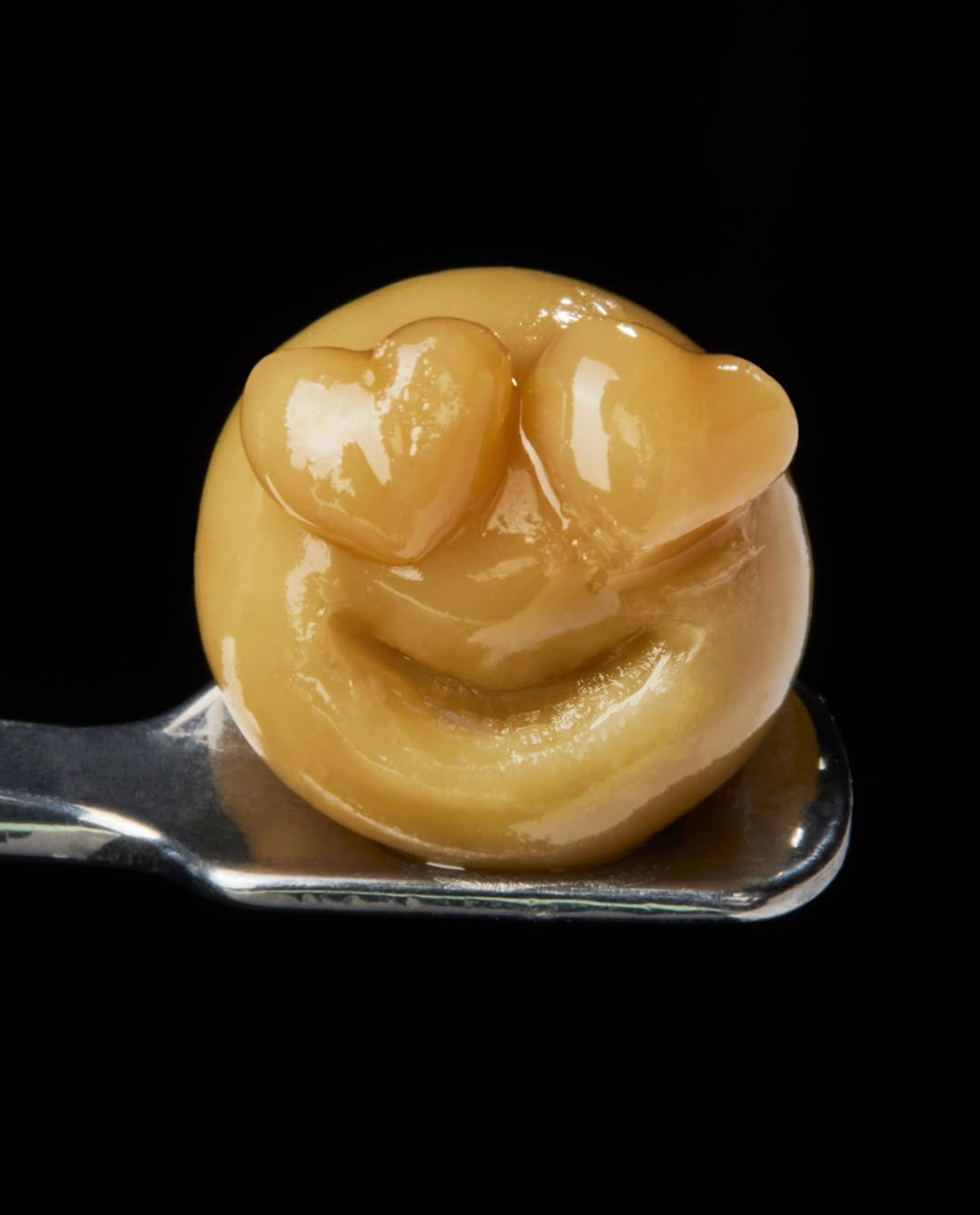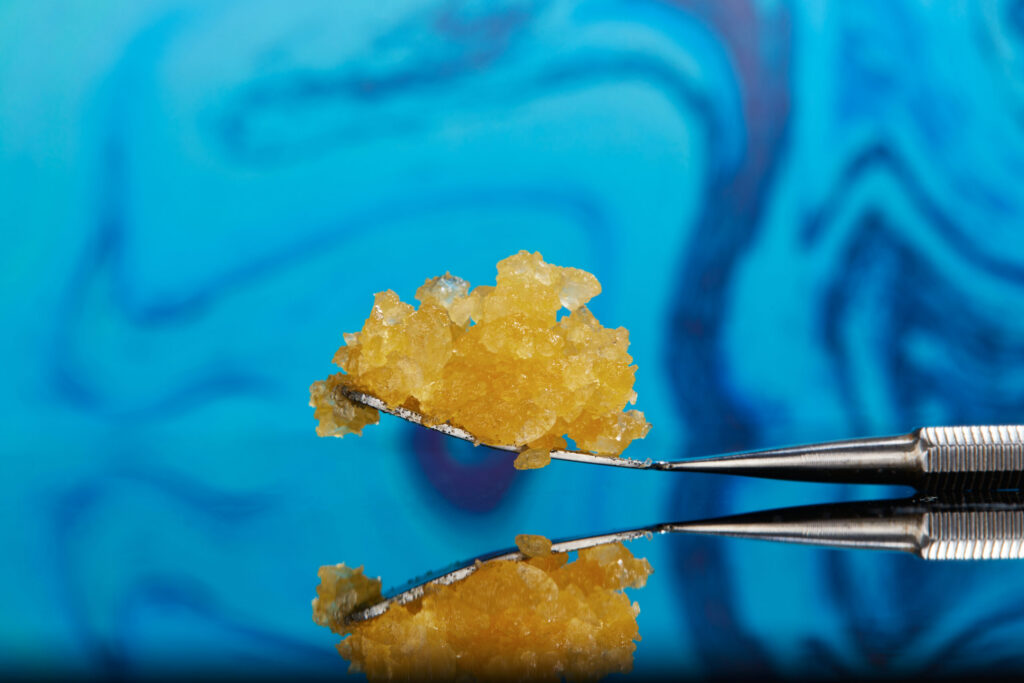
Live resin sugar earns its reputation for one reason: terpene density you can actually taste. Its crystalline structure suspended in aromatic “sauce” isn't just a visual texture — it's a chemical setup that preserves volatile compounds responsible for strain-specific flavor.
 Photo by: Gina Coleman/Weedmaps
Image lightbox

If you care about terpene expression more than chasing the highest THC percentage on the label, live resin sugar stands out for structural reasons. Fresh frozen input, hydrocarbon extraction, and controlled crystallization work together to retain compounds that often degrade during traditional drying and curing.
What is live resin sugar?
Live resin sugar is a hydrocarbon-extracted concentrate made from fresh frozen cannabis flower. Instead of drying and curing the plant, producers freeze it immediately after harvest to slow terpene evaporation and oxidation.
Extraction typically uses butane, propane, or a blend in a closed-loop system to separate cannabinoids and terpenes from plant material. After solvent removal, the extract undergoes controlled crystallization.
How the sugar texture forms
This stage causes:
- THCA to form visible crystals (“sugar”)
- Terpene-rich liquid to separate around those crystals (“sauce”)
The final product is a semi-wet, granular concentrate suspended in aromatic oil. That separation is what makes it behave differently from more uniform textures.

Image lightbox

Why fresh frozen material matters for flavor
Terpenes are volatile by nature. Many begin evaporating or oxidizing during drying and curing — especially lighter monoterpenes that contribute bright citrus, fruit, and floral notes.
Freezing the plant immediately after harvest:
- Slows terpene evaporation
- Reduces oxidation
- Preserves more of the plant's original aromatic profile
This doesn't automatically mean live resin tastes “stronger.” It often means the terpene spectrum more closely resembles the living plant.
The role of crystallization in taste
 Photo by: Gina Coleman/Weedmaps
Image lightbox

The “sugar” texture forms when THCA separates from the terpene-rich fraction during post-processing. Temperature, pressure, and time influence how those crystals develop.
Cannabinoid vs terpene separation
The separation creates:
- Cannabinoid-dense crystals
- Terpene-dense liquid
When vaporized together, terpenes volatilize first, followed by cannabinoid-driven intensity. That staged delivery is part of what flavor-focused consumers notice.
Why flavor feels more pronounced at lower temperatures
Terpenes volatilize across a broad temperature range. Some begin evaporating below 300°F, while others require more heat. THCA begins converting to THC around 220°F, though complete decarboxylation requires sustained exposure.
At lower dab temperatures:
- More terpenes remain intact
- Fewer degradation byproducts form
- Vapor feels smoother
Because live resin sugar carries a relatively high terpene fraction compared to distillate, it often performs best at moderate temperatures.
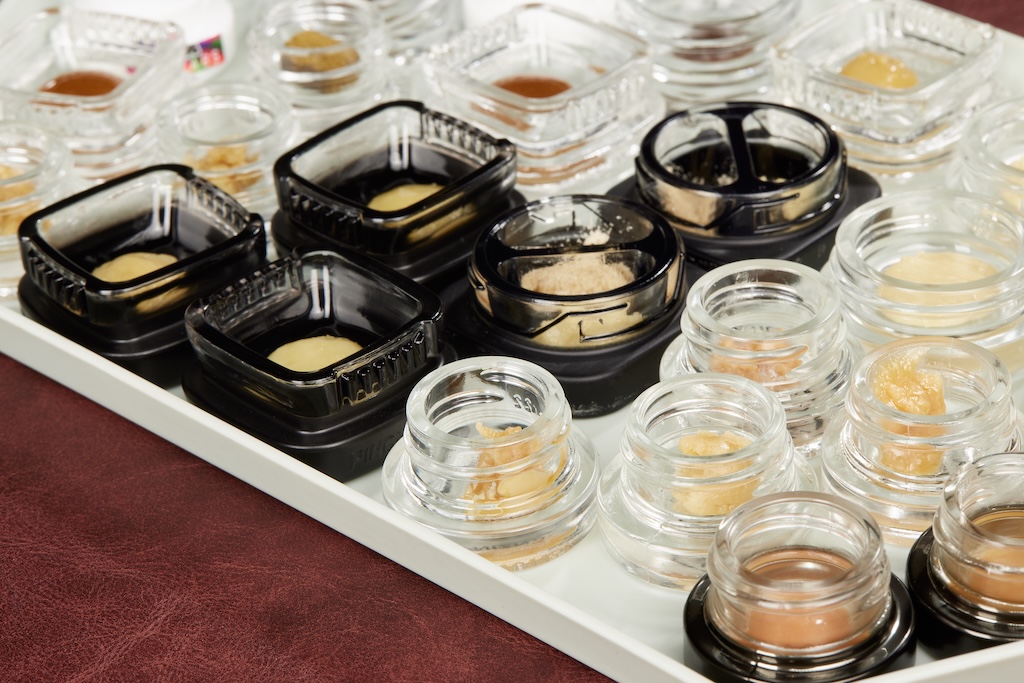
Live resin sugar vs other concentrate textures
 Photo by: Photo by: Gina Coleman/Weedmaps
Image lightbox

Not all concentrates prioritize flavor equally.
Distillate
Highly refined, often 80–95%+ THC. Native terpenes largely removed and sometimes reintroduced.
Shatter
Glass-like and stable. Terpene retention varies by processing conditions.
Live Resin Badder
Also made from fresh frozen flower, but whipped for uniform texture.
Live Resin Sugar
Distinct crystal formation with terpene-rich liquid separation. Less homogenized than badder.
What to look for in quality live resin sugar

Quality depends on:
- Starting flower quality
- Speed of freezing
- Extraction control
- Proper solvent removal
- Storage conditions
Visually, look for:
- Distinct crystalline texture
- Visible terpene-rich liquid
- Minimal dark oxidation
Aroma remains the strongest quality indicator.
Is live resin sugar stronger?
Potency depends on cannabinoid concentration, not texture. Live resin sugar commonly tests between 60–80% total THC, though exact potency varies.
Its distinction isn't maximum THC — it's terpene expression and layered flavor.
Who is live resin sugar best for?
Live resin sugar may appeal to:
- Consumers who prioritize strain-specific flavor
- Experienced concentrate users
- Those using temperature-controlled rigs
- People who find distillate flavor too neutral
Concentrates remain potent regardless of texture, so mindful dosing matters.
The bottom line
Live resin sugar delivers on flavor because of how it's made. Fresh frozen input preserves a broader terpene spectrum, and controlled crystallization produces cannabinoid crystals suspended in terpene-rich sauce — a structure that supports layered, strain-specific flavor when vaporized thoughtfully.
Order live resin sugar for pickup or delivery from a dispensary near you.