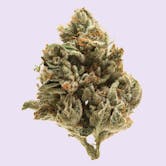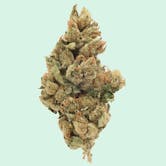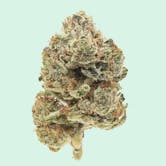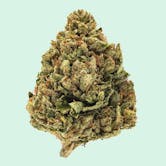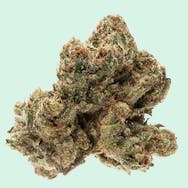
- Earthy (36% of reported flavors)
- Strawberry (35% of reported flavors)
- Lemon (29% of reported flavors)
OG Kush is one of the strains that put West Coast weed on the map and then spent the next three decades rewriting everybody else's family tree. Its best-known origin story traces the original cut to Florida grower Matt Berger, who later shared it with Josh Del Rosso, aka JoshD, in Los Angeles. The genetics remain disputed, with one longstanding theory connecting OG Kush to Chemdog, Lemon Thai, and Hindu or Pakistani Kush genetics. Whatever went into the original cross, the cut that hit California in the 1990s became the foundation of an entire cannabis dynasty.
The nose is pure OG and doesn't bother knocking. Sharp lemon and pine hit first, followed by skunk, damp earth, pepper, and a blast of fuel that hangs around long after the jar closes. Myrcene, limonene, and caryophyllene commonly show up in its terpene profile, matching the strain's earthy, citrus-heavy, spicy funk. JoshD Farms has reported THC around 20%, while stronger indoor runs can climb into the mid-20s.
Those who've stuck with this strain describe a quick euphoric head change before the weight starts dropping into the body. The opening can feel bright, hazy, and social, but OG Kush has a habit of getting heavier as the session rolls on. Push it hard enough and that easy body calm can turn into serious couch gravity.
OG Kush became breeding-room royalty, with its influence running through generations of West Coast genetics. Skywalker OG, Headband, Kosher Kush, and countless other OG-family strains carry pieces of that legacy, while Triangle Kush occupies its own tangled place in the early OG story. More than three decades later, breeders are still chasing that same lemon-fuel stink. OG Kush didn't just survive the hype cycle. It helped build the damn thing.
Del Rosso was the first to cultivate Kush in California, sharing cuttings with friends and fellow growers, and renaming it OG Kush (OG being short for “Original,” not “Ocean Grown” or “Original Gangster” as is often rumored) to differentiate his Florida plant from phenotypes cultivated by other breeders. When OG Kush first started to proliferate through the market, many growers reproduced the plant without the right indoor grow conditions, and the results often have varied in quality, effect, and flavor profile. OG Kush is meant to signify that the strain was grown properly by Josh and his original crew of breeders.
JoshD also reports that OG Kush is difficult to grow because it’s highly sensitive to changes in light and nutrient levels and can be susceptible to pests. Successful growers will find OG Kush has a 58-day flowering period and develops sizable yields of triangle-shaped colas covered in oily, shiny trichomes. Sugar leaves are green with streaks of lavender and pink. Testing from Phylos Bioscience reveals moderate genetic variation in the strain.