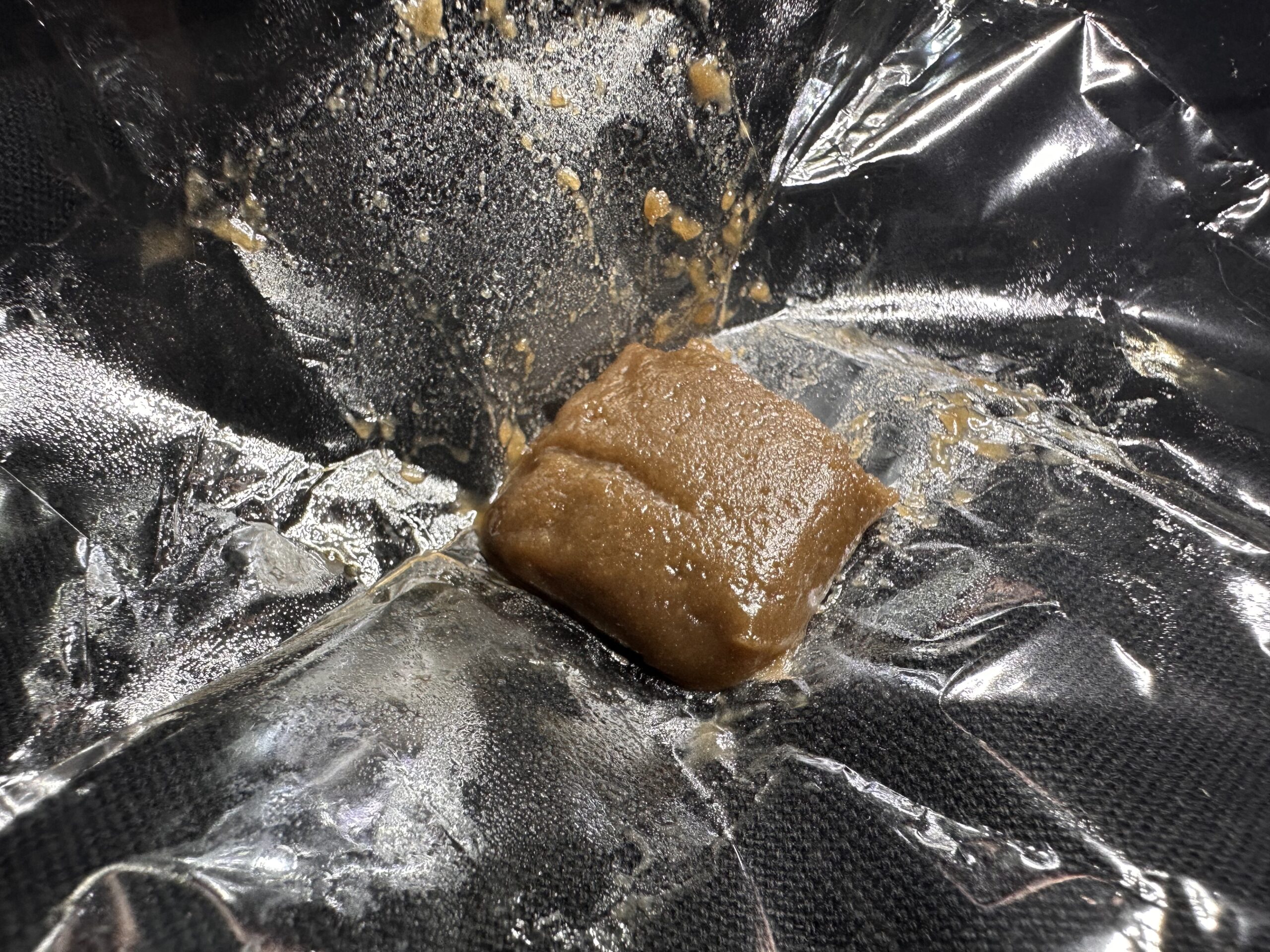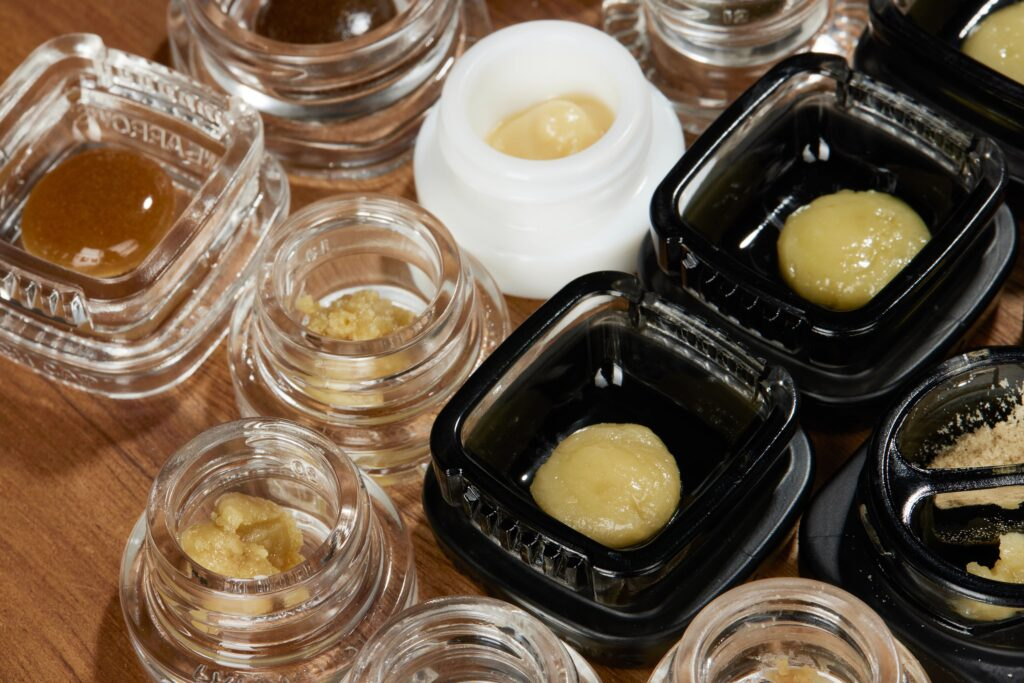
Hash and rosin both start at the same place: trichomes. What separates them is how far that material gets pushed. Hash is the result of mechanical separation, knocking resin heads loose through ice water or dry sift. Rosin takes that same material and refines it further, using controlled heat and pressure to isolate the portion that actually melts clean.
 Photo by: Gina Coleman/Weedmaps
Image lightbox

These aren't parallel products. In many workflows, rosin starts with hash, but hash isn't just a stepping stone — it's already a finished extract with its own grading system and use cases.
Selectivity doesn't come later. It starts during hashmaking, where trichomes are separated and sorted using micron screens, agitation control, and careful handling. Each bag pulls a different fraction, defining purity and melt quality before pressing is even on the table.
Pressing that hash into rosin is a second stage of separation, not a simple refinement. Heat and pressure push out the resin while leaving behind some waxes and contaminants, but what comes out depends entirely on the quality of the input. That's why yield, texture, and overall experience can vary so widely between hash and rosin—they're shaped by different forms of selectivity at different stages of the process.
What hash and rosin actually extract
Hash doesn't produce a single uniform output. Ice water or dry sift yields a full spectrum of material, from contaminated fractions to true full-melt. Some of it meets the standard for dabbing on its own. A large portion doesn't and is better suited for sprinkling in a bowl or joint, pressing, or infusions.
Rosin starts with already separated trichome heads and pushes that material further. When hash is pressed, heat and pressure soften the resin inside the trichome heads, allowing it to flow. That oil is forced through a fine filter bag, while heavier waxes, membranes, and any remaining particulates are left behind. The result isn't just melted hash, it's a more selective separation, shaped by how clean the starting material was and how precisely the press is run.
That's the split. Hash captures the full range of separation across multiple grades and uses. Rosin keeps only the fraction that performs under heat. The difference isn't raw input. It's how selective the process becomes after separation.
How bubble hash uses ice water and filtration

Image lightbox

Ice water extraction is built around clean separation. Cold temperatures make trichome heads brittle enough to break free without smearing or rupturing.
Flower is agitated in ice water, then filtered through mesh bags arranged by micron size. Each layer pulls a different grade. Larger microns tend to carry more contamination. Mid-range fractions like 73–120 microns often perform best, though that shifts depending on cultivar. Lower microns can be extremely clean, but yields drop off fast.
A single run produces a spectrum, not a finished product. Some fractions are ready to dab. Others are set aside for pressing or infusions.
No heat touches the material here, which helps preserve volatile compounds. More importantly, this step sets the ceiling. If separation isn't clean, nothing downstream fixes it.
How rosin uses heat and pressure

Image lightbox

Rosin builds on that foundation. Bubble hash or dry sift is packed into a fine mesh bag and pressed between heated plates. Heat softens the resin inside the trichome heads. Pressure pushes the meltable portion out, while anything that doesn't liquefy stays in the filter.
This isn't about squeezing everything out. It's about leaving the wrong material behind.
Material that's contaminated or structurally compromised won't press clean, which is why not all hash translates into high-quality rosin.
Press variables matter. Temperature, pressure, and timing all shift the outcome. Lower temps preserve more flavor. Higher temps push yield at the expense of nuance.
The result is a more selective extract. Not automatically better, but tighter, cleaner, and entirely dependent on what went into it.
Yield: what you get vs what you keep
Yield in solventless isn't just output. It's filtration.
Genetics and trichome density set the baseline. Some cultivars dump resin. Others don't. Even high-yield runs still produce a mix of grades, and only a portion meets the standard for dabbing or pressing.
Rosin cuts that down further. Not all hash becomes rosin — only the part that melts and flows makes it through. The rest stays behind.
Higher quality almost always means lower yield. That tradeoff is intentional. You're keeping less so that what remains actually performs.
Terpene retention and what actually affects flavor
 Photo by: Gina Coleman/Weedmaps
Image lightbox

Flavor isn't decided by one step. It's cumulative.
Ice water extraction runs cold, which helps preserve volatile compounds, especially with fresh frozen material where brighter, more fragile aromatics are still intact.
Rosin introduces heat, but not at levels meant to degrade the material. Done properly, it allows the resin to flow without stripping the profile.
Temperature still matters. Lower press temps preserve more nuance. Higher temps trade expression for output.
Beyond that, everything counts. Starting material, drying technique, storage conditions, and time all shape how flavor shows up. Every step either preserves it or costs it.
Texture and physical structure
How a concentrate looks and feels comes directly from how it was handled.
Bubble hash can range from sandy and loose to soft and fully meltable. Cleaner separation produces better melt. More contamination leads to residue.
Rosin starts with already separated trichome heads and pushes that material further. When hash is pressed, heat and pressure soften the resin inside the trichome heads, allowing it to flow. That oil is forced through a fine filter bag, while heavier waxes, membranes, and remaining particulates are left behind. The result isn't just melted hash—it's a more selective separation shaped by the quality of the input and how precisely the press is run.
What comes off the press doesn't stay static. Fresh press rosin typically presents as a translucent, sap-like oil, but over time it can nucleate and shift into a more opaque, waxy consistency. That transformation, often referred to as cold cure, is driven by factors like starting material, terpene content, and storage conditions, all of which influence how the final texture settles and expresses.
These aren't cosmetic differences. They show how much plant material made it through and how the resin behaves under heat.
Why process shapes the experience
Hash carries a broader range of the original separation. Some fractions melt clean. Others are better mixed with flower or pressed. That variability defines how it performs across different uses.
Rosin is selective by design. Built from the portion that fully liquefies, it delivers a more consistent experience, especially when dabbed or vaporized. That consistency comes from removing what doesn't perform, not from adding anything new.
Neither is automatically better. High-end full-melt hash can rival top-tier rosin. Low-quality input in either format falls apart fast.
Execution decides everything. Starting material, separation, and refinement all stack. Miss one step and it shows.
Hash vs. rosin: not all resin makes the final cut

LiveHash already does the heavy lifting. Through precise separation and filtration, it can reach full melt — one of the cleanest expressions of the plant without further processing.
Pressing that hash into rosin applies a different kind of separation, using heat and pressure to isolate flowable oils while leaving some material behind. It's not inherently more selective, just a different outcome from the same resin.
Quality isn't defined by the label. It comes down to genetics, starting material, and how carefully each step is handled.
Find ice water hash, rosin, and solventless concentrates near you on Weedmaps.