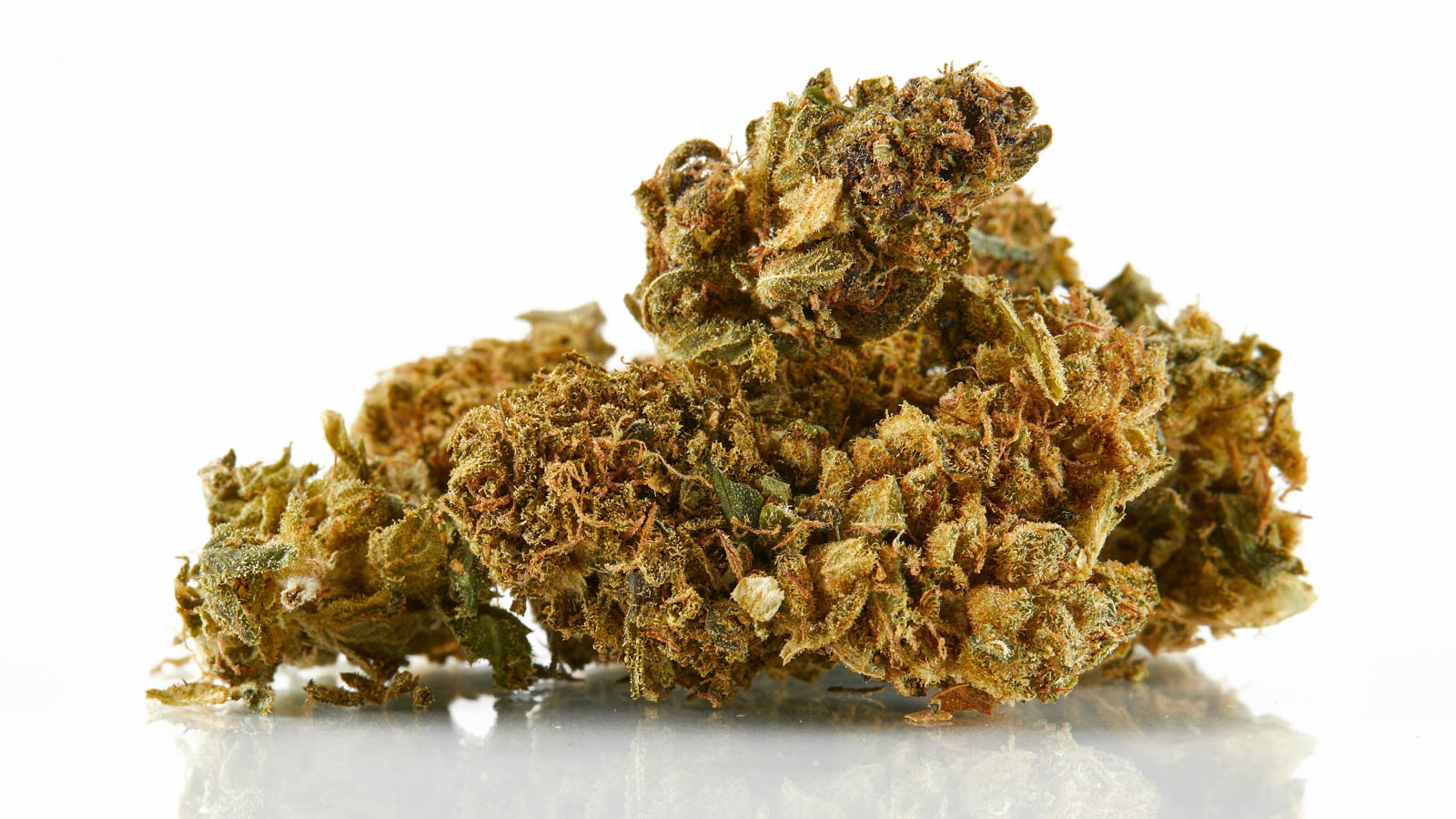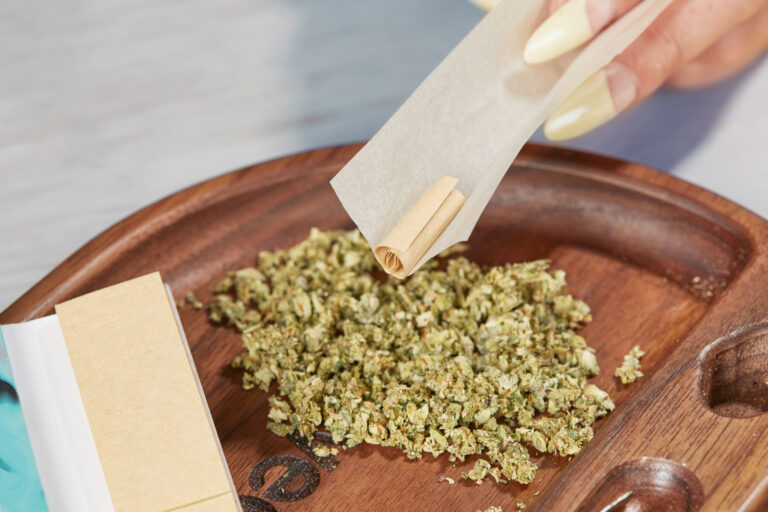
Rolling papers directly affect how a joint burns, tastes, and holds together. The material and thickness determine burn rate, airflow, and how much flavor comes through.
 Photo by: Gina Coleman/Weedmaps
Image lightbox

Rolling papers aren't just a wrapper — they control heat, airflow, and burn behavior, which ultimately decides whether a joint smokes smooth or harsh. Small changes in material and thickness can be the difference between an even burn and a joint that runs.
Some papers burn evenly and preserve terpene flavor, while others burn hotter and introduce more paper taste. These differences determine whether a joint smokes clean or harsh from start to finish.
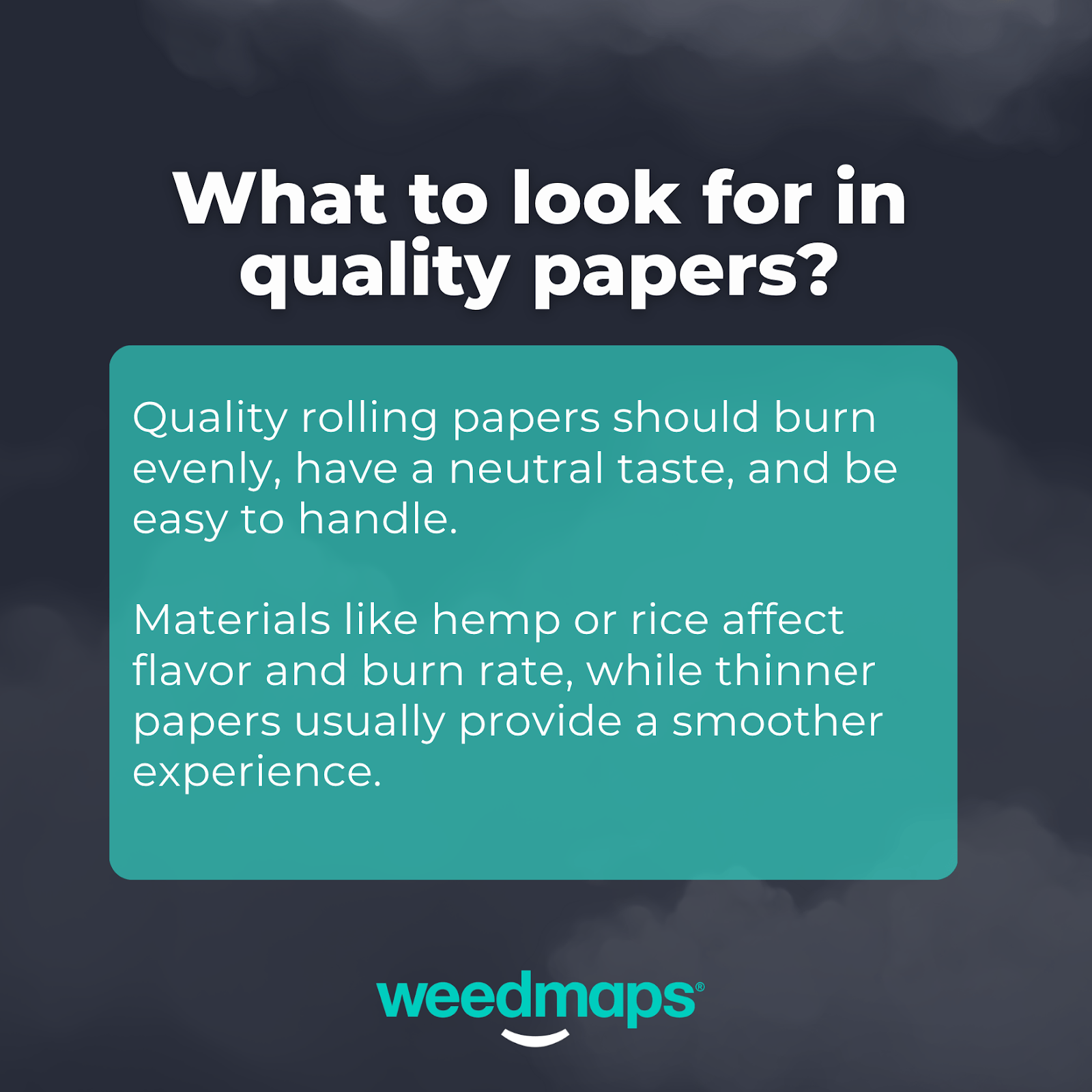
Image lightbox

How rolling papers work
Rolling papers are designed to hold ground cannabis and control combustion.
A quality paper should:
- Burn evenly without relighting
- Maintain structure while rolling
- Interfere as little as possible with flavor
The paper controls how heat moves through the joint, which directly affects burn consistency and taste.
Common types of rolling papers
Different materials affect burn rate, heat, and flavor.
Hemp papers
Hemp papers offer a balanced burn and moderate thickness.
They:
- Burn at a steady rate
- Are easier to handle due to slight texture
- Keep flavor relatively neutral
They're a reliable option for consistency and ease of use.
Rice papers
Rice papers are thinner and burn more slowly.
They:
- Burn at a lower temperature
- Preserve more terpene flavor
- Produce less ash
Because they're thin, they require more control when rolling but deliver a cleaner-tasting result.
Wood pulp papers
Wood pulp papers are thicker and more durable.
They:
- Burn hotter and faster
- Are easier to roll
- Introduce more paper flavor
This makes them more forgiving, but less ideal if flavor is a priority.
Thickness and burn rate

Image lightbox

Paper thickness directly controls combustion. Thinner papers burn more slowly and at lower temperatures, which helps preserve flavor and prevents overheating the flower. Thicker papers burn hotter and faster, which can lead to harsher smoke and less flavor clarity.
Choosing thickness is essentially choosing between ease of use and flavor quality.
The role of the gum line
The gum line plays a key role in how a joint burns. A clean, even seal keeps airflow consistent across the joint. If the seal is uneven or poorly aligned, one side may burn faster, leading to canoeing.
A well-placed gum line helps maintain structure and supports an even burn from start to finish.
Bleached vs unbleached papers

Image lightbox

Rolling papers can be bleached or unbleached, which affects both appearance and taste.
Unbleached papers tend to have a more neutral flavor, while bleached papers are processed for appearance and may introduce slight paper taste.
The difference is subtle, but noticeable depending on preference.
Size and format options
Rolling papers come in different sizes depending on how you prefer to roll. Smaller papers work well for shorter sessions, while larger papers allow for more material or sharing.
Pre-rolled cones remove the need to roll entirely, but trade off some control over airflow and density.
What to look for in a quality paper
A quality rolling paper should deliver consistency from start to finish.
- Even burn — prevents canoeing
- Neutral taste — preserves flavor
- Proper thickness — controls heat and burn rate
- Clean seal — supports airflow and structure
These factors work together to determine how the joint performs.
The bottom line

Rolling papers directly influence burn, flavor, and overall experience. Material, thickness, and seal all play a role in how a joint performs.
Choosing the right paper makes the difference between an uneven, harsh burn and a smooth, consistent session.
Find rolling papers and cannabis products near you on Weedmaps.