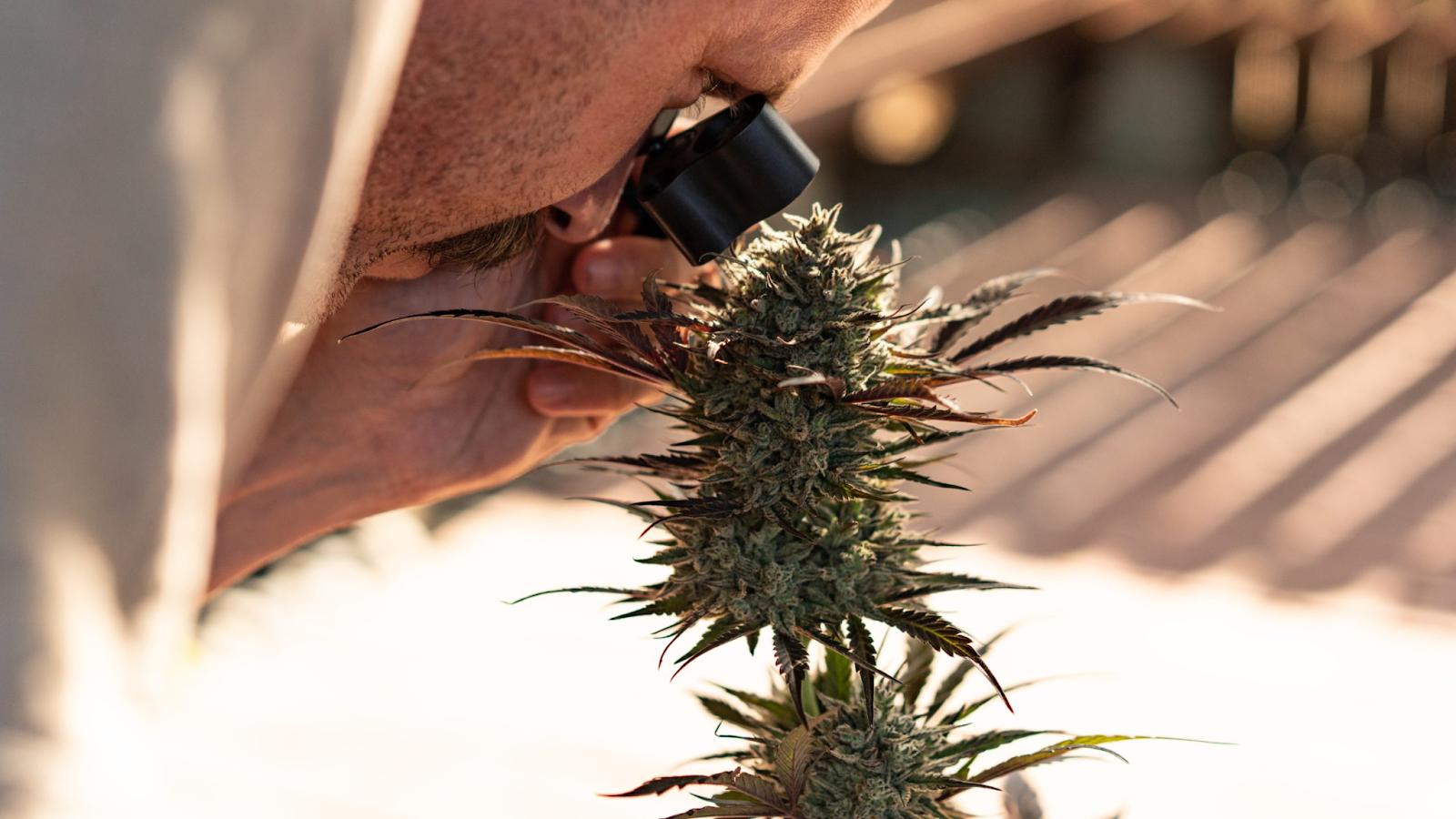
Popcorn buds form because cannabis plants prioritize light, hormones, and energy at the top of the canopy. The upper canopy wins the competition for resources, while lower branches get outpaced, receiving less light, less energy, and less development. This limits growth and produces smaller, less dense buds.
 Photo by: Gina Coleman/Weedmaps
Image lightbox

This isn't a quality flaw; it's the natural outcome of how the plant allocates growth — light and energy concentrate up top, and everything below develops with what's left.
What are popcorn buds?
 Photo by: Gina Coleman/Weedmaps
Image lightbox

Popcorn buds are smaller flowers that develop on lower or interior parts of the plant where light exposure is limited.
They typically show:
- Reduced size
- Lower density
- Less calyx stacking
These differences come from constrained growth conditions, not inferior chemistry. The chemical profile can remain comparable, even as structure declines.
Apical dominance and growth priority
Cannabis growth follows apical dominance, where the top of the plant controls resource allocation.
The apical meristem produces hormones that suppress lateral growth and direct energy upward. This concentrates development in the main colas, where light exposure is strongest.
Lower branches don't stop growing; they just can't keep up. With less light and weaker hormonal influence, cell expansion slows and bud formation falls off.
That's why the top stacks knuckled buds and the lower nugs remain small.
Light penetration and canopy structure

Image lightbox

Light intensity drops sharply below the canopy.
Upper buds receive direct, high-energy light that drives photosynthesis and biomass production. Lower branches sit in partial shade, where light levels are insufficient to support full development.
Reduced light limits energy availability, which directly restricts bud size and density.
Canopy structure and plant training determine how much of that light reaches the lower section: spread the canopy, and lower buds improve; crowd it, and they fall off fast.
Energy allocation and bud development
Cannabis directs energy toward the most productive growth sites.
Top colas act as dominant sinks, pulling carbohydrates and nutrients toward them. Lower buds compete for remaining resources and develop under limited supply.
This results in:
- Smaller calyx formation
- Reduced density
- Slower maturation
The plant invests its resources where it gets the best return on investment; the tops get fed, lower branches get what's left.
Density, structure, and resin production
 Photo by: Gina Coleman/Weedmaps
Image lightbox

Bud size and bud quality are separate variables.
Popcorn buds often have looser structure and less visual density because cell expansion is limited. However, trichome production still occurs across the plant.
Resin development depends on genetics and environmental conditions, not just position on the plant. Lower buds are often less mature, but they can still carry meaningful cannabinoid and terpene content.
Size drops first. Potency doesn't always follow.
Why popcorn buds are often undervalued
Market grading prioritizes size and appearance.
Larger, denser buds signal strong growth and command higher prices. Popcorn buds fall into lower tiers because they lack visual uniformity, not because they lack potency.
The discount reflects how they look, not always how they perform.
When popcorn buds perform well
Popcorn buds perform well when structure is irrelevant.
Once ground, differences in size and density disappear. What remains is cannabinoid content and burn behavior.
They are best suited for:
- Joints and bowls
- Infusions and edibles
- Pre-roll production
If it's getting broken down anyway, size stops mattering.
When larger buds matter more
Larger buds perform better when structure influences the experience.
They retain moisture more effectively, maintain integrity during handling, and burn more consistently when used whole.
For flower-focused use, these factors become more noticeable.
Popcorn buds: less bulk, same potential

Popcorn buds form because cannabis prioritizes light, hormones, and energy at the top of the plant. Lower branches develop under limited light and reduced signaling, which restricts size and density but does not eliminate cannabinoid content.
They're smaller because of position, not because they're weaker.
Judge them by use, not appearance. If you're grinding it, popcorn holds up. If you care about structure, larger buds earn their place.
Find cannabis flower and products near you.