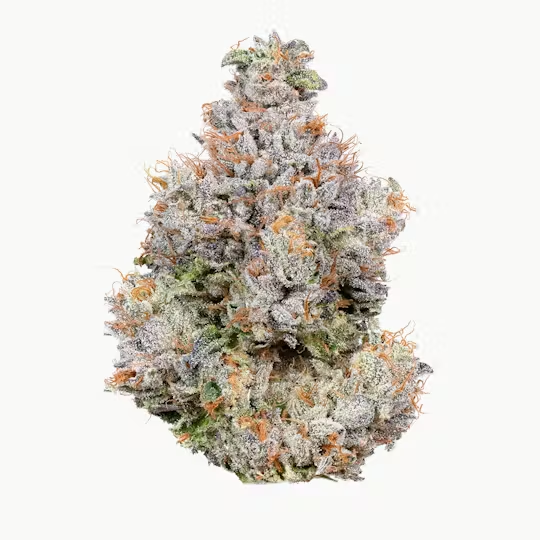
Every cannabis plant carries a genetic blueprint, but genetics alone don't decide what ends up in the jar. Understanding the difference between genotype and phenotype helps explain why some cuts become legends while others never leave the grow room.

Image lightbox

Walk into two different dispensaries and ask for Gelato, and you might walk out with two different plants. Same name on the jar. Same lineage on paper. But the smell, the bud structure, even how it hits can be noticeably different depending on where you bought it.
That's not a labeling mistake. It's phenotype at work, and once you understand how it functions, strain shopping starts to make a lot more sense.
Genotype is the blueprint
 Photo by: Gina Coleman/Weedmaps
Image lightbox

Genotype is the genetic code a plant inherits from its parents — the fixed instructions written into its DNA. When breeders cross two cannabis plants, they're working at the genotype level, selecting for traits they want to lock into future generations: a particular terpene tendency, a growth pattern, a cannabinoid ratio.
That genetic code doesn't change once a seed germinates or a clone roots. A clone is a genetic copy of its mother plant, carrying the exact same genotype forward. In that sense, genotype is the part of the equation that stays constant. It's the blueprint, not the finished building.
Phenotype is what actually grows
Phenotype is what happens when that genetic blueprint meets the real world. Light spectrum and intensity, nutrient timing, temperature swings, humidity, training techniques like topping or low-stress training, even how the final product is dried and cured — all of it shapes how the genetic code gets expressed in the finished plant.
Two cuttings from the exact same mother plant, grown under different conditions, can finish with different terpene profiles, different bag appeal, and a different overall experience. The genotype didn't change. The expression of it did.
This is why a strain grown by two different cultivators can smell and feel like two different products, even when both growers are working from genuinely identical genetics.
What this means when you're shopping
 Photo by: Gina Coleman/Weedmaps
Image lightbox

A strain name tells you about lineage. It doesn't promise a fixed terpene profile, a specific potency, or a guaranteed experience every time. Variation between batches, and especially between cultivators, is normal — it's not automatically a sign that something's wrong or that a product is mislabeled.
That doesn't mean strain names are meaningless. Lineage still tells you a lot about what to expect in general terms — growth habits, typical effects, common terpene tendencies. It just means the name is a starting point, not a guarantee.
Why cultivators chase specific phenotypes
When breeders run a batch of seeds from a cross, that single genotype can express itself slightly differently in every individual plant. Cultivators will often grow out dozens of seeds from the same cross, then select the one plant — the one phenotype — that best expresses the qualities they're after: standout terpenes, strong structure, ideal yield.
That selected plant becomes a "cut," and from there, it gets propagated as clones rather than grown from seed again. This is why a dispensary's house cut of a popular strain can develop a reputation of its own. It's not just "Gelato" — it's a specific phenotype of Gelato that one cultivator selected and has kept alive through cloning.
What to actually look for on the label
 Photo by: Gina Coleman/Weedmaps
If consistency matters to you, the strain name alone won't get you there. A few things will tell you more:
Lab results listing actual terpene percentages, not just THC content, give you a more accurate read on what the experience will likely be like. The grower or cultivator name on the label matters too — if you've had a phenotype you liked from a specific cultivator, that name is often a better predictor of consistency than the strain name by itself. And if a budtender or menu lists a specific cut name rather than just the strain, that's usually a sign you're getting a known, selected phenotype rather than an unverified batch.
Strain names get you in the right neighborhood. Lab data and grower reputation get you to the actual house.
Curious how a specific phenotype stacks up? Browse strains on Weedmaps to compare effects, lab data, and consumer notes side by side.