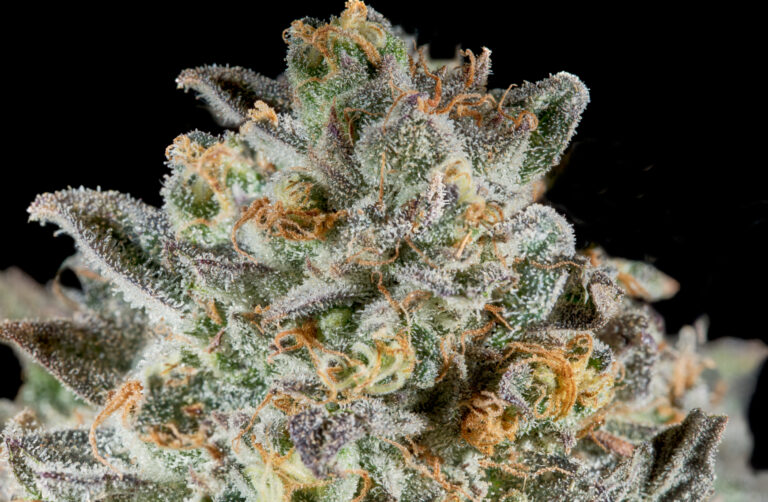
Same smell, same effect, same bag appeal, different name on the label. That's not a coincidence, and it's not always a rebrand either. It's what happens when an industry runs on breeder records and word of mouth instead of a real naming authority.
 Photo by: Gina Coleman/Weedmaps
Image lightbox

You bought Gorilla Snacks last month. This week the shop two blocks over is selling something with a strikingly similar smell, effect, and bag appeal, under a completely different name, with a different backstory printed on the label. Same genetics, a close relative, or pure coincidence — the label alone won't tell you which.
That gap between what a name promises and what's actually in the jar is the real story behind cannabis naming, and it's worth understanding before your next purchase.
There's no universal registry
Wine has appellations. Beer has style guidelines enforced by real organizations. Cannabis has breeder records, seed catalogs, some state tracking systems, and scattered plant-variety protections, but nothing that functions as a single naming authority the whole industry follows. A breeder releases a cultivar under one name, a grower picks it up and selects a phenotype worth naming separately, a retailer inherits whatever a database happened to call it last. Now one lineage can carry three or four different names depending on where you're shopping.
Aggregator sites add another layer. Many rely on retailer feeds, user submissions, or previously published entries, and verification standards vary widely from one source to the next. Some do careful editorial work. Others don't. The result is the same either way: names multiply faster than verified genetics do.
Not every name difference means something shady
Before assuming a name change is a rebrand or a bait-and-switch, it's worth knowing the legitimate reasons names diverge:
- A breeder-approved alias: the same cultivar sold under a second name with the original breeder's blessing.
- A named phenotype or selected cut: a grower selects a standout expression of a strain and gives it its own name, even though it shares a lineage with the original.
- Regional shorthand: the same strain going by a nickname common to one market and a formal name elsewhere.
- Spelling drift: a name that mutates slightly as it passes through menus and databases until it looks like a separate strain.
- A cross derived from the original: a new strain bred from a popular cultivar, related but genuinely distinct.
- Two unrelated strains that independently landed on the same name: rarer, but it happens, especially with names built around a popular flavor or effect.
Some of these are worth paying attention to. Others are just how cannabis naming has always worked. The problem isn't that names vary. It's that menus rarely tell you which of these is happening.
The pattern shows up constantly in database work
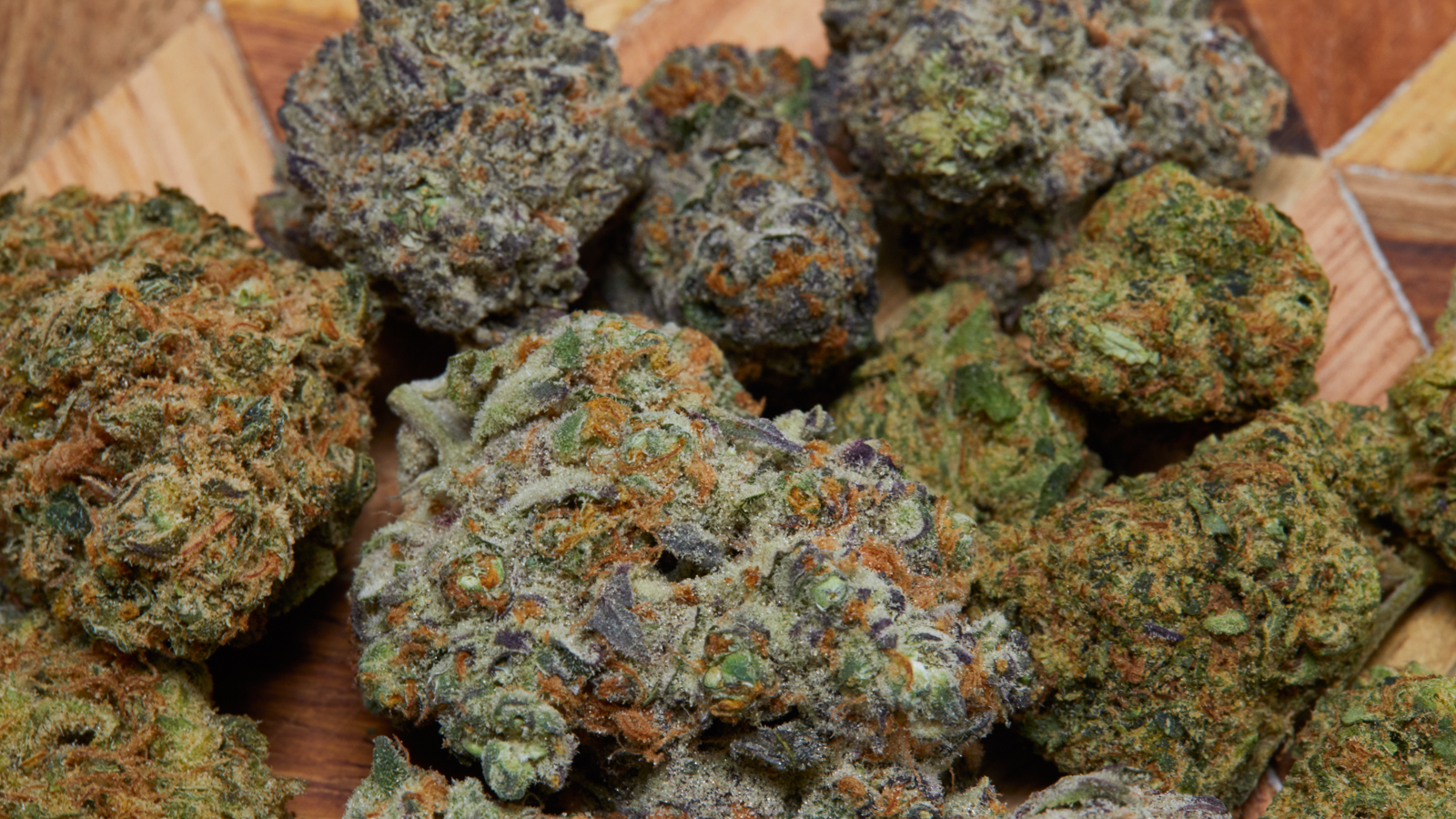
 Photo by: Gina Coleman/Weedmaps
Image lightbox

Tracing lineage back to breeder records and primary sources, instead of trusting whatever name shows up most recently, surfaces this problem fast.
Take Cannalope Kush and Cantaloupe Kush. A one-letter difference shows up across menus and databases, and depending on the source, that's either a genuine spelling variant of the same strain or two separately documented releases. It's not always obvious which without checking primary sourcing directly. That's exactly the kind of case that demands real verification instead of a guess.
Strawberry Banana and Strawnana are a cleaner example: Strawnana is commonly used as shorthand for Strawberry Banana, and treating them as the same entry rather than competing strains reflects how the name is actually used in the market. Even here, "commonly treated as an alias" is a more honest claim than "always identical," since sourcing and phenotype selection can still vary by grower.
What the confusion actually costs you
A "limited" or "exclusive" drop priced at a premium might turn out to be closely related to something sitting on a shelf two shops over for less, not because anyone lied, but because naming and pricing don't always track genetics closely. That's worth knowing before you pay extra for "new."
It cuts the other way too. You find a strain you love, look for the same name next time, and get something noticeably different, because the name got reused loosely, a different phenotype got selected, or the lineage didn't carry through cleanly. Chasing a name is less reliable than chasing a lineage.
How to buy smarter

Image lightbox

Ask for breeder and lineage, not just the strain name on the label. If nobody in the building can speak to where a strain actually comes from, treat that as useful information.
Before assuming an unfamiliar name is something brand new, check whether it traces back to a strain you already know. A lot of "new" strains are established genetics with new packaging.
Be more skeptical of names that sound built for a menu board or a social feed than names with any traceable breeding history. That's not proof of anything on its own, but it's a reasonable prompt to ask more questions.
The name on the jar is a marketing decision. The genetics behind it are the only thing that actually gets you high the way you expect. Skip the guessing and search strains and compare dispensary menus on Weedmaps, then ask your budtender for lineage before you commit to anything labeled "exclusive."