That forgotten joint in the back of your drawer may still light, but its smell, texture, and packaging reveal whether it's worth smoking—or ready for the trash.
 Photo by: Gina Coleman/Weedmaps
Image lightbox

If you're wondering how long pre-rolls last, the short answer is six to 12 months, provided they're stored properly. That said, they're at their best during the first three months, when their flavor, aroma, and potency are freshest.
Like most cannabis products, pre-rolls don't expire overnight. Instead, exposure to light, heat, air, and moisture gradually breaks down cannabinoids and terpenes, leaving you with a harsher smoke and a less flavorful experience.
The good news is that proper storage can significantly slow that process. In this guide, we'll explain how long pre-rolls stay fresh, what causes them to degrade, how to tell when a pre-roll has gone stale, and the best ways to keep your joints in peak condition.
How long do pre-rolls last?
How long a pre-roll stays fresh depends on whether it's unopened, how it's stored, and whether it's made with flower alone or infused with cannabis concentrates.
Unopened pre-rolls
An unopened pre-roll can maintain good quality for six to 12 months when stored in a cool, dark place inside its original sealed packaging. While it's still enjoyable after several months, you'll generally get the best flavor, aroma, and potency if you consume it within the first three months.
Even during storage, cannabinoids and terpenes begin to degrade slowly. Proper storage simply helps slow that process.
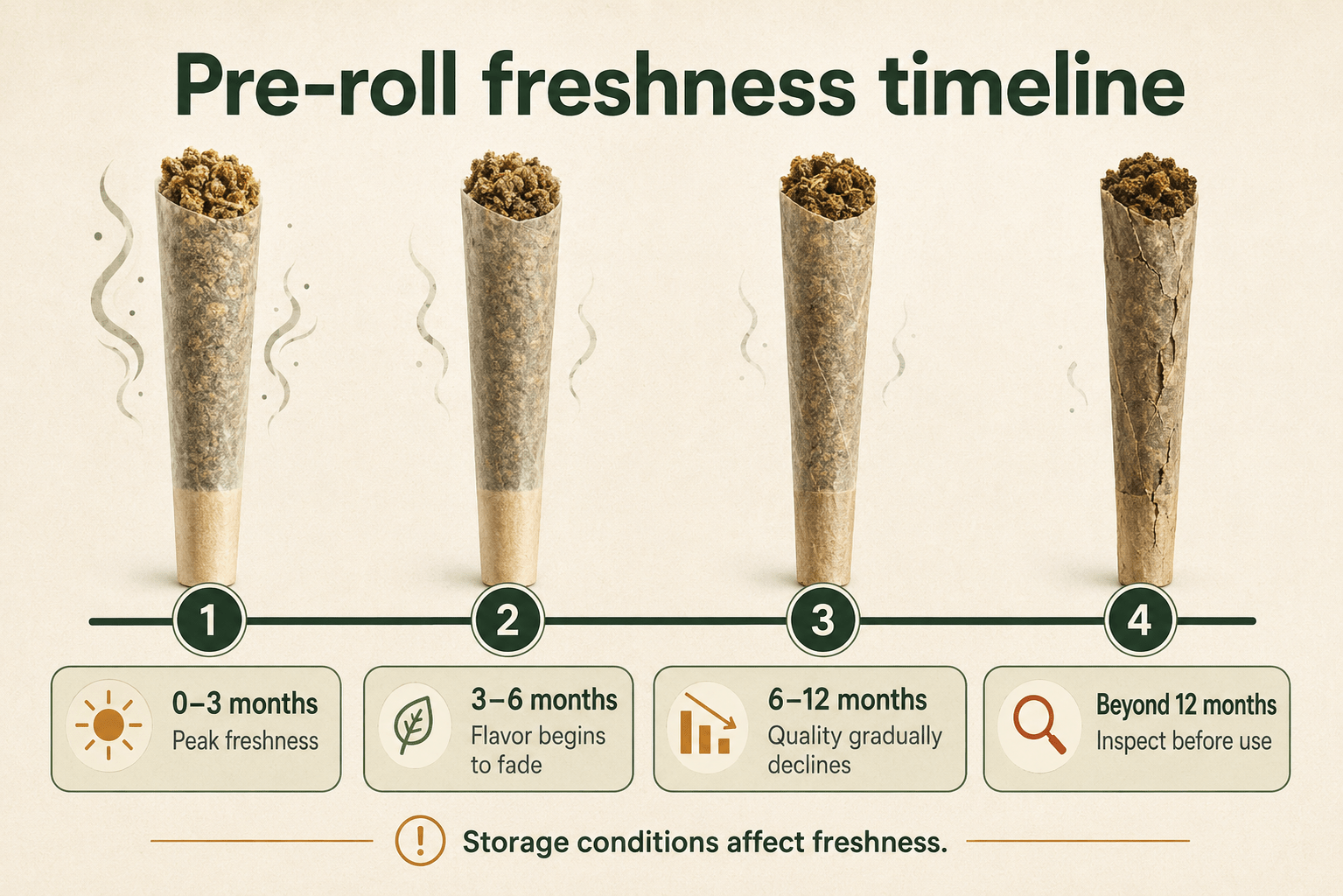
Image lightbox

Opened pre-rolls
Once you break the seal, the clock speeds up.
Exposure to oxygen allows moisture and aromatic compounds to escape, causing the flower to dry out more quickly. An opened pre-roll is best enjoyed within one to two weeks, especially if it isn't stored in an airtight container.
Half-smoked pre-rolls
A partially smoked pre-roll has the shortest shelf life.
After combustion, the remaining flower is exposed to resin, ash, and additional air, all of which accelerate degradation. For the best experience, try to finish a half-smoked pre-roll within one to two days. Storing it in a sealed doob tube or another airtight container can help preserve freshness in the meantime.
Infused vs. regular pre-rolls
Infused pre-rolls have a shorter shelf life than traditional flower pre-rolls because the concentrates they contain begin to oxidize more quickly than flower alone. In general, they're best enjoyed within three to six months of purchase.
That's becoming increasingly important as infused products continue to grow in popularity. According to industry data, infused pre-rolls accounted for 66.3% of California pre-roll sales in 2025, making proper storage more relevant than ever.

Image lightbox

Whether you're buying a standard joint or an infused pre-roll, proper storage makes the biggest difference. Keeping your pre-rolls away from heat, light, air, and excess moisture will help preserve their flavor, potency, and overall quality for as long as possible.
What makes pre-rolls go stale?
A pre-roll doesn't go stale all at once. Instead, its cannabinoids and terpenes gradually break down as they're exposed to the environment.
The biggest culprits are air, light, heat, and humidity. Together, they reduce potency, mute flavor, and can even create conditions where mold develops.

Image lightbox

Air exposure and oxidation
Every time a pre-roll is exposed to oxygen, chemical changes begin to occur.
Over time, THC oxidizes into CBN, a cannabinoid that research suggests has more sedative properties. As a result, an old pre-roll may not simply feel less potent, it may produce a different experience than it did when it was fresh.
Research published by the United Nations Office on Drugs and Crime found that THC concentrations decrease by an average of 16.6% per year when cannabis is stored at room temperature. Once a pre-roll's original seal is broken, exposure to air increases and the degradation process speeds up.

Image lightbox

Light and UV degradation
If there's one thing to avoid, it's sunlight.
A 2024 peer-reviewed study that specifically examined pre-rolled cones found that light was the biggest driver of terpene loss, more significant than either temperature or humidity. UV exposure also accelerates the breakdown of THC, reducing both flavor and potency over time.
That's why opaque tubes or other light-blocking containers do a better job of preserving freshness than leaving a pre-roll on a windowsill or countertop.
Temperature and terpene loss
Heat speeds up almost every process that makes cannabis age.
Research published in the National Library of Medicine found that higher temperatures accelerate cannabinoid degradation, while industry data suggests cannabis can lose 30–50% of its terpene content within six months if it's stored improperly.
Not all terpenes disappear at the same rate, either. Monoterpenes such as myrcene and limonene evaporate more quickly than sesquiterpenes like beta-caryophyllene, which helps explain why an older pre-roll smells flat.
For the best results, store pre-rolls somewhere between 60–70°F (15–21°C).
Humidity and mold risk
Humidity is a balancing act.
When relative humidity drops below 50%, cannabis becomes dry and brittle, making for a harsher smoke while allowing terpenes to evaporate more quickly. On the other hand, humidity above 65% creates conditions where mold can develop.
Common cannabis molds include Aspergillus and Botrytis cinerea, which is why most experts recommend storing pre-rolls at 55–62% relative humidity. Staying within that range helps preserve freshness without creating excess moisture that could compromise the product.
Getting humidity right isn't just about maintaining quality, it's also about protecting the safety of the cannabis you're planning to consume.
How to tell if your pre-roll has gone bad
A pre-roll doesn't suddenly become unusable overnight. Before you light it up, take a minute to check its smell, appearance, and texture.
The smell test
Fresh cannabis should have a strong, strain-specific aroma. Depending on the cultivar, that might be earthy, citrusy, piney, fruity, or gassy.
If your pre-roll smells like hay, dust, or has little to no aroma, it's likely lost a significant amount of its terpene content. A musty, damp, or sour smell is a much bigger concern, as it may indicate mold. If you notice any of those odors, it's best to throw the pre-roll away.
Visual inspection
Next, take a close look at the flower and rolling paper.
Watch for gray, white, or greenish fuzzy patches, which may indicate mold growth. It's important not to confuse mold with trichomes. Trichomes appear as an even, frosty coating across the flower, while mold looks patchy, fuzzy, and irregular.

Image lightbox

Also check for excessive browning, dark spots, or rolling paper that's yellowed, separating, or unusually brittle. These can all be signs that the pre-roll has lost freshness.
Texture and burn quality
A fresh pre-roll should feel slightly firm while still having a little give when gently squeezed.
If it crumbles easily or feels hollow, the flower has likely dried out. While that doesn't necessarily make it unsafe, it results in a faster, hotter burn and a harsher smoking experience.
If the flower feels damp, slimy, or unusually soft, don't smoke it. Those are strong indicators that moisture has compromised the product and mold may be present.

Image lightbox

Is it safe to smoke an old pre-roll?
It depends on why it's old.
A dry pre-roll that passes the smell and visual tests is generally safe to smoke, although it probably won't deliver the same flavor, aroma, or potency as it did when it was fresh. Expect a harsher smoke and a less enjoyable overall experience.
The real concern is mold. According to Healthline, smoking moldy cannabis can cause coughing, nausea, and vomiting, even in otherwise healthy people. Those with mold allergies may also experience sinus pain, congestion, or wheezing.
For immunocompromised individuals, the risks are more serious. The Society of Cannabis Clinicians notes that exposure to Aspergillus and other molds can lead to invasive lung infections, which is why these individuals are generally advised to avoid unprocessed cannabis products.
When in doubt, don't smoke it. If a pre-roll smells musty, shows signs of mold, or simply doesn't seem right, it's better to discard it and find fresh pre-rolls near you.
Medical disclaimer: This page is for informational purposes only and not intended as medical advice. Please consult your physician before changing any medical treatment.
How to store pre-rolls to keep them fresh
Proper storage can make the difference between a pre-roll that stays fresh for months and one that dries out after a few weeks.
Best containers for pre-roll storage
An airtight glass jar is one of the best ways to store pre-rolls. Glass doesn't absorb odors, create static, or affect the flavor of the cannabis, and a tight-fitting lid helps limit exposure to oxygen.
For individual joints, doob tubes are another excellent option. They're portable, create a secure seal, and work especially well if you're saving a half-smoked pre-roll for later.
Original dispensary packaging is fine for short-term storage, but most tubes aren't designed to be completely airtight for months at a time. For longer storage, transferring your pre-rolls to a sealed glass container is a better choice.
Avoid plastic bags whenever possible. They don't seal well, and static can pull delicate trichomes away from the flower. Metal tins without airtight seals can also allow air and moisture to get in.
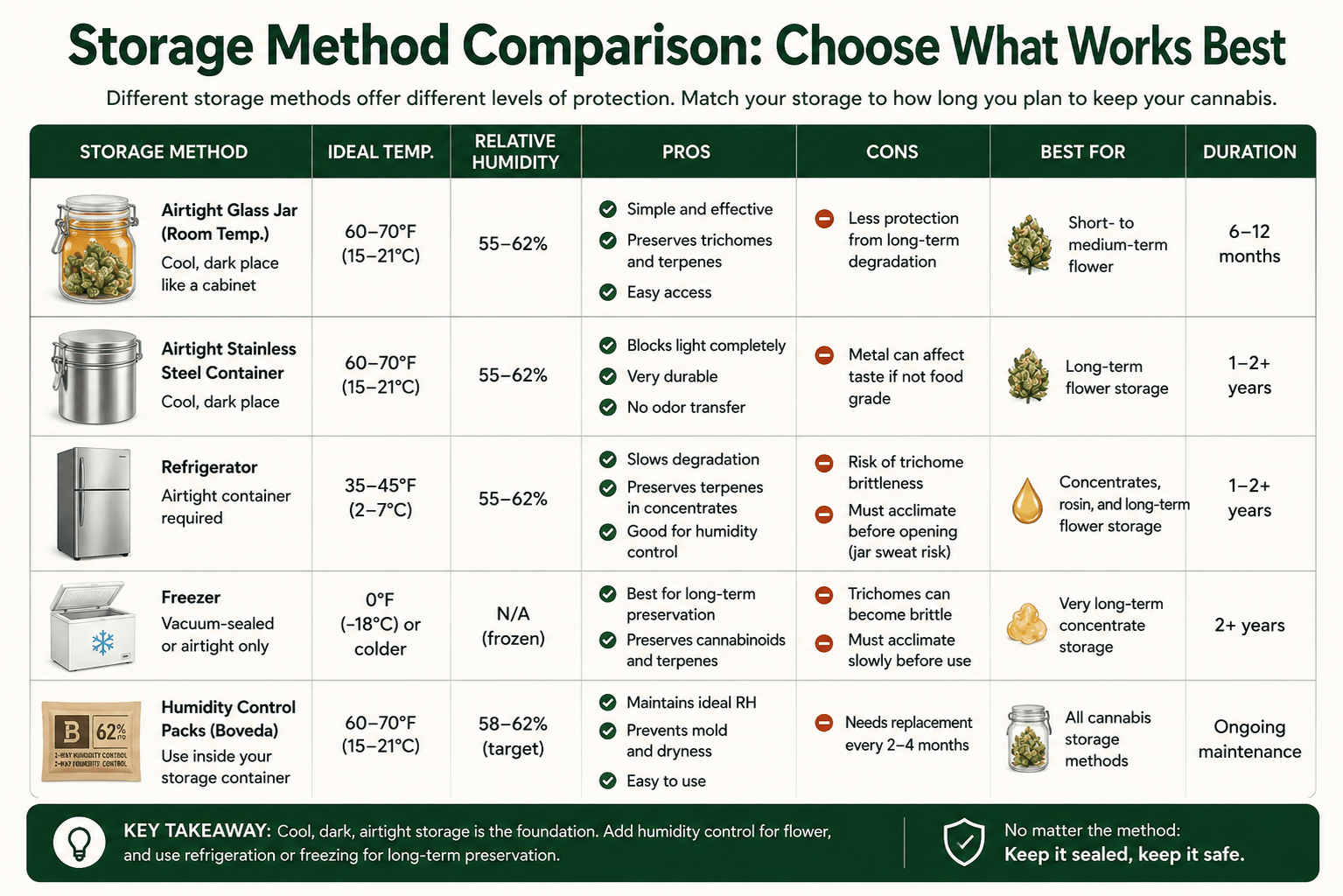
Image lightbox

Using humidity packs
Two-way humidity packs help maintain a stable environment inside your storage container by absorbing or releasing moisture as needed.
For pre-rolls, 58% relative humidity is generally the better choice because slightly drier flower burns more evenly. If you're trying to bring a dry pre-roll back to life, a 62% humidity pack is more effective.
One humidity pack is enough for most containers. Replace it every two to four months, or sooner if it becomes stiff or completely dried out.
Storage conditions that matter
Even the best container won't help if it's stored in the wrong place.
Keep pre-rolls somewhere cool, dark, and dry, ideally between 60–70°F (15–21°C). Avoid windowsills, cars, and anywhere exposed to direct sunlight or heat, since UV light and higher temperatures speed up cannabinoid and terpene degradation.
Although refrigeration and freezing can preserve cannabinoids under laboratory conditions, they're not recommended for everyday storage. Repeated temperature changes can create condensation, increasing the risk of moisture damage and mold.
Common storage mistakes
Some of the biggest storage mistakes are also the easiest to avoid.
Leaving pre-rolls in an open drawer, storing them near a sunny window, or keeping them in a hot car can shorten their shelf life considerably. Refrigerating or freezing them may also introduce unwanted moisture.
It's also a good idea to store older and newer pre-rolls separately. Mixing them in the same container can expose fresh products to excess moisture or contaminants from older ones.
How to revive a dry pre-roll
If your pre-roll has simply dried out, but doesn't show any signs of mold, you may be able to restore some of its moisture.
Place the pre-roll in a sealed glass jar with a 62% two-way humidity pack for 24 to 48 hours. While this won't restore lost terpenes or potency, it can improve the texture and make the pre-roll burn more evenly.
Avoid leaving citrus peels or other fresh produce in the container for more than a few hours. While these DIY methods add moisture quickly, they can also introduce excess humidity that encourages mold growth.
For more tips, check out our guide on how to rehydrate cannabis.
What to look for when buying fresh pre-rolls
Good storage starts before you even get home. Choosing a fresh pre-roll at the dispensary gives you a head start on preserving flavor and potency.
Start by checking the package for a packaged-on or harvest date. In general, the more recent the date, the fresher the product is likely to be.
If the packaging mentions nitrogen flushing, that's another good sign. Replacing oxygen with nitrogen during packaging helps slow oxidation and preserve cannabinoids and terpenes before the pre-roll is opened.
It's also worth asking your budtender how quickly pre-rolls sell. Dispensaries with high inventory turnover are more likely to have fresher products than those where inventory sits on the shelf for longer periods.
Finally, inspect the packaging itself. If the tube or seal appears damaged, loose, or previously opened, the product may already have been exposed to air.
Before visiting a dispensary, you can also browse pre-rolls near you on Weedmaps to compare products, read customer reviews, and check dispensary ratings.
Frequently asked questions
Do pre-rolls go bad?
Yes, but not in the same way food does. Instead of suddenly expiring, pre-rolls gradually lose potency, flavor, and aroma over time. When stored properly, they generally maintain good quality for six to 12 months, with peak freshness during the first three months.
How do you know if a pre-roll has gone bad?
Start with your senses. A musty or sour smell, fuzzy gray or white patches, a crumbly texture, or a harsh, papery taste are all signs that a pre-roll is past its prime. If you suspect mold, don't smoke it.
Is it safe to smoke an old pre-roll?
A dry, older pre-roll is generally safe if it passes the smell and visual tests, although it may be less potent and harsher to smoke. If you notice mold or an unusual odor, discard it. Immunocompromised individuals should be especially cautious with any cannabis that may be contaminated.
Do pre-rolls lose potency over time?
Yes. Research suggests THC gradually degrades during storage, with concentrations decreasing by about 16% per year at room temperature. As THC oxidizes, some of it converts into CBN, which research suggests has more sedative properties.
How do you keep pre-rolls fresh?
Store pre-rolls in an airtight glass container with a 58% relative humidity pack, and keep them somewhere cool, dark, and dry. Avoid direct sunlight, excessive heat, and refrigeration or freezing.
How long can you store a pre-roll?
With proper storage, most pre-rolls maintain good quality for six to 12 months. For the best flavor and aroma, try to enjoy them within the first three months. Infused pre-rolls are best consumed sooner, within three to six months.
Can you confuse trichomes with mold?
Yes. Healthy trichomes form an even, frosty layer across the flower, while mold appears as fuzzy, irregular patches that are often gray, white, or greenish. If you're not sure which you're seeing, it's safest to throw the pre-roll away.