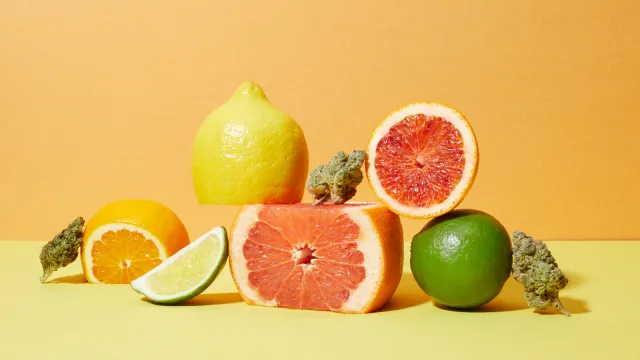
Gassy weed gets its sharp, fuel-like aroma from a combination of terpenes and volatile sulfur compounds (VSCs). Together, these naturally occurring compounds create the diesel, skunky, and chemical notes that make certain cannabis cultivars smell so loud and distinctive.
 Photo by: Gina Coleman/Weedmaps
Image lightbox

Few cannabis aromas are as recognizable as gas. Crack open the jar of the right cultivar and you'll be met with a bold mix of diesel, rubber, earth, spice, or skunk that leaves little doubt about what's inside.
For a long time, terpenes got most of the credit for that unmistakable smell. Today, we know the story is more complex. A second group of aromatic compounds helps explain why some flower has that piercing fuel-forward character while others don't.
The many layers of a gassy aroma
"Gassy" is one of cannabis' most recognizable aroma descriptors, but it doesn't describe one specific smell. It's an aroma profile made up of several pungent notes that create the unmistakable scent many consumers call "gas."
Depending on the cultivar, gassy flower may smell like:
- Diesel
- Gasoline
- Rubber
- Skunk
- Sharp chemical notes
- Earthy soil
- Black pepper
- Garlic or onion
Every fuel-forward flower has its own personality. One cultivar may lean toward diesel and citrus, while another blends earthy musk with pepper, rubber, or skunk. Those differences come from each flower's unique mix of aromatic compounds.
It's also helpful to separate "loud" from "fuel-forward." Loud flower has an aroma that jumps out of the jar and fills the room. Fuel-forward flower has a distinct diesel-like character. Some cultivars are loud without smelling like fuel, while others have a clear gas profile that unfolds more gradually.
The best gassy flower has definition as well as intensity. You may notice diesel first, followed by earthy, spicy, piney, citrus, or skunky notes as you spend more time with the flower. Those layers give the aroma depth and make quality gas easy to recognize.
The chemistry behind the fuel aroma

Image lightbox

When people describe a flower as gassy, they're smelling a combination of aromatic compounds working together. Terpenes play a major role by creating the base of the aroma profile, but no single terpene smells exactly like gasoline on its own.
Think of terpenes as the foundation. Each one contributes a different scent that helps shape the final aroma.
- Myrcene brings earthy, musky, and herbal notes that give the gassy flower its rich, dense character.
- Beta-caryophyllene adds peppery, spicy, and woody aromas that make the profile feel sharper and more pronounced.
- Limonene contributes bright citrus notes that can lift heavier aromas and give some fuel-forward cultivars a citrus-diesel edge.
- Humulene introduces subtle earthy, woody, and hoppy qualities that add depth and complexity.
- Pinene delivers crisp pine and forest aromas that create a cleaner, more refreshing finish in some gassy cultivars.
The balance of these terpenes matters more than any single one. A flower dominated by myrcene and beta-caryophyllene will smell heavier and earthier, while one with more limonene or pinene can come across as brighter and sharper.
Even then, terpenes don't tell the whole story. Two flowers with similar terpene profiles can smell surprisingly different. That's because another group of aromatic compounds helps create the piercing fuel note that gives gassy weed its signature character.
Sulfur compounds: the secret behind the smell
Volatile sulfur compounds (VSCs) are another group of naturally occurring aromatic molecules that play a major role in the sharp, fuel-forward aroma found in some cannabis cultivars. These same types of compounds are also responsible for the pungent smell of garlic, onions, and skunk spray, where even tiny amounts make a big impression.
The same is true for gassy flower. Humans can detect certain sulfur compounds at incredibly low concentrations, far below the levels needed to notice many terpenes. As a result, trace amounts of VSCs can dramatically influence aroma, creating the diesel, skunky, or chemical notes that define fuel-forward cultivars.
One VSC, 3-methyl-2-butene-1-thiol (321MBT), has been identified as a key contributor to cannabis' signature skunky and fuel-like aroma. While terpenes provide much of the aromatic foundation, sulfur compounds add the sharp, unmistakable punch associated with true gas.
Why THC doesn't make weed smell gassy
It's easy to assume that a flower with a strong, fuel-forward aroma must also be high in THC. After all, many loud cultivars are also potent. But those two qualities come from different parts of the plant.
THC reflects a flower's cannabinoid content, while its aroma comes from the compounds responsible for scent. That's why a flower testing above 30% THC can smell surprisingly mild, while another testing closer to 20% delivers a bold, fuel-forward aroma.
If you're looking for truly gassy flower, treat THC as one piece of the puzzle. Freshness, aroma, and a well-preserved terpene profile tell you far more about what you'll smell when you open the jar.
Keeping the gas alive: storing terpene-rich flower

Image lightbox

You've found a batch of flower with the loud, fuel-forward aroma you're after. The next step is preserving it. Many of the compounds responsible for cannabis aroma are highly volatile, meaning they gradually dissipate when exposed to air, heat, light, and changing humidity.
For everyday storage, keep flower in an airtight glass jar in a cool, dark place. Glass helps preserve aroma without absorbing odors, and limiting exposure to oxygen slows the breakdown of the terpenes and sulfur compounds that give gassy flower its distinctive character.
Humidity also plays an important role. Flower that's too dry loses aromatic compounds more quickly, while excess moisture creates conditions that can encourage mold. A humidity control pack can help maintain a stable environment if you plan to store flower for more than a few weeks.
Every time you open the jar, fresh oxygen enters and aromatic compounds escape. If you keep several cultivars on hand, storing each one in its own container and opening it only when needed helps preserve its unique aroma profile.
For most people, a cool, dark cupboard is the best place to store flower. Refrigeration and freezing can introduce moisture as the flower returns to room temperature, which can affect both texture and aroma. An airtight glass jar kept away from heat and light does the best job of preserving those distinctive fuel notes.
The bottom line

A gassy aroma is the result of cannabis chemistry working together. Terpenes create the foundation, volatile sulfur compounds add the sharp fuel notes, and freshness helps preserve the full experience. That's why the best gassy flower delivers more than intensity. It offers a layered, distinctive aroma that stands out from the moment you open the jar.
Browse fuel-forward cultivars on Weedmaps to find products available for pickup or delivery near you.