
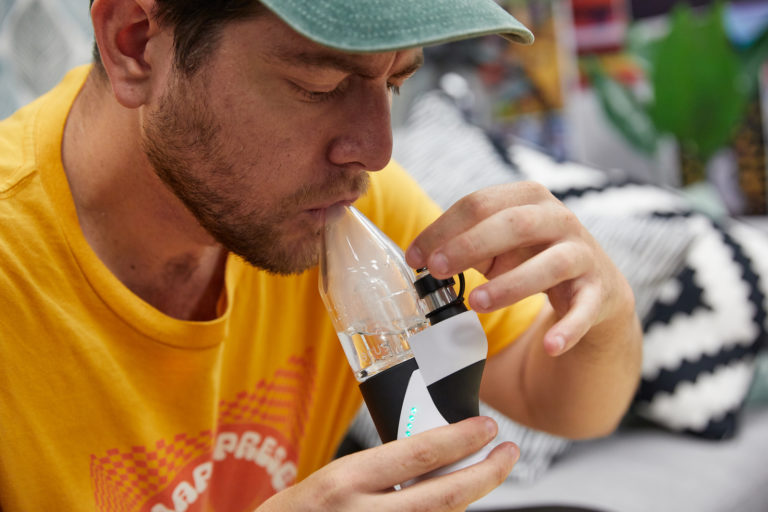
THC percentages look precise, but one lab result cannot perfectly represent an entire batch. Sampling differences, lab methods, storage conditions, and terpene loss all affect how strong cannabis actually feels.
 Photo by: Gina Coleman/Weedmaps
Image lightbox

People scan the label, find the highest THC percentage, and assume that's automatically the strongest option in the case. But THC percentages are way messier than they look.
That number comes from a tiny sample being used to represent an entire production batch. Then, different labs use slightly different testing methods, calculations, and preparation standards to measure potency. After testing, the product itself can keep changing as oxygen, heat, and time slowly reshape the chemistry.
So the number on the label is real. It's just not as absolute as people think.
That's why two concentrates with nearly identical THC percentages can still feel completely different once terpene retention, oxidation, freshness, and cannabinoid balance enter the equation.
Once you understand how potency testing really works, THC percentages start looking less like exact scores and more like estimates with context behind them.
Why THC percentages are harder to measure than they look
Cannabis is not chemically uniform.
Even inside the same production run, cannabinoid distribution can vary depending on how the extract settled, mixed, cooled, or was portioned before sampling. The lab only tests a small amount of material, but that result gets stretched across every jar tied to the batch.
That's where the first accuracy problem starts.
If the sampled portion contains slightly more cannabinoid-dense material than the rest of the batch, the reported THC percentage trends higher than what many consumers actually experience across normal servings. This happens with flower too, but concentrates create their own version of the problem.
One area of the jar may contain a slightly different cannabinoid concentration than another depending on how the extract stabilized after processing. If the sample gets pulled from a particularly potent section, the final label reflects that spot more than the entire jar itself.
That's why THC percentages should always be treated as representative estimates instead of perfect measurements.
Why different labs can report different THC numbers

Image lightbox

Even identical cannabis samples can produce different THC percentages depending on the lab running the test.
Part of the reason comes down to methodology.
Some labs focus on delta-9 THC alone. Others calculate “total THC,” which includes THCA converted into potential THC using a standardized formula. That one calculation difference alone can noticeably shift the headline potency number consumers see on packaging.
Preparation matters too. Different extraction solvents, calibration standards, testing equipment, and instrument settings all influence how cannabinoids get quantified during analysis.
Small procedural differences can create slightly different final potency readings even when the starting material is technically the same. That's why a concentrate tested at one lab may not produce the exact same THC percentage at another lab.
The chemistry didn't necessarily change. The measurement system did.
Why THC percentages can drift after testing
The THC number printed on packaging is basically a snapshot from testing day. The problem is that cannabis chemistry keeps evolving after the sample leaves the lab.
Once concentrates get exposed to oxygen, warmth, and repeated handling, cannabinoids and terpenes slowly begin degrading over time. THC gradually oxidizes into CBN over time, while volatile terpenes can evaporate or destabilize even faster. This changes how the product feels in real use.
A concentrate stored improperly may still technically test “high THC,” but the experience can feel flatter, duller, or less expressive because the terpene profile degraded after testing.
Light speeds the process up even faster. UV exposure destabilizes cannabinoids directly while heat accelerates nearly every degradation reaction happening inside the jar.
That's why two jars with the exact same original THC percentage can perform very differently weeks later depending on storage conditions.
Why THC percentage alone cannot predict the full experience

Image lightbox

THC is important, but it is not the entire profile. Research suggests cannabinoids and terpenes may influence how cannabis effects present themselves, even when THC percentages look similar on paper.
Two concentrates with identical THC percentages can still feel dramatically different depending on terpene retention, minor cannabinoid content, and overall freshness. This is where “high THC equals stronger experience” starts breaking down.
A terpene-rich extract with slightly lower THC feels more dynamic and expressive than a terpene-thin extract chasing extreme potency numbers alone.
One concentrate smells loud, distinct, and strain-specific. Another smells muted despite carrying a bigger THC percentage on paper. In practice, the louder terpene profile creates the more memorable session.
Why storage changes real-world potency
Storage conditions quietly affect potency more than most people realize.
Heat softens extracts and accelerates cannabinoid degradation. Oxygen exposure keeps oxidation reactions moving. Light destabilizes cannabinoids and weakens terpene preservation over time. The result is gradual potency drift after testing.
You may notice: the flavor fading faster, the onset feeling less sharp, or the overall profile becoming flatter and less nuanced than when the concentrate was first packaged. This is one reason older concentrates sometimes feel weaker despite carrying strong THC numbers on the label.
The THC percentage may not have collapsed dramatically yet, but the surrounding chemistry already changed enough to reshape the experience.
Why concentrates can feel more consistent than flower

Image lightbox

Concentrates create more repeatable dosing because cannabinoids are distributed more evenly than they are in raw flower.
With flower, resin production varies naturally across the plant. Some sections contain denser trichome coverage than others. Many concentrate formats partially smooth out that variation because cannabinoids become concentrated into a more chemically consistent extract during processing.
That consistency helps small portions feel more predictable session to session.
A rice grain-sized dab from one part of the jar behaves more similarly to the next portion compared to sampling random sections of whole flower.
But consistency still depends on stability. If the concentrate oxidizes, separates, or loses terpene integrity during storage, even a highly potent extract can start feeling noticeably different over time.
Why live resin and rosin feel more terpene-forward
Live resin and rosin both became popular partly because they preserve terpene expression better than many heavily processed extracts.
Live resin starts with fresh frozen cannabis instead of cured material. That helps preserve more of the plant's original volatile compounds before extraction even begins.
Rosin approaches the problem differently.
Instead of using hydrocarbon solvents, rosin relies on heat and pressure to separate cannabinoids and terpenes mechanically. When handled carefully, that process can preserve strong terpene expression while avoiding some solvent-related processing steps entirely.
Neither style automatically guarantees “better” potency. But both create fuller terpene profiles that make the experience feel more expressive and strain-specific compared to extracts focused almost entirely on maximizing THC percentage alone.
How to sanity-check THC percentages while shopping
The smartest way to read THC labels is treating them as one signal instead of the whole decision.
Start by checking whether the batch number on the package matches the certificate of analysis tied to that exact product. If the IDs do not match, the THC percentage becomes far less meaningful immediately.
Then look beyond THC alone. Fresh packaging dates, strong terpene percentages, stable storage, and verified lab results tell you more about how the product will actually perform than chasing the highest potency number in the room.
You can spot the difference quickly.
A terpene-rich concentrate with a strong aroma profile and clean lab transparency predicts a better real-world session than a dry, muted extract leaning entirely on a giant THC percentage for marketing.
The chemistry matters more than the flex.
The chemistry matters more than the flex

THC percentages are useful, but they are not absolute measurements of how strong cannabis will feel.
Sampling variation, lab methods, storage conditions, oxidation, terpene loss, and cannabinoid balance all shape the final experience after testing happens. That's why two products with nearly identical THC percentages can still land completely differently once consumed.
The smartest shoppers treat THC like one piece of a bigger chemistry picture instead of the only thing worth reading on the label.
Find lab-tested concentrates, live resin carts, and terpene-rich flower near you on Weedmaps.
