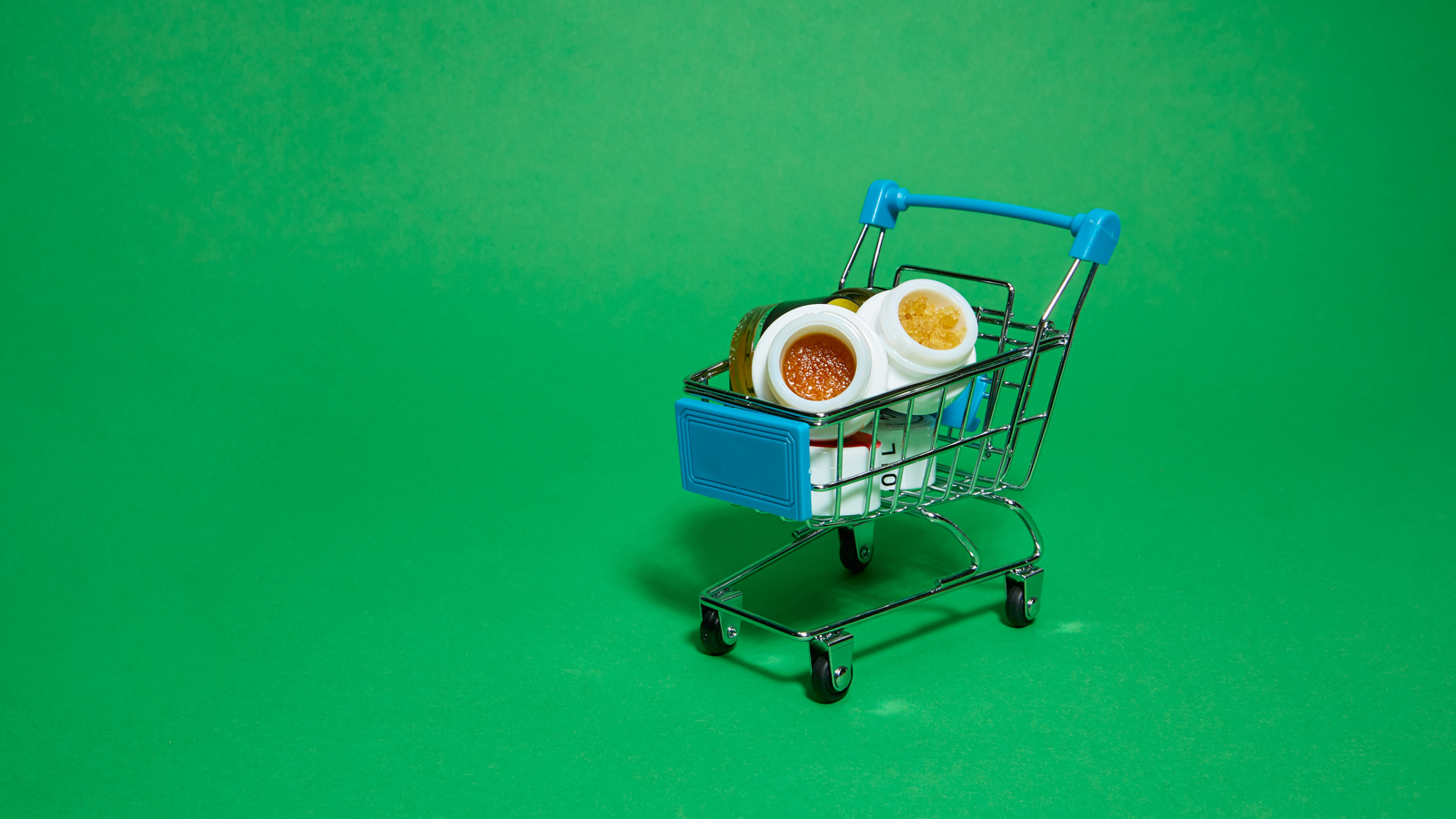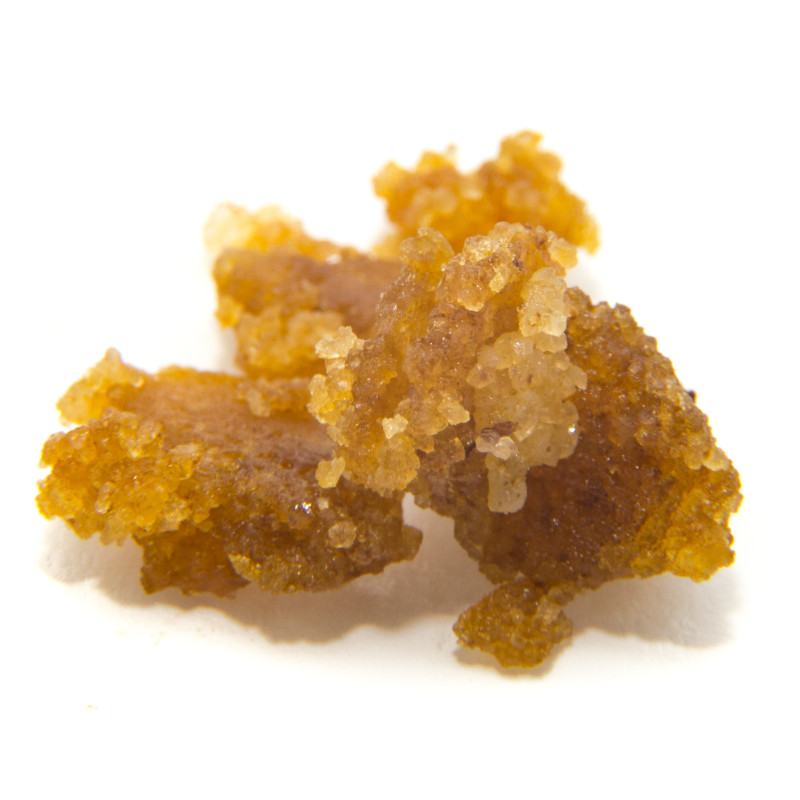
Sugar forms through crystallization. As it settles, nucleation causes cannabinoids to separate from the terpene-rich solution and form crystals. That process gives sugar its grainy texture and shapes how stable and consistent it feels.
 Photo by: Gina Coleman/Weedmaps
Image lightbox

Sugar doesn't turn grainy by accident. That texture comes from how crystals form and grow inside the extract.
Nucleation is the moment that process starts — when THCA in the terpene-rich solution reaches a supersaturated state and begins locking into solid form.
From there, structure takes over, shaping how sugar looks, feels, and holds up over time.
How sugar forms: nucleation in action
Inside sugar, THCA exists in solution with terpenes — suspended in a supersaturated state where the concentration is high enough that any disruption can trigger crystallization.
When nucleation begins, small clusters of THCA molecules come together and form the first stable crystal point.
Once that point exists, growth follows. More THCA attachs, the crystal expands outward, and the surrounding terpenes remain in a fluid layer around it.
What you're looking at is a split system: solid THCA crystals and a liquid terpene phase. That separation is what gives sugar its grainy, wet texture — and why no two jars feel exactly the same.
How crystal structure shows up in the jar
Crystal formation isn't just visual—it directly controls how sugar behaves.
- Texture: Smaller crystals feel smoother and more uniform. Larger crystals create a chunkier, more uneven consistency.
- Stability: Even crystal structure holds its shape. Irregular growth can shift over time, changing how the extract sits in the jar.
- Performance in the dab: Consistent structure melts more evenly, so vapor builds steadily instead of spiking or stalling.
Why some sugar changes over time
Sugar isn't static. If the system hasn't fully stabilized, THCA crystals can continue to grow or reorganize inside the jar. That's why some extracts get grainier, separate further, or shift in texture after sitting.
It's crystallization finishing what it started — and it doesn't stop until the system reaches equilibrium.
What it means for the dab
Crystal size, terpene distribution, and how far crystallization has progressed all affect how sugar melts. A jar that's still actively separating will behave differently under heat than one that's fully stabilized — less even melt, less consistent vapor, more variation pull to pull. Sugar that's reached equilibrium holds its texture in the jar and delivers a more predictable dab from start to finish.
Dialing in sugar consistency
Consistency comes down to control: how nucleation starts, how crystals grow, and how the terpene phase interacts with that structure. When that balance is right, sugar stays stable, texture holds, and the melt stays predictable from one dab to the next.
When it's not, you get uneven texture, shifting consistency, and less reliable performance.
Dial it in: where sugar texture actually comes from

Sugar consistency isn't random — it's the result of crystallization happening in real time. Nucleation sets the foundation. Crystal growth defines the structure. The terpene phase holds everything together.
Dial those in, and texture, stability, and melt all follow. Find sugar available for pickup or delivery near you on Weedmaps.