 Photo by: Gina Coleman/Weedmaps
Image lightbox

CBN gummies are marketed for sleep, but research shows a more nuanced picture. Early studies suggest CBN may reduce nighttime awakenings, though it has not been proven to treat insomnia or dramatically speed sleep onset. Here's what science actually supports, and what remains uncertain.
Image lightbox
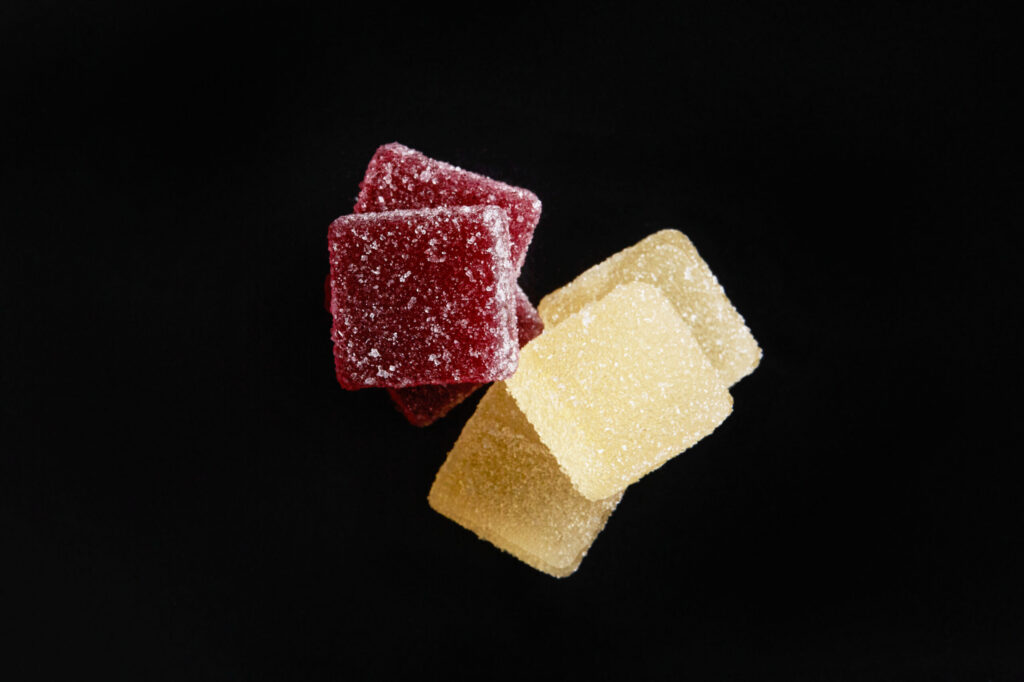
CBN gummies have quickly become a popular addition to nighttime routines. Walk into a dispensary and you'll see them positioned as gentle sleep aids, often marketed as calming, non-intoxicating, and ideal for rest.
But do they actually make you sleepy? The honest answer is: possibly, but not in the way most labels suggest.
Research on cannabinol (CBN) is still developing. Some early human trials indicate it may help reduce nighttime awakenings. What it has not definitively shown is faster sleep onset or guaranteed sedation. Understanding that distinction changes how you evaluate these products.
Let's unpack what we know.
What CBN is, and how it differs from THC and CBD
CBN (cannabinol) is a minor cannabinoid that forms when THC ages and oxidizes. Because it originates from THC degradation, it shares structural similarities, but its effects are meaningfully different.
Unlike THC:
- CBN has much weaker binding affinity at CB1 receptors
- It does not produce strong psychoactive effects
- It is generally described as non-intoxicating at typical edible doses
Compared to CBD:
- CBN has far less clinical research behind it
- It appears to interact more directly with CB1 receptors than CBD
- It is more often associated with sedation in consumer products
That last point is where much of the marketing focus lands, but the science is more restrained.
What the research actually says about CBN and sleep
The most frequently cited study linking CBN to sleep dates back to the 1970s. In that early research, CBN alone did not produce strong sedative effects. Drowsiness was observed primarily when CBN was combined with THC.
That finding matters. It suggests that some historical associations between “old cannabis” and sleepiness may have involved residual THC, not CBN acting independently.
More recent human research paints a clearer, though still incomplete, picture. A 2023 randomized clinical trial examining 20 mg CBN found:
- Reduced nighttime awakenings compared to placebo
- No significant improvement in time to fall asleep
- No meaningful increase in next-day impairment at studied doses
In other words, CBN may help some people stay asleep, but evidence that it helps you fall asleep faster remains limited.
That's an important distinction. Supporting sleep continuity is different from acting as a sedative.
How CBN interacts with the endocannabinoid system
CBN interacts with the body's endocannabinoid system, particularly CB1 receptors in the central nervous system. However, it binds at significantly lower potency than THC, often described as roughly one-tenth as active at CB1 receptors.
This lower activity likely explains two things:
- Why CBN does not feel intoxicating at typical doses
- Why its sedative effects, if present, are generally subtle
Rather than “knocking you out,” CBN appears to modulate signaling in ways that may promote relaxation and reduce nighttime disturbances. The effect, when it occurs, is usually described as gradual and calming, not abrupt.
Individual response varies widely. Metabolism, body composition, prior cannabis exposure, and overall sleep health all influence outcomes.
Why CBN gummies are associated with sleepiness
So if the science is still developing, why are CBN gummies so closely linked to sleep? There are three main reasons:
1. Historical association with aged cannabis: Older cannabis flower contains higher levels of CBN due to THC degradation. Many consumers anecdotally associate aged cannabis with heavier, sleepier effects.
2. Edible timing naturally aligns with bedtime: Because gummies take 30 minutes to 2 hours to take effect, they are commonly consumed before bed. That reinforces the sleep connection.
3. Formulations often combine cannabinoids: Some products include small amounts of THC or CBD alongside CBN.
These combinations may influence the overall effect profile. It's important to note that many commercial sleep gummies rely on the broader calming properties of cannabinoids rather than a single compound acting alone.

What dose of CBN is typically used for sleep?
Most consumer CBN gummies fall in the 5–20 mg range per serving.
In clinical research:
- 20 mg has been studied in controlled human trials
- Higher doses (such as 30 mg or more) are under investigation
Starting low is generally recommended. Higher doses may increase the likelihood of next-day grogginess, which some users report when exceeding their optimal range.
As with all edibles, onset time varies:
- 30 minutes to 2 hours is typical
- Effects may last 4–8 hours
Taking additional gummies too quickly is one of the most common mistakes. Allow adequate time before reassessing.
Potential side effects and safety considerations
CBN appears to have a relatively mild side effect profile at typical doses, but that does not mean it is risk-free. Reported considerations include:
- Next-day grogginess at higher doses
- Possible liver enzyme interactions (CBN is metabolized via CYP pathways)
- Limited long-term research data
If you take prescription medications, especially sedatives, antidepressants, or blood thinners, consult a healthcare provider before adding cannabinoids to your routine. CBN is not a clinically approved insomnia treatment. It should be approached as a wellness product with emerging research, not a guaranteed solution.
So, do CBN gummies make you sleepy?
Based on current evidence:
- CBN may support sleep continuity in some individuals
- It has not been proven to dramatically shorten sleep onset
- Effects appear subtle rather than strongly sedative
- Individual response varies significantly
For some people, CBN gummies may contribute to a more restful night. For others, the effect may be minimal. The key is realistic expectations. Think of CBN as a potentially supportive compound, not a knockout agent.
The bottom line
CBN gummies are associated with sleepiness, but the science suggests a more measured interpretation. Early research shows promise in reducing nighttime awakenings, yet evidence remains limited and evolving.
If you choose to try CBN, consistency, moderate dosing, and high-quality formulation matter more than marketing claims.
Browse CBN gummies and cannabinoid wellness products available at dispensaries near you. Compare lab-tested options, review cannabinoid content, and find products that align with your preferences.Order cannabis edibles for pickup or delivery from a dispensary near you.