Concentrates are an entire world of products made from extracting cannabinoids and terpenes from the cannabis plant. They're desirable due to their high potency and intense flavor — they can also be enjoyed in a variety of ways.
Concentrates can be made with solvents like Butane Hash Oil (BHO), used to make live resin, or without solvents, which come in the form of dry sift, ice water hash, and rosin.
Below, learn about the world of concentrates and how to consume them.
Concentrate origins
Though they seem like relatively new products, concentrates have been around for thousands of years and boast a unique history.
Hashish
The oldest and arguably most prolific concentrate is hashish or “hash”. The exact origin of hashish is challenging to pin down, but it's mentioned in texts dating back to the 10th and 11th centuries.
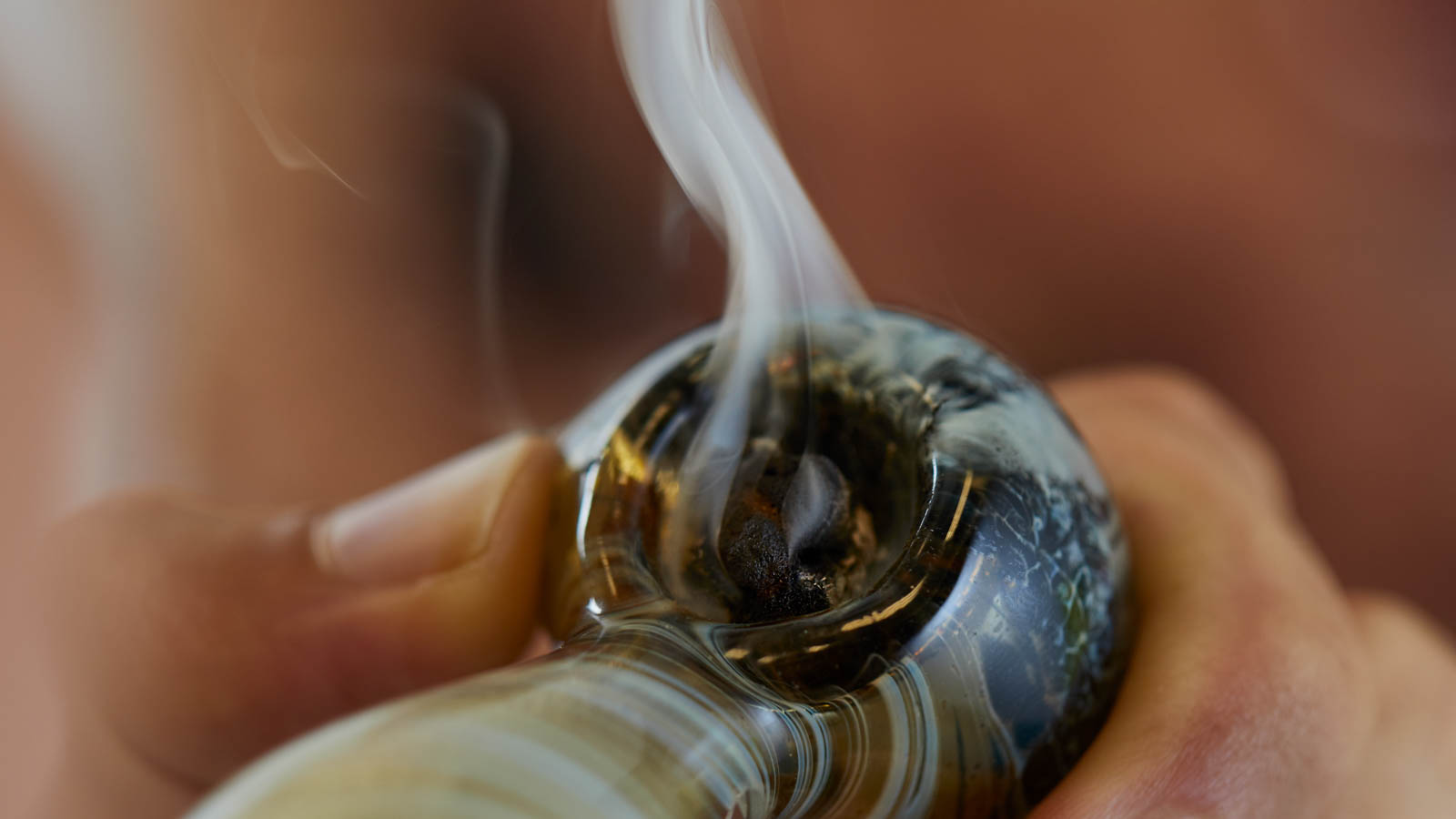 Photo by: Gina Coleman/Weedmaps
Image lightbox
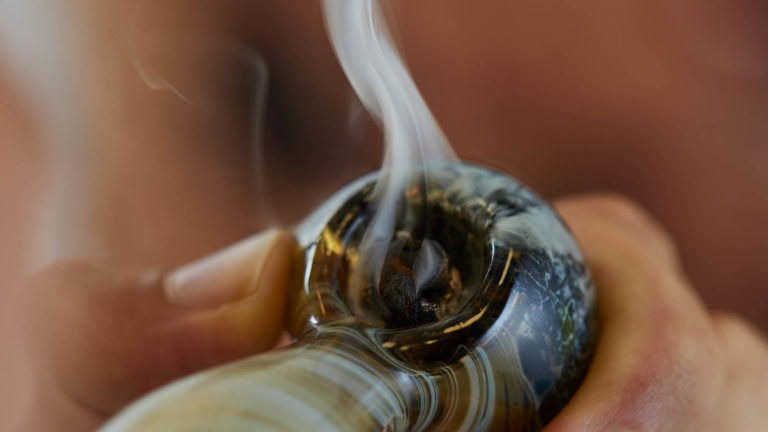
The exact route through which hashish spread from its origin point is unknown, but it likely spread from Central to Southwest Asia through Persia or India. Hashish from this era would have started as kief, also known as dry sift, which is cannabis that's been sifted through a sieve to remove its trichome glands. It was turned into hashish when applying heat and pressure, then pressed into bricks or rolled into balls. Charas, which spread from Southern Asia, is made by hand-rubbing hashish into small resin balls.
First isolations
Thankfully today, cannabinoid and terpene isolation are possible. The first cannabinoid to be isolated was cannabinol (CBN), the cannabinoid into which tetrahydrocannabinol (THC) breaks down after prolonged bouts of storage.
CBN was first isolated from a red oil cannabis extract at the end of the 19th century. But it wasn't until 1932 when British chemist R.S. Cahn clarified CBN's chemical structure and paved the way for the cannabinoid's chemical synthesis and official discovery by two separate research groups in 1940: Lord Todd in the UK and R. Adams in the US. Pharmacologists H.J. Wollner, John R. Matchett, Joseph Levine, and Peter Valaer made the first THC cannabis extraction two years later.
Concentrates vs. extracts: what's the difference?
You may have heard the terms “concentrate” and “extract” used interchangeably, but there is a subtle difference between them. Extracts are a specific type of concentrate made using a solvent. Not all concentrates are made with solvents, so all extracts are concentrates, but not all concentrates are extracts. Hence the confusion.
A cannabis tincture is a concentrated extract contained in a liquid, usually alcohol or glycerin.
What are concentrates made of?
Concentrates can start with any part of the plant, which can be dried and cured or fresh.
- Trim: The excess leaves that are removed from cannabis buds to make the end product more attractive and deliver a smoother smoke. This part of the plant generally contains fewer trichomes than cannabis buds, but accumulating the trichomes from trim uses cannabinoids and terpenes that would otherwise get discarded.
- Nugs: Cannabis buds are also known as flowers. A nug run is a batch of concentrates extracted from dried and cured nugs.
Types of concentrates you can consume
There are a variety of concentrate types and consistencies that you can find on the market today:
Keif and hash
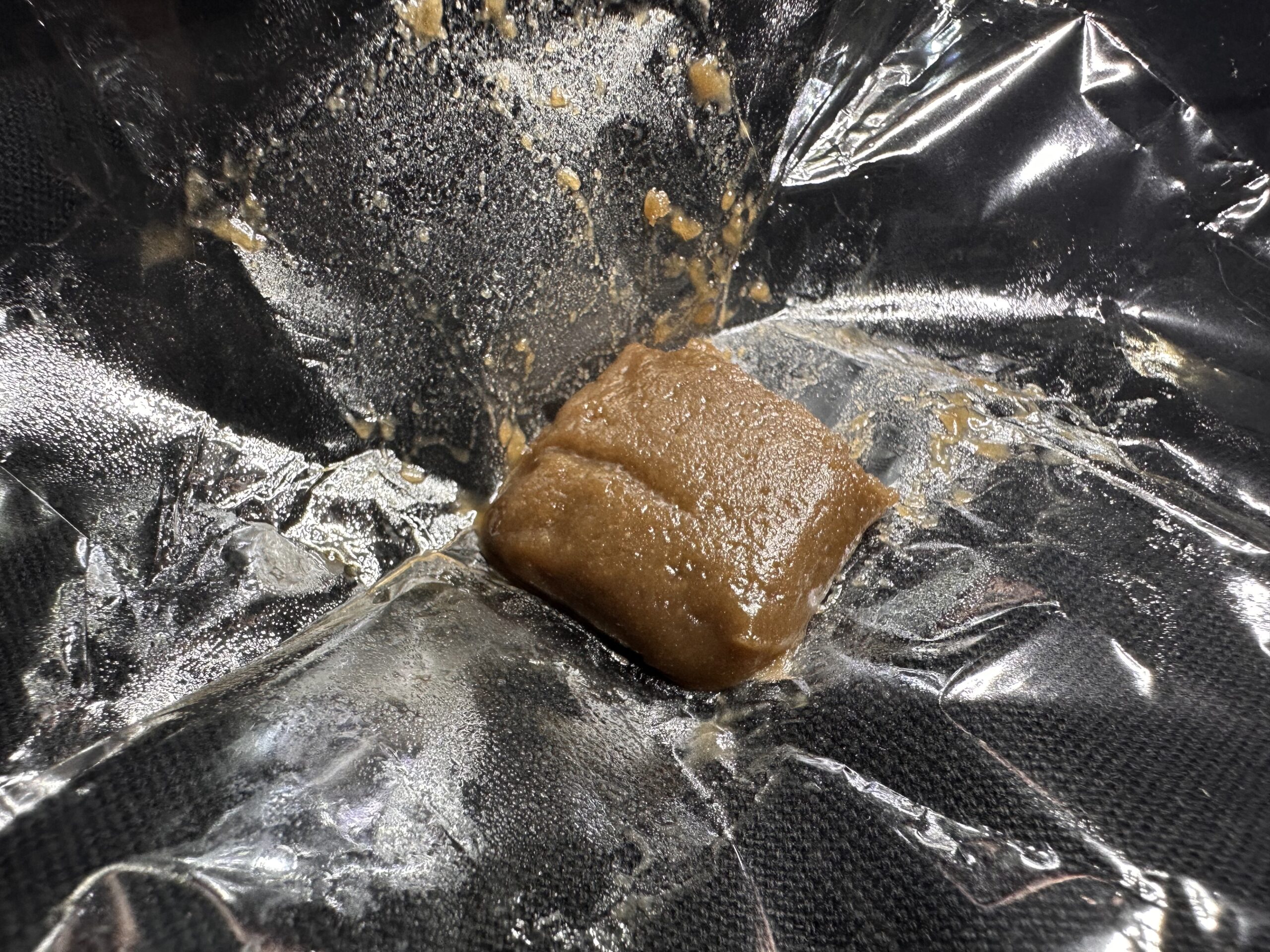
Keif is the loose cannabis trichomes collected after grinding fresh cannabis. Kief comes in a powdery green form. Hash is kief that's been pressed, which usually forms into a slab or ball.
- Temple ball: Hash that is cured and pressed into a ball. Temple balls are typically used to top bowls of flower or are rolled into joints.
- Sand: Hash that is sifted and can be sprinkled on top of flower or pressed for dabbing.
Rosin
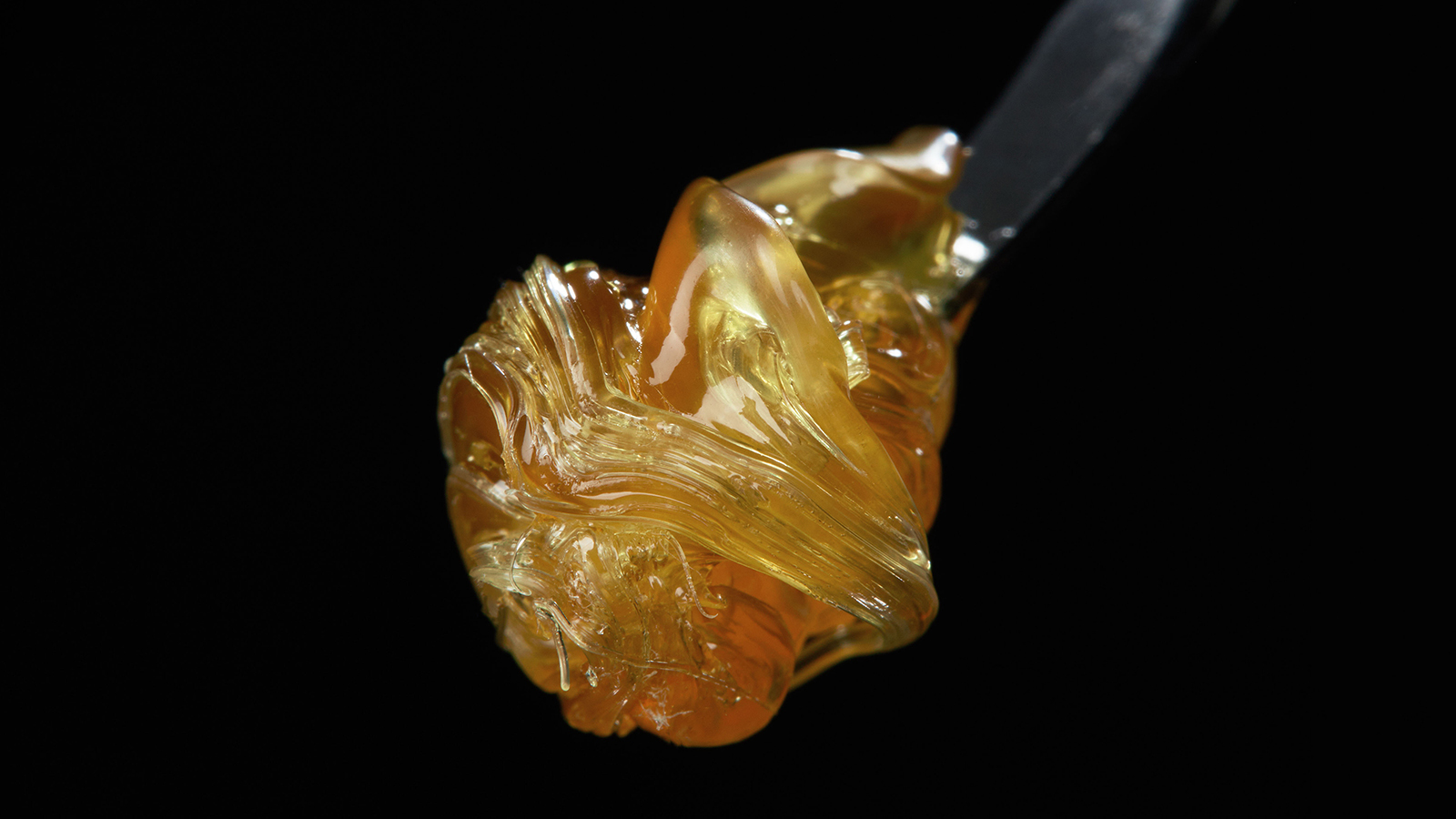 Photo by: Gina Coleman/Weedmaps
Image lightbox

Made by applying heat and pressure to cannabis flower or bud, rosin can be made easily at home or found in almost any dispensary. Consistensies of rosin include:
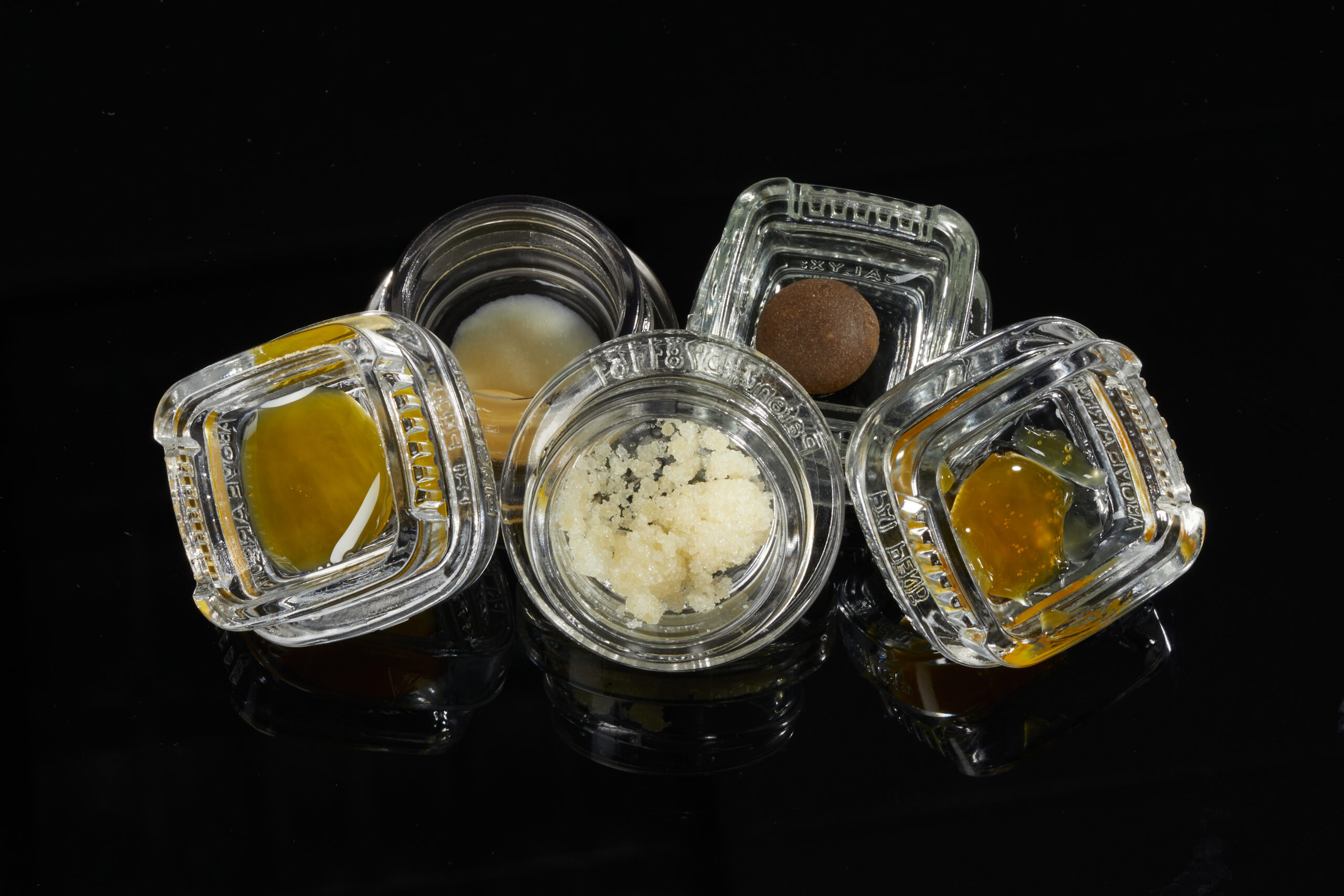
- Fresh press: Maintains a sap-like consistency that can be dabbed.
- Cold cure: Rosin that's left to cure at low temperatures. It's whipped after, resulting in a smooth and creamy consistency.
- Jam/Sauce: Rosin that has a viscous and syrupy texture, similar to the consistency of jam or sauce.
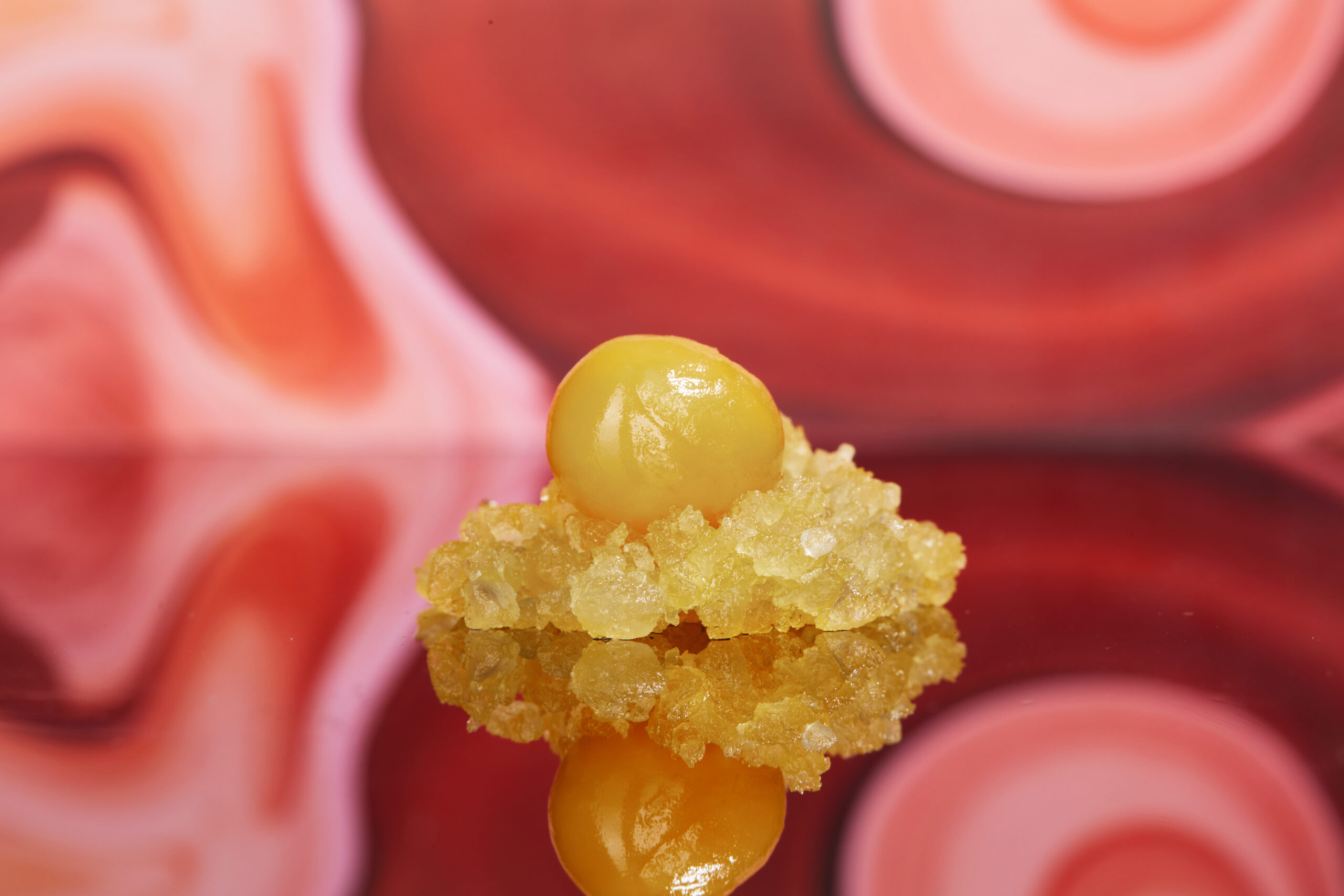
- Solventless diamonds: Rosin in a crystalline structure that resembles diamonds. It's produced without the use of solvents, resulting in a clean and pure extract.
Live resin
Live resin is produced using a solvent and fresh flower. This method of extraction maintains the starting cannabis terpenes, which makes for an incredibly flavorful experience.
- Shatter: A brittle form of resin with a glass-like texture, obtained through solvent extraction and careful cooling.
- Sap: Sticky and viscous concentrate resembling tree sap, offering a liquid-like consistency and flavorful experience.
- Crumble: Dry and honeycomb-like resin created through solvent extraction.
- Badder/Budder: Soft and creamy form or resin, similar to butter or cake batter. It's achieved by purging solvents at higher temperatures and pressures.
- Distillate: A refined and potent concentrate produced through distillation, offering purity, transparency, and precise dosing for various consumption methods.
How are concentrates made?
Concentrates are made in two ways:
Mechanical separation
Mechanical separation involves breaking and removing trichomes from plant material via physical action such as shaking or pressing. Dry sift, for example, involves shaking cured cannabis through a series of screens in specific sizes to ensure that nothing but trichome glands make it into the final product.
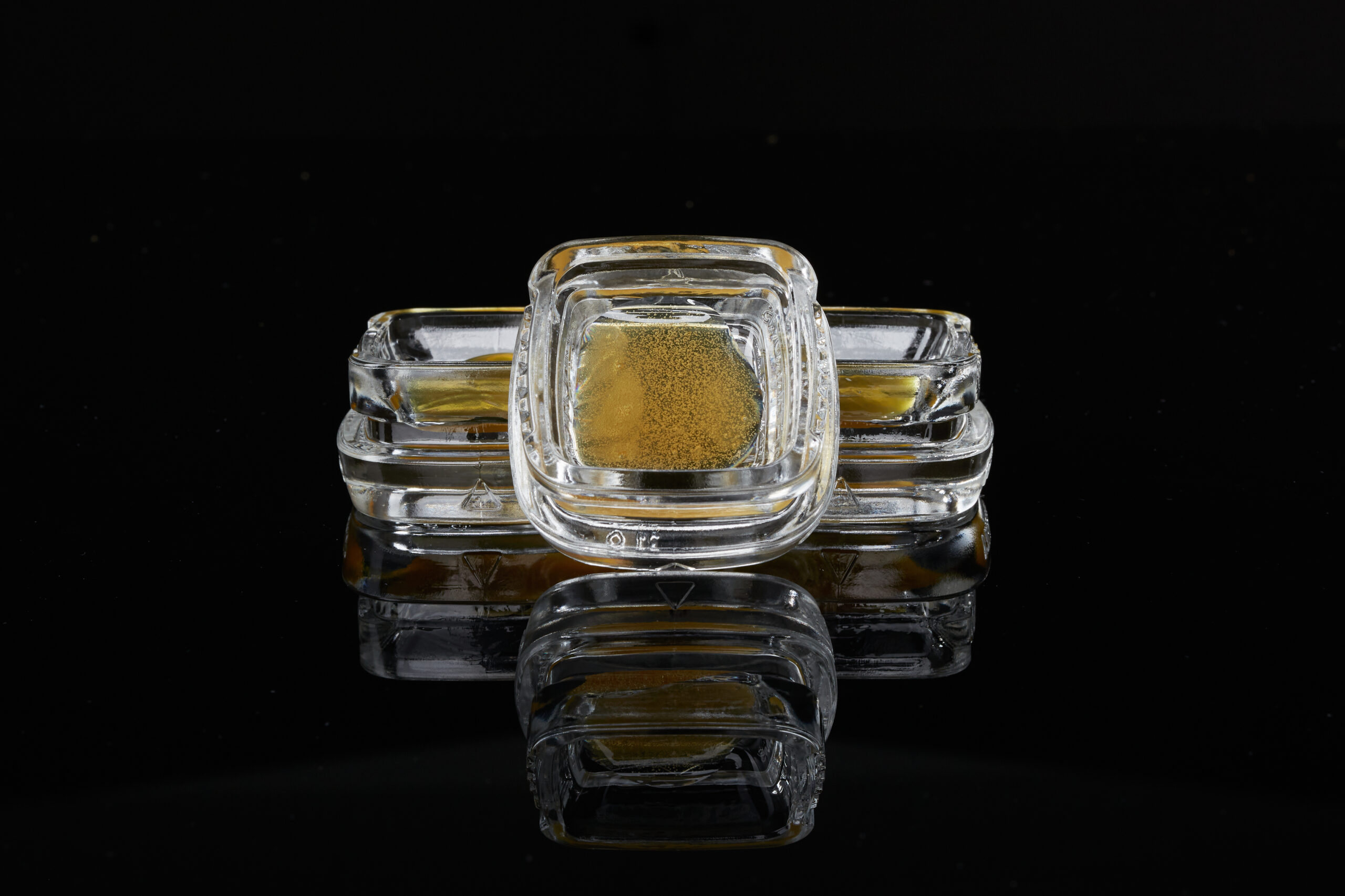 Photo by: Gina Coleman/Weedmaps
Image lightbox
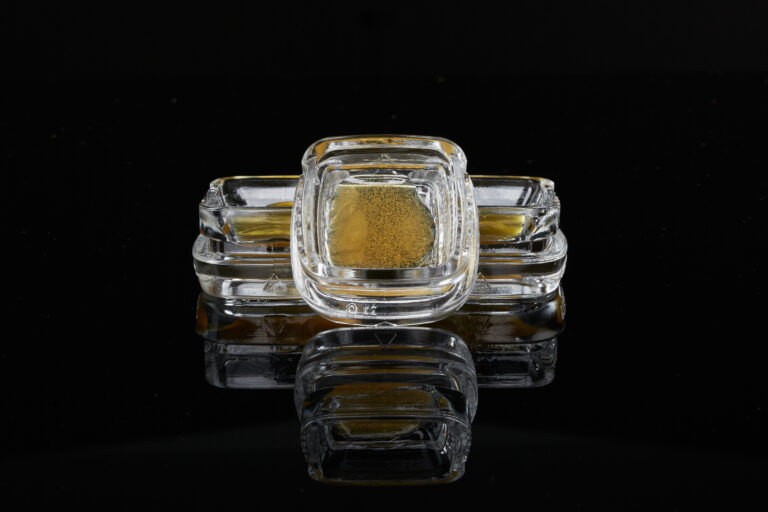
Mechanical separation methods use centrifugal action, gravity separation, and filtration to separate the trichome glands from the plants. The most common methods include:
- Sieving/sifting: Sifting ground plants by hand or in a mechanical tumbler composed of screens delicately removes exposed trichomes, resulting in a powder called kief.
- Steam: Steam can be used to extract the polar terpenoid molecules.
- Ice-water method: Ground plant material, ice, and water are combined in a vessel and agitated until the trichome glands break off the plant and sink to the bottom.
- Cold or warm press: This method produces rosin. You use heat and pressure to remove the cannabinoids and terpenes from the plant. Usually made with industrial presses, you can make rosin at home with a hair straightener.
Chemical extraction
Chemical extractions, also known as solvent-based extractions, utilize a chemical solvent to dissolve the trichomes from the plant. It's considered the most efficient method for removing trichomes and is preferred for commercial extraction. Chemical extractions should be made by professionals only.
The solvents used for extraction include BHO, Propane Hash Oil (PHO), ethanol, and carbon dioxide. These solvents are used in liquid form to essentially “wash” the plant of its therapeutic compounds. Afterward, the solvent is removed from the solution before it is safe to consume. Processors seek solvents that have low boiling points to maintain the full spectrum of compounds extracted from the plant without denaturing or boiling them off.
Present-day full-spectrum extracts, sauce, distillate, and crystalline (also known as diamonds) have caught the attention of cannabis connoisseurs. Within a few years, consumers have become more educated and aware of the subtle differences in all concentrates.
How to consume concentrates
Concentrates such as hash, live resin, and rosin — along with a massive variety of dab rigs — are available in almost all dispensaries. To consume a cannabis concentrate safely and effectively, you must have the appropriate equipment.
Pair with flower
Concentrates can help increase the potency and improve the flavor of your flower. The next time you pack a bowl, try sprinkling kief on top or mix rosin and flower into your next joint. For those new to concentrates, these methods may be the best way to ease you into it.
Consume with a dab rig
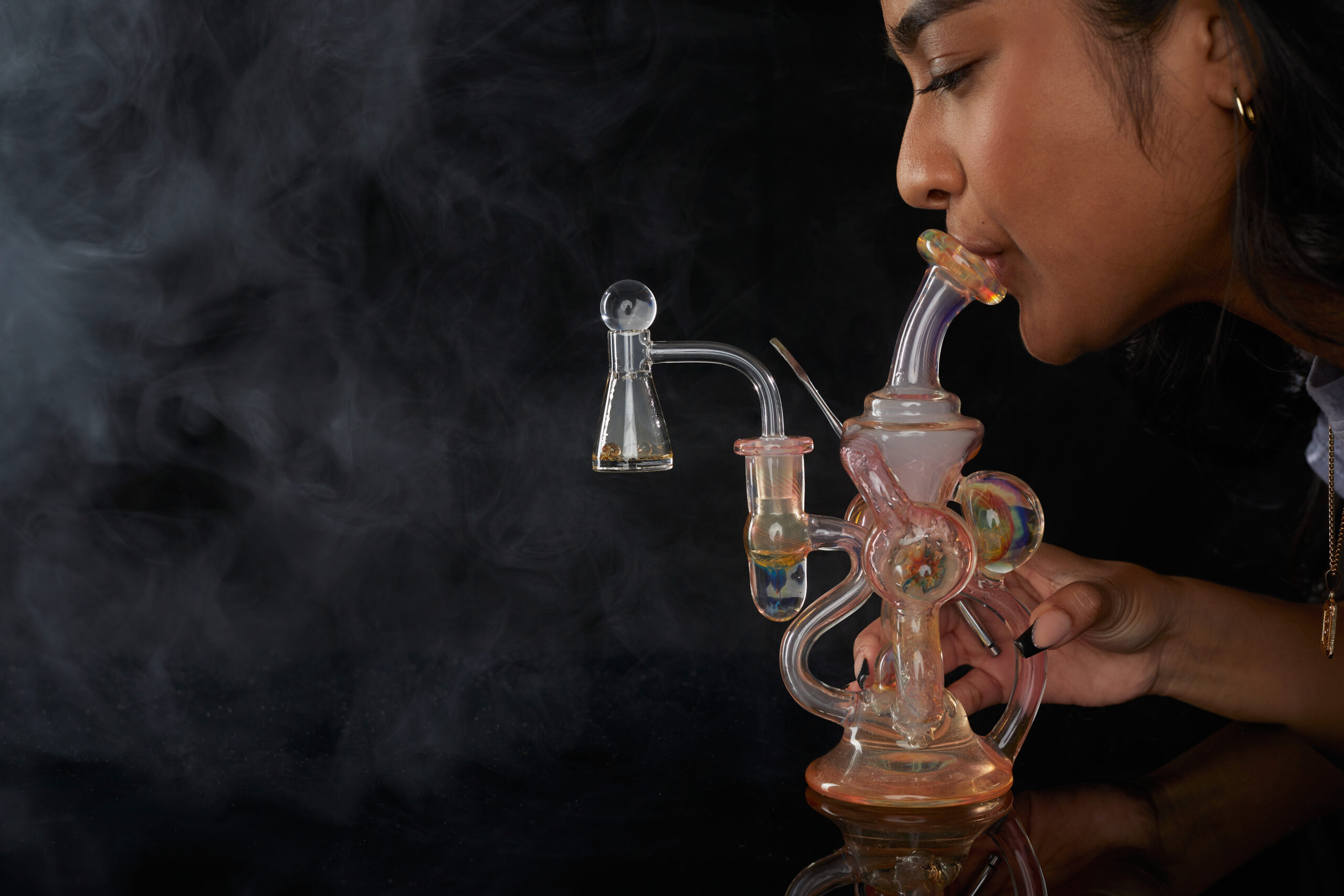 Photo by: Gina Coleman/Weedmaps
Image lightbox
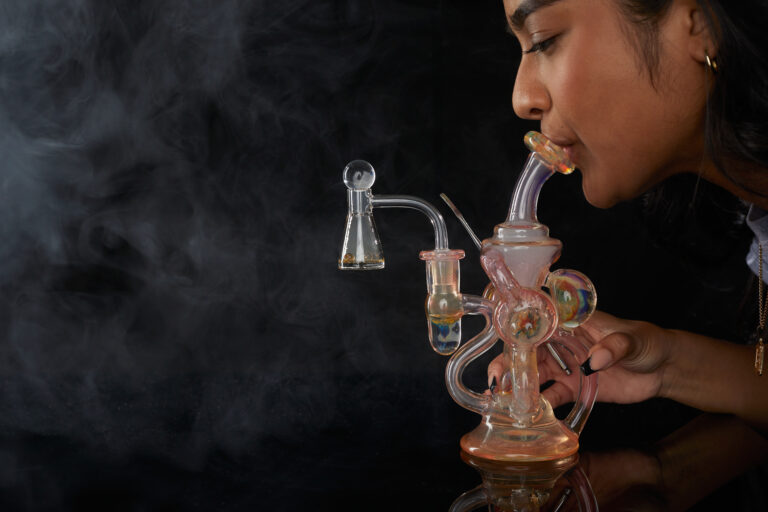
Concentrates can be consumed with a dab rig — this activity is called dabbing. Quickly becoming one of the most popular consumption methods, dabbing offers potent highs and flavor-packed experiences that make the most of the plant's rich terpene profile.
A dab rig is a glass pipe, similar to a bong, designed for concentrates. Dab rigs typically include a titanium, quartz, or glass nail that can be thought of as the bowl in the dab rig. Consumers use a butane torch lighter to bring the nail to a temperature that, almost instantly, vaporizes the concentrates.
Vaporizers and portable vape pens
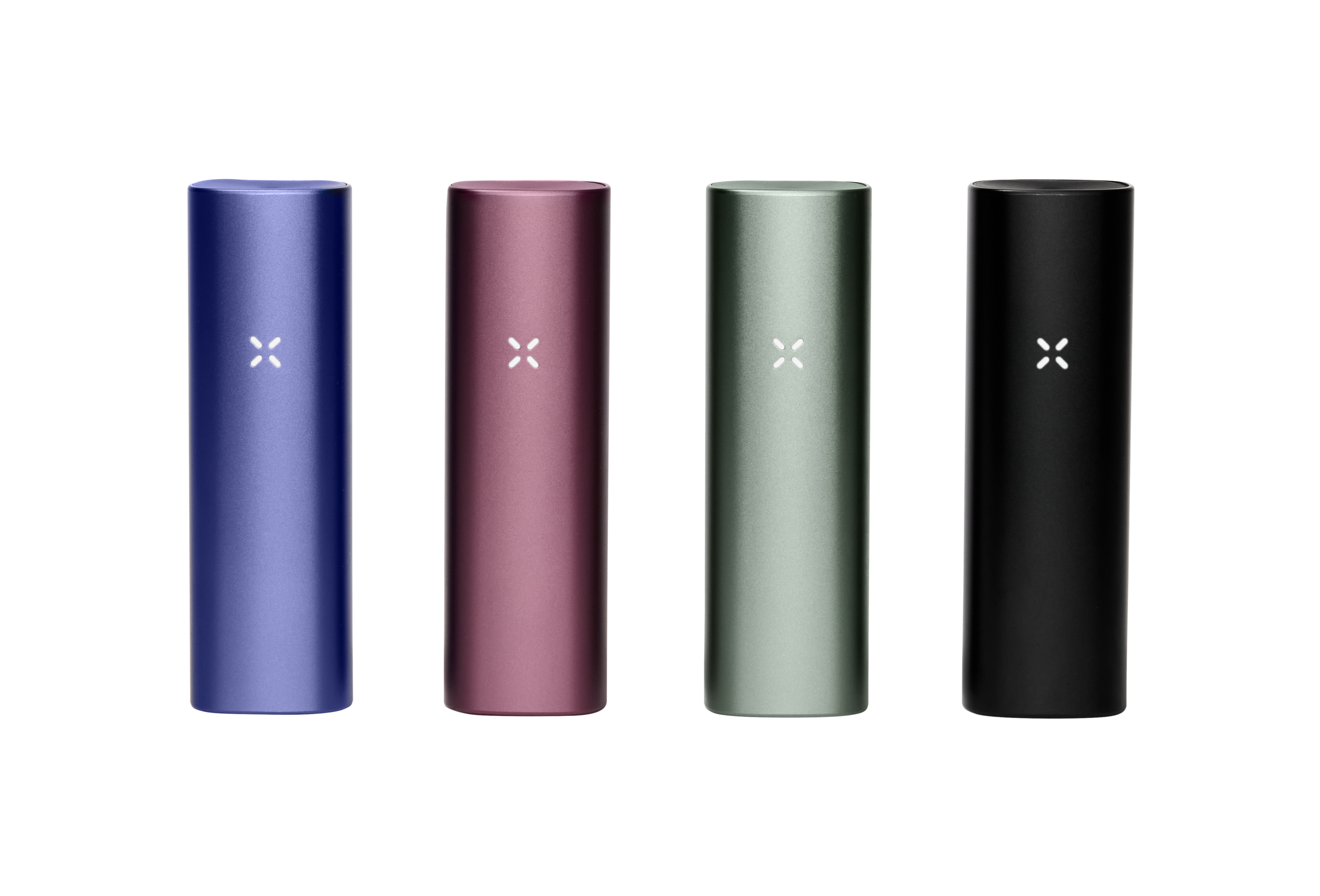
Concentrates can be vaporized using a portable or handheld vaporizer. The market is currently full of dry-herb vaporizers that offer an additional wax or dab feature. With a vaporizer, you manually fill a chamber with a concentrate of your choice and attach the chamber to a battery. The chamber typically contains a heating coil that turns the concentrate into a vapor when the user presses a button. Unlike dab rigs, vaporizers seldom require additional equipment.
A vape pen consists of a pre-filled cartridge that attaches to a battery. The cartridge contains a heating element that comes in contact with the battery and heats the concentrate when activated.
How to store concentrates
The key to proper concentrate storage is minimizing outside elements like heat, humidity, and air, as these elements can change the texture, potency, and taste of the final product.
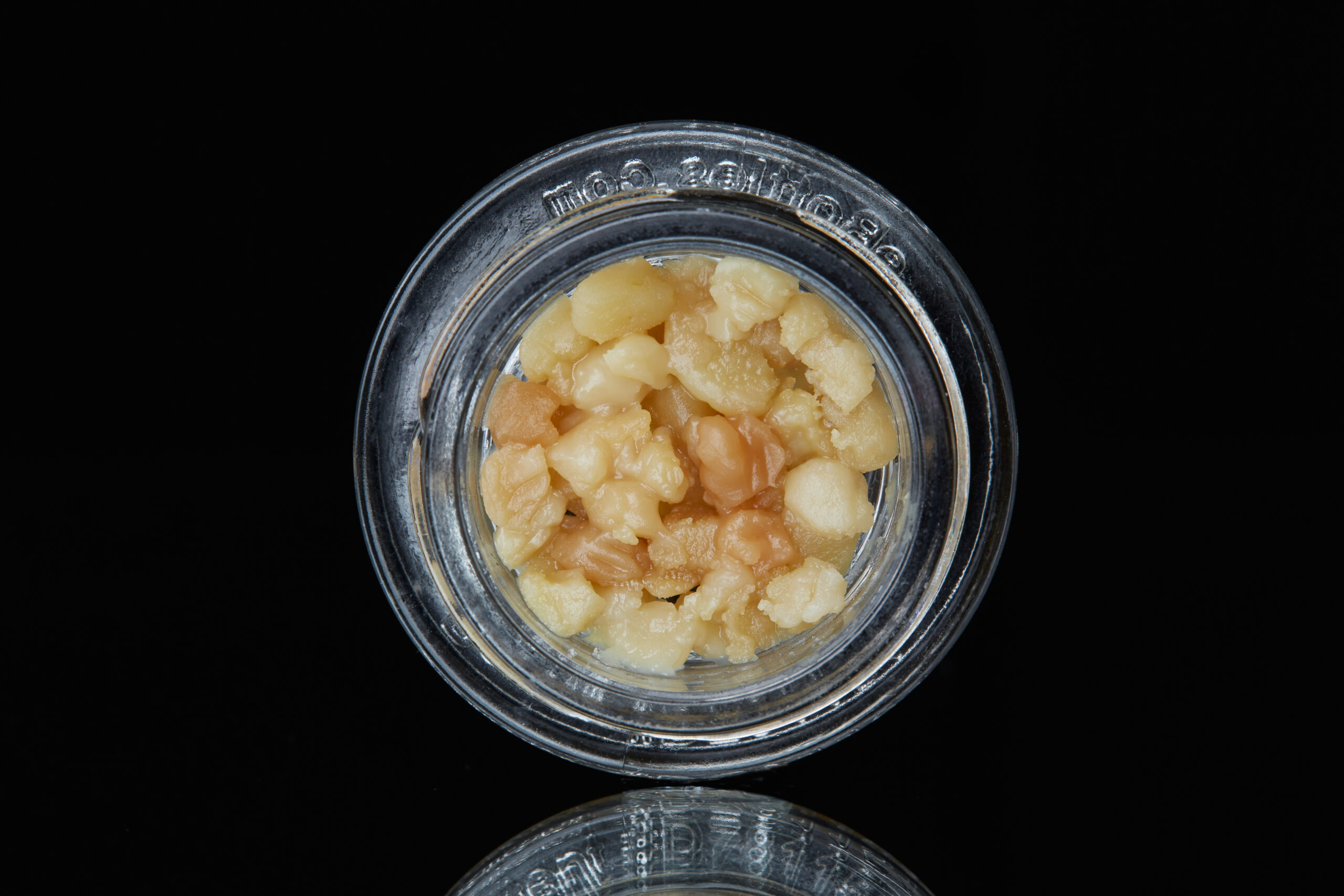 Photo by: Gina Coleman/Weedmaps
Image lightbox
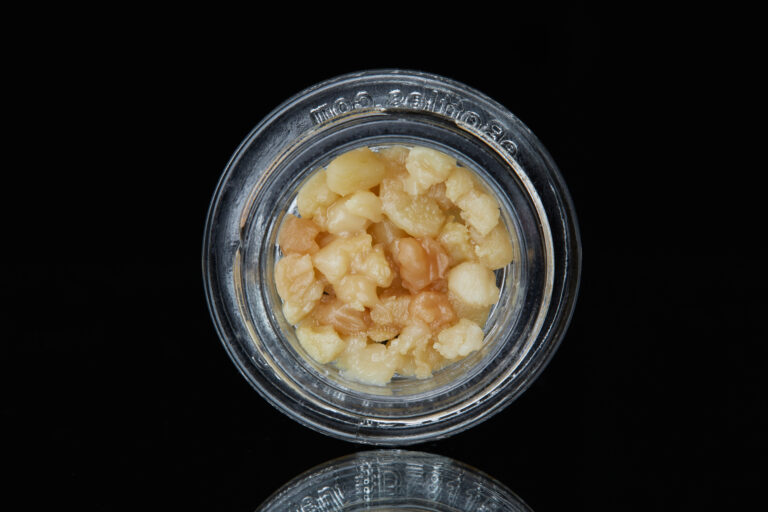
The container you choose should be based on the concentrate's consistency:
- Glass jars: Usually hold softer concentrates like budder and sauce. Glass is your best bet for long-term storage.
- Silicone jars: Provides easy access and removal for virtually any concentrate consistency, but silicone jars don't usually offer an airtight seal that is good enough for long-term storage.
- Parchment paper: A short-term storage solution used for solvent-based extracts.
Concentrates should be stored in a cool, dark place, and containers should be as small as possible to minimize excess air. Short-term storage typically doesn't require more than a room temperature setting, but for long-term storage, use an airtight container and consider storing it in the refrigerator.
Freezing concentrates has its risks. When frozen concentrates aren't adequately sealed, they may accumulate moisture and become harsh when dabbed. With the proper container, you'll minimize the risk of moisture contamination.