- Lemon (41% of reported flavors)
- Lime (34% of reported flavors)
- Mint (24% of reported flavors)
707 Headband carries Northern California’s area code, but the name covers more than one genetic account.
Origin 1: Humboldt Seed Organization developed its version from an unnamed Mendocino elite clone crossed with True OG. The breeder classifies it as 70% sativa / 30% indica and lists THC at 19–23%. Lemon, aromatic wood, and pine define this version, giving it a sharp, resinous Kush profile with a pronounced citrus edge.
Origin 2: The older Northern California cut has no firmly established breeder credit. Its lineage is commonly reported as OG Kush × Sour Diesel, while another widely circulated account includes Master Kush. Neither formula is conclusively documented for the original clone. Descriptions of this version emphasize diesel, skunk, and lemon, with THC commonly cited in the low-to-mid 20s and a heavier physical character than the sativa-leaning seed line.
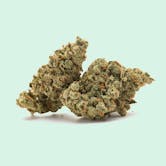
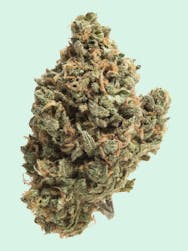
Across those accounts, the flower stays firmly in pungent territory. Lemon rind cuts through fuel, pine resin, and earthy spice, with a woody finish that hangs on the palate. Buds are generally compact and forest green, threaded with orange hairs and coated in frost. Classic West Coast flower with a strong chemical edge.
Fans of 707 Headband describe a cerebral lift paired with substantial body relaxation. Creative, euphoric, and upbeat reports sit alongside heavier, more settled experiences, particularly as the session develops. Some mention the forehead-pressure sensation associated with the Headband name. The balance depends on the cut: one can feel invigorating, another considerably more laid-back.
Humboldt Seed Organization’s feminized 707 Headband develops an open branching structure that allows light into the canopy. Its compact flowers can become heavy enough to require staking or trellis support late in bloom. The breeder recommends a relatively short indoor vegetative period to manage the plant’s eventual size.
For that specific seed line, indoor flowering takes approximately 63–68 days, with listed yields of 500–600 g/m² under favorable conditions. Outdoor harvest falls in early to mid-October in the Northern Hemisphere, with warm, relatively dry conditions or greenhouse protection preferred. These specifications should not be applied automatically to older cuts sold under the same name; their flowering behavior and output need to be assessed separately.