Colombian Gold
- Skunk (42% of reported flavors)
- Woody (33% of reported flavors)
- Earthy (26% of reported flavors)
Colombian Gold is old-school cannabis with dirt under its fingernails. The sativa landrace developed in the Santa Marta Mountains of Colombia, where generations of local cultivation and selection shaped tall tropical plants built for long seasons, intense sun, and life outdoors. There isn't a breeder or tidy two-parent cross behind it. Colombian Gold comes from the era when geography was the pedigree.
The strain became one of Colombia's most celebrated exports during the 1960s and 1970s, earning its Gold nickname from flowers that could develop yellow, amber, and golden tones as they matured and were traditionally processed. Those genetics eventually became breeding stock far beyond South America. Most famously, Colombian Gold was crossed with Afghani, with Acapulco Gold later brought into the line that became Skunk #1. That puts Colombian Gold deep in the family tree of an enormous chunk of modern cannabis.
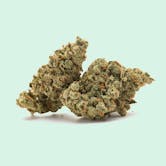
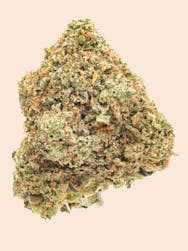
Colombian Gold smells like the old-school stash drawer in the best possible way. Pine, earth, wood, herbs, and unmistakable Skunk funk come first, with citrus and peppery spice sharpening the edges. The flowers tend to be long and airy rather than rock-hard, with green buds, orange pistils, heavy resin, and the yellow-to-golden coloration that helped make the name famous.
The consensus among people who've run through a jar is a bright, energetic cerebral high with an upbeat, creative streak that can stay lively for the long haul. There's some relaxation underneath, but Colombian Gold made its reputation on the headier side of the experience. More than half a century later, its biggest flex isn't nostalgia. Its genetics are still hiding inside strains people smoke every day.
As a true landrace Sativa, Colombian Gold produces tall, branchy plants that bloom within 75-90 days when grown indoors. However, a moderately experienced grower can tease out a November yield of up to 600 grams per square meter in an outdoor garden in the Northern Hemisphere, and harvest in May in the Southern Hemisphere.