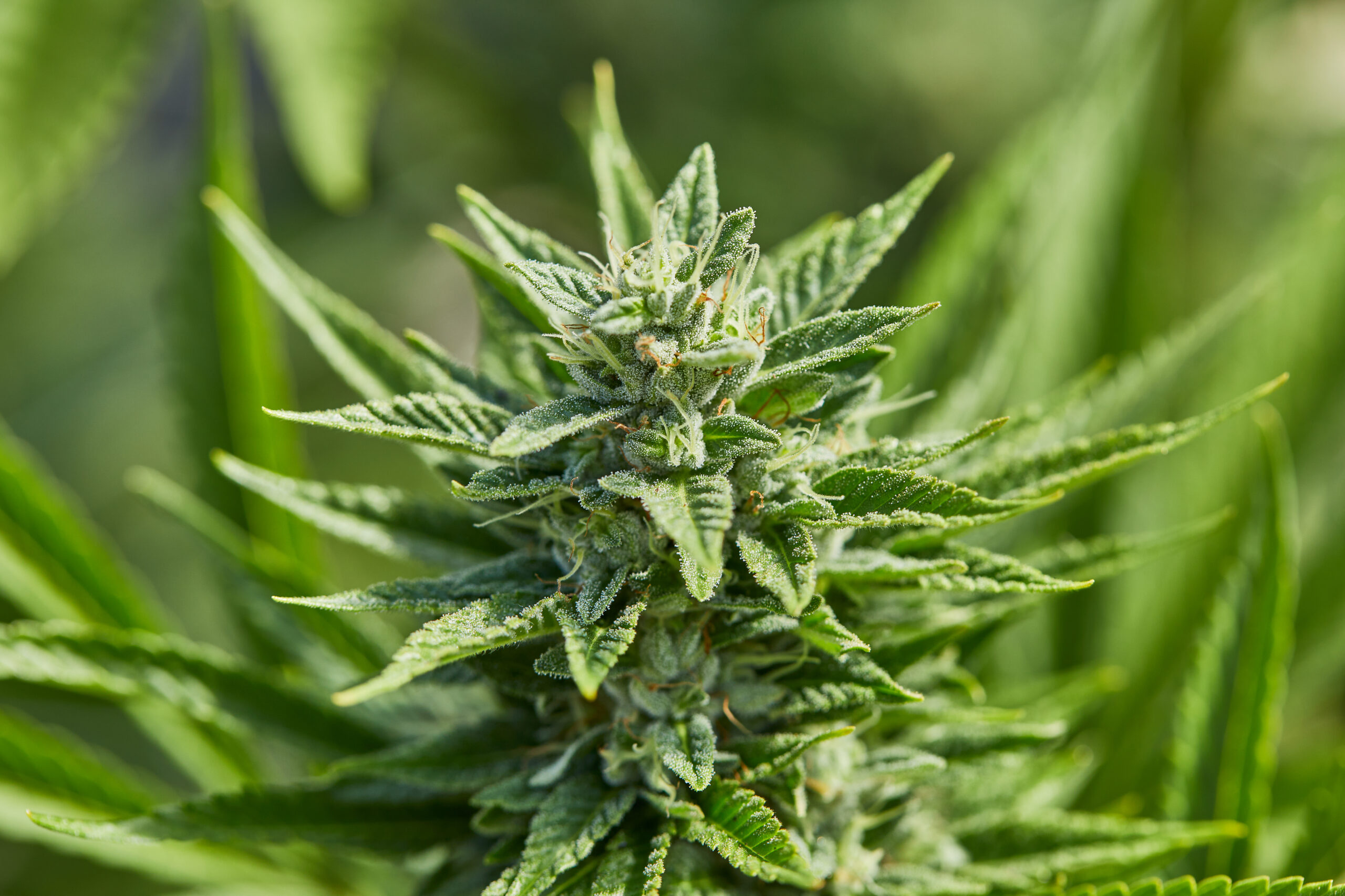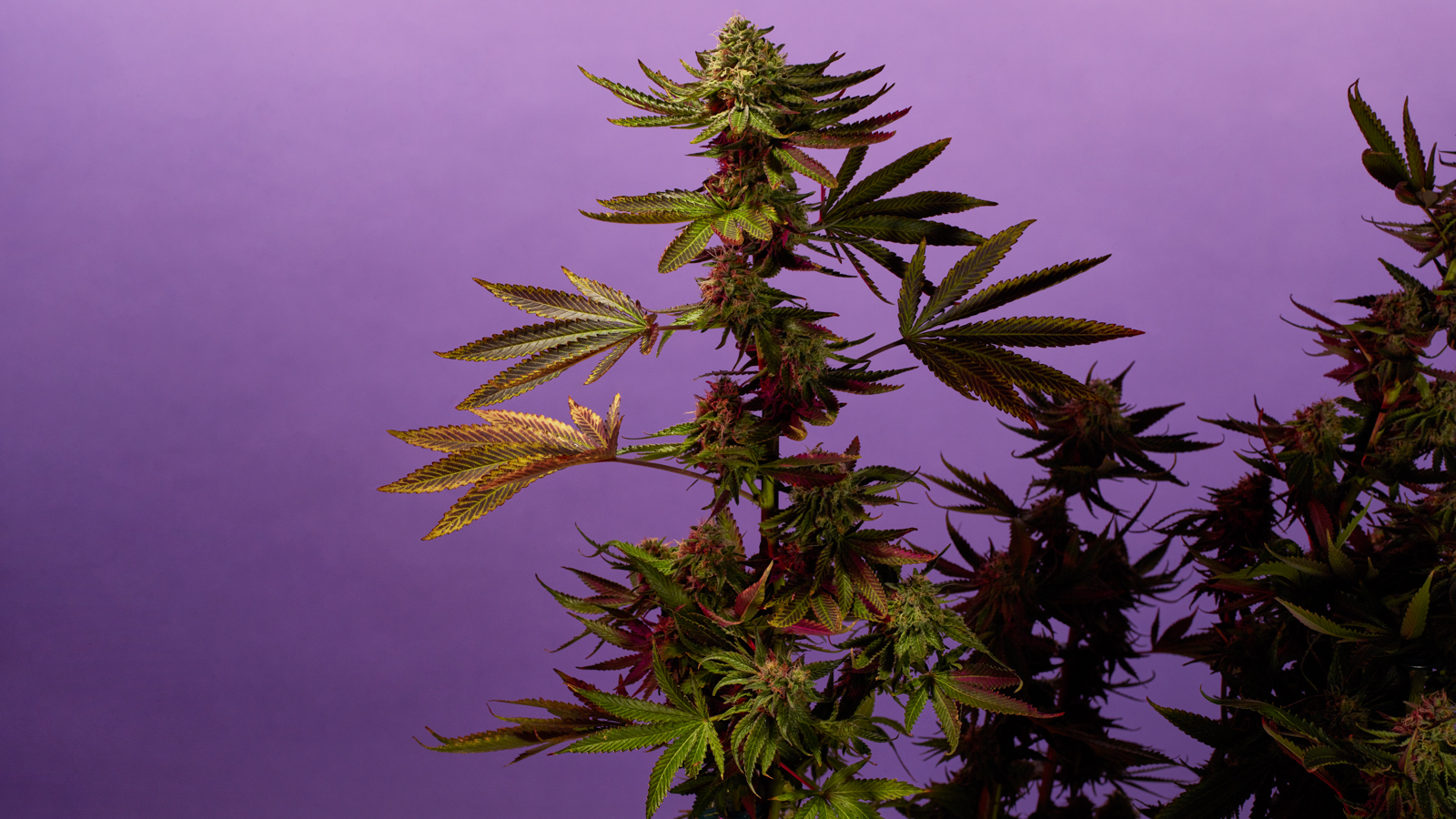
Hemp flower can look, smell, and even feel remarkably similar to cannabis sold in licensed dispensaries. Dense buds, sticky trichomes, and loud terpene profiles don't tell you whether a product is legally classified as hemp or marijuana.
 Photo by: Gina Coleman/Weedmaps
Image lightbox

That distinction comes down to chemistry, specifically how much THC the flower contains and how that THC is measured. Under federal law, a small difference in cannabinoid content can determine whether a cannabis flower is sold as hemp or regulated as marijuana.
But legality is only part of the story. A hemp flower can meet THC requirements and still vary dramatically in aroma, freshness, cannabinoid content, and overall quality. Understanding where the legal line is drawn, and what exists beyond it, can help you make more informed decisions when shopping for hemp flower.
What is hemp flower?
Hemp flower is the dried, harvested flower of the cannabis plant. Like other cannabis flower, it contains cannabinoids, terpenes, and trichomes that contribute to its aroma, appearance, and overall profile.
Hemp is classified based on its cannabinoid content, particularly THC levels. That legal classification is what separates hemp flower from other categories of cannabis and forms the foundation of how hemp is regulated in the United States.
The 2018 Farm Bill and the legal THC threshold
The legal framework for hemp flower comes from the Agriculture Improvement Act of 2018, commonly known as the 2018 Farm Bill. The legislation removed hemp from the Controlled Substances Act and established a federal definition for hemp.
Under the Farm Bill, hemp is defined as cannabis containing no more than 0.3% delta-9 THC on a dry-weight basis. That threshold became the legal dividing line between hemp and marijuana in the United States.
Because the distinction is based on cannabinoid content, two cannabis flowers can look and smell identical while being classified differently under the law. Dense buds, visible trichomes, and strong terpene aromas don't determine whether a product qualifies as hemp. The cannabinoid profile does, which is why lab testing plays such an important role in the hemp market.
THCA makes hemp flower more complicated
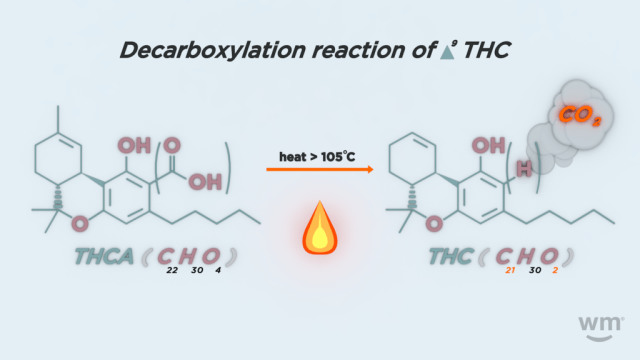
Image lightbox

Delta-9 THC is the cannabinoid most people think of when they hear "THC," but it isn't the only form found in cannabis flower. Freshly harvested cannabis naturally contains THCA (tetrahydrocannabinolic acid), a cannabinoid that converts into delta-9 THC when exposed to heat through smoking, vaping, or cooking.
Because THCA can become THC, regulators and testing laboratories often look beyond the delta-9 THC number alone when evaluating hemp. Instead, they may calculate total potential THC to better understand how much THC could be present after decarboxylation, the process that converts THCA into delta-9 THC.
This is one reason a hemp flower label doesn't always tell the whole story. A product may show a low delta-9 THC percentage while still containing measurable amounts of THCA.
Aroma and terpenes: the fastest clues to quality
Once a hemp flower meets legal THC requirements, aroma becomes one of the quickest ways to evaluate quality. Fresh hemp flower should smell distinct, whether that means notes of citrus, pine, flowers, earth, herbs, or fuel. The specific aroma matters less than how clearly those characteristics come through.
Flat or muted aromas can signal age, poor curing, or terpene loss. Notes resembling hay, cardboard, dry grass, or stale plant material often suggest that the flower no longer reflects its original profile. Because terpenes are sensitive to heat, oxygen, light, and time, they often degrade before cannabinoids do, making aroma an early indicator of freshness.
Terpenes are also responsible for much of what makes one hemp flower different from another. Limonene is commonly associated with citrus-forward aromas, while pinene contributes pine and forest-like notes. Myrcene often brings earthy or herbal characteristics, and caryophyllene is known for its peppery, spicy aroma.
These aromatic compounds help shape a flower's identity and influence how users describe the overall experience. In hemp flower, where THC content is intentionally limited by legal thresholds, terpene expression becomes an especially important part of what distinguishes one cultivar from another.
A certificate of analysis can tell you what was present when a batch was tested. Aroma can help reveal how well that flower has maintained those characteristics over time.
How CBD influences the experience
Many hemp flower products are bred for higher CBD content. Because CBD does not produce the same intoxicating effects as THC, CBD-rich flower has become a popular option for those seeking the aroma and ritual of cannabis with a different cannabinoid profile.
CBD percentage is one useful data point, but it doesn't tell the whole story. Two hemp flowers with similar CBD levels can offer very different experiences depending on their THC content, cannabinoid ratio, terpene profile, and freshness.
That's why it's helpful to look at the full cannabinoid profile rather than focusing on a single number. CBD, THC, terpenes, and overall product quality all contribute to the character of a hemp flower.
Why dates matter on hemp flower labels
A certificate of analysis provides a snapshot of a hemp flower's chemistry at the time it was tested. But cannabis is a plant product, and its chemical profile can change over time.
Exposure to heat, light, oxygen, and storage conditions can affect both cannabinoids and terpenes after harvest. Terpenes are often the first compounds to fade, which is one reason older flower may lose some of its aroma even when cannabinoid levels remain relatively stable.
That's why dates matter. The harvest date can help you understand how old the flower is, while the package date provides insight into when it was prepared for sale. The test date on a COA adds another layer of context by showing when the cannabinoid and terpene profile was measured.
An older COA isn't necessarily a problem, but it may be less useful for evaluating the flower's current condition. When harvest dates, test dates, aroma, and cannabinoid data all align, you have a clearer picture of what you're buying.
How to read a hemp flower COA
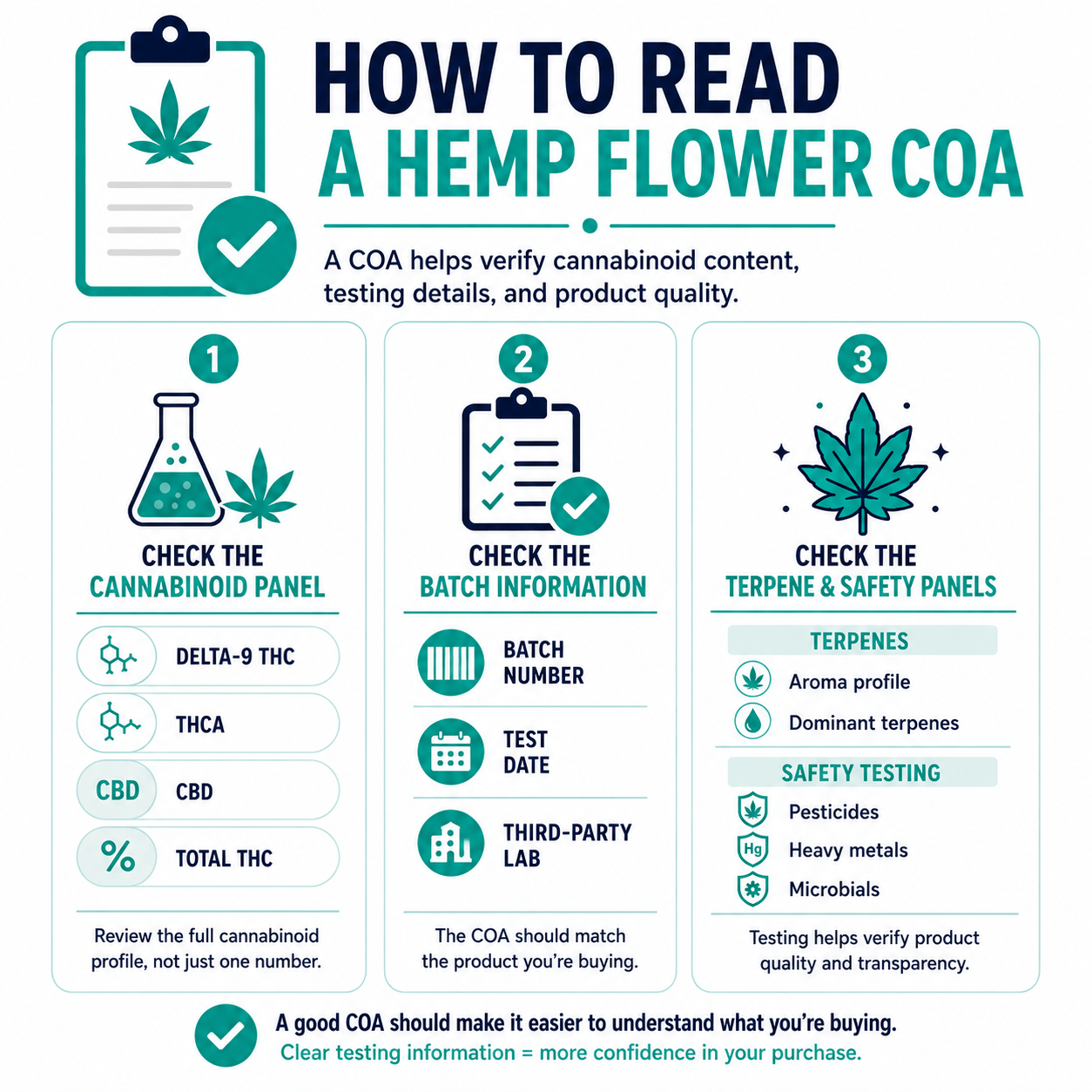
Image lightbox

A certificate of analysis (COA) is one of the most useful tools for evaluating hemp flower. It verifies cannabinoid content, provides testing information, and can help you determine whether a product matches its label claims.
Check the cannabinoid panel
Start with the cannabinoid profile. Look for delta-9 THC, THCA, CBD, and total THC when available. Together, these numbers provide a more complete picture of the flower's chemistry than any single cannabinoid alone.
Check the batch information
The batch number on the COA should match the product you're purchasing. Also review the test date and the laboratory that performed the analysis. A recent test from an accredited third-party lab provides more confidence than an undated or incomplete report.
Check the terpene and safety panels
If available, review the terpene profile to better understand the flower's aromatic characteristics. It's also worth checking for safety testing, including pesticide, heavy metal, and microbial screening. These results can provide additional insight into product quality and transparency.
A good COA should make it easier to understand what you're buying. The more clearly a product's testing information is presented, the easier it is to evaluate both compliance and quality.
The bottom line

The legal line that separates hemp from marijuana comes down to THC content, but a single number only tells part of the story. Aroma, cannabinoid content, terpene expression, freshness, and transparent testing all help paint a more complete picture of quality.
Explore all flower products and compare options from retailers near you on Weedmaps.