TAC stands for total active cannabinoids — a broader look at what's in a product beyond just THC. Learn what counts toward TAC, how it's calculated, and why a higher TAC doesn't always mean a stronger high.
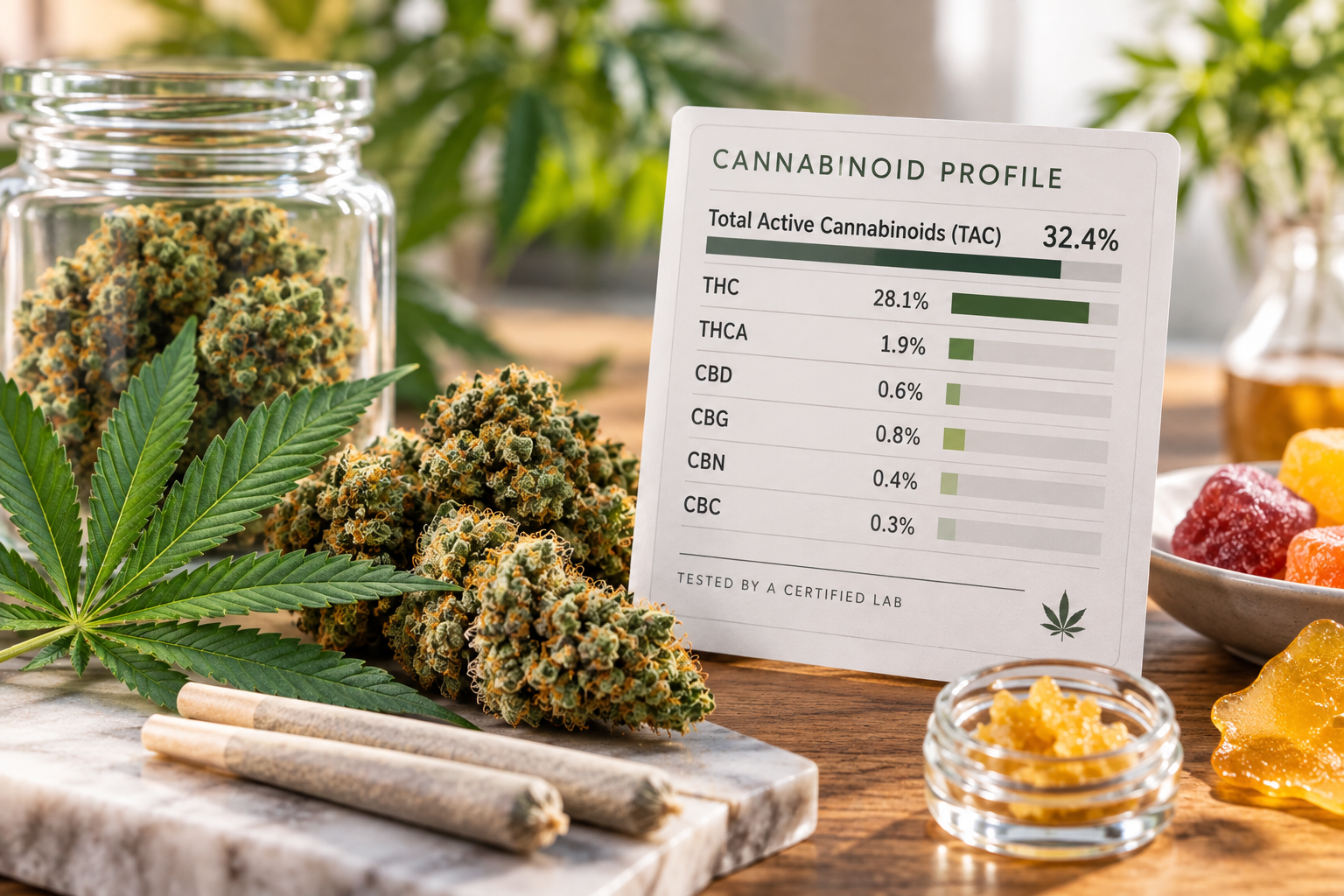
Image lightbox

TAC usually stands for total active cannabinoids. It gives you a wider look at the cannabinoids measured in a cannabis product, with THC included but far from alone.
Check a dispensary menu and you might see TAC sitting right next to THC. They're related, but they're not interchangeable, and treating them like they are can give you the wrong idea about what's inside.
Does a higher TAC mean you'll get higher? No. Not automatically, and not reliably. Here's what counts toward TAC, how it's calculated, and how to read it on a label without getting played.
What is TAC in weed?
TAC gives you a bigger-picture look at what's in your cannabis: a combined measure of multiple cannabinoids detected in a product. Exactly what's included can vary by lab and reporting method.
THC hogs the spotlight, but it's not out there alone. The National Institute on Drug Abuse has identified at least 125 cannabinoids in cannabis. Depending on the product, a lab might detect THC standing alongside CBD, CBG, CBN, and others. Depending on the reporting method, TAC rolls multiple measured cannabinoids into one number.
One thing to know: TAC isn't standardized nationwide, and how it's defined and calculated can vary by lab and market. Regulators tend to talk about a "cannabinoid profile" instead, and what's required on that label depends entirely on which state you're in — Massachusetts uses that exact phrase, but don't assume every state's rulebook matches. Check your own state's labeling requirements for the specifics.
The format shifts by product too: flower shows cannabinoid content as a percentage, edibles show milligrams per serving or package.
What's inside TAC
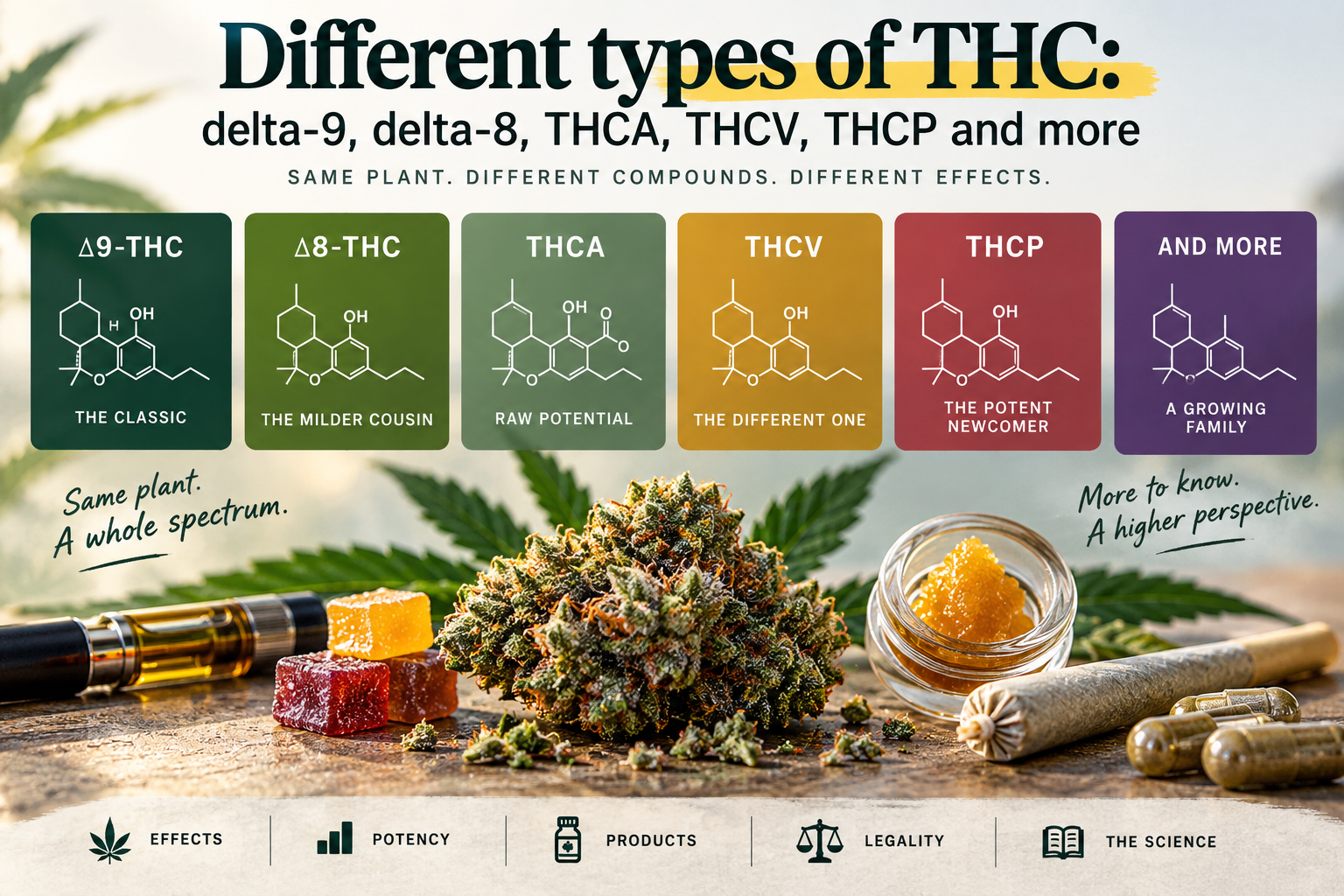
Beyond THC, that total can include CBD, CBG, CBN, CBC, THCV, and acidic cannabinoids like THCA and CBDA when a lab detects them.

Image lightbox

The exact lineup changes product to product, and which cannabinoids get folded in can vary by lab or by how a given menu calculates the number. You might see several broken out separately on the label, each one feeding into the overall TAC figure.
Terpenes generally aren't counted — they're not cannabinoids, so they typically don't factor into TAC.
TAC vs THC
TAC and THC can look like competing potency numbers on a label, but they're telling you two different things. THC is one cannabinoid. TAC is a broader total that can include THC and other cannabinoids measured by the lab. Exactly what's included depends on how that TAC figure is defined and calculated. THC is the number most people have their eye on for a reason: delta-9 THC is the primary cannabinoid behind cannabis's intoxicating effects
Here's where it gets real: two jars of flower can both list 30% TAC. One might have 28% Total THC. The other could sit at 24% Total THC, with other cannabinoids making up more of the difference. Same TAC number. Completely different cannabinoid profile.
That's the trap. TAC alone can't tell you potency. If THC is what you're chasing, look at the THC number directly — TAC just tells you what else is riding along with it.
How TAC and total THC are calculated
So where do these numbers actually come from? It starts at the lab. One standard lab method is high-performance liquid chromatography (HPLC), which lets labs measure cannabinoids like THC and THCA separately.
If you're looking at flower, that THCA number is especially important. In raw cannabis flower, much of the potential THC is present as THCA rather than delta-9 THC. Once you light a joint, hit a vape, or heat cannabis for an edible, THCA goes through decarboxylation. It loses carbon dioxide (CO₂) and converts to THC.
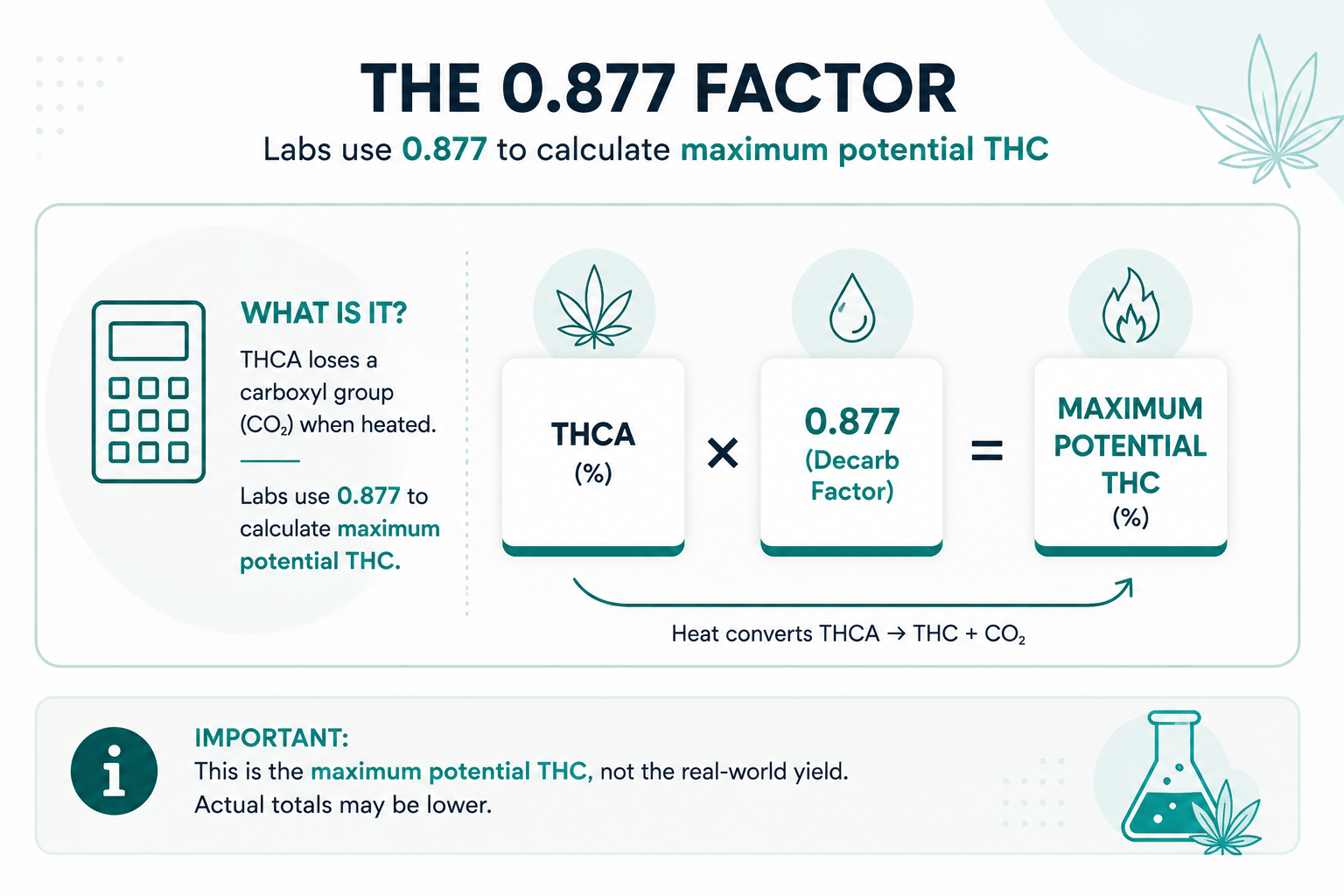
Image lightbox

That conversion is exactly why you can't just add THC and THCA together and call it a day. The real formula:
Total THC = delta-9 THC + (THCA × 0.877)
The 0.877 accounts for the difference in molecular mass when THCA loses carbon dioxide and converts to THC. So 10% THCA caps out at a theoretical 8.77% THC — the ceiling, not a guarantee. What you actually get depends on heat, time, and method.
Some TAC calculations apply similar acidic-conversion logic across the broader cannabinoid profile, but exactly what's included and how it's tallied can vary by lab. So when a concentrate claims 90% TAC, the lab is reporting a very high concentration of cannabinoids under its calculation method. It does not mean the product contains 90% THC.
Does higher TAC mean a stronger high?
Not necessarily. TAC is useful for understanding what's in a product, but it isn't a reliable shortcut for predicting how high you'll get.
The cannabinoid profile matters, and so does your own response to cannabis. A product with a higher TAC can have more of that total coming from non-intoxicating cannabinoids, while a lower-TAC product could have a larger share coming from THC. That's why shopping by the biggest TAC number can be misleading.
You may also hear the entourage effect come up when people talk about why products with similar numbers can feel different. The idea is that cannabinoids and terpenes may interact in ways that shape the overall experience, but the science behind the entourage effect is still evolving. A 2024 review found that the proposed enhancement from terpenes remains unproven.
So when you're sizing up a product, don't let TAC make the decision for you. Check the THC number, take a look at the rest of the cannabinoid profile, and factor in what you already know about how you respond to cannabis.
How to read TAC on a label
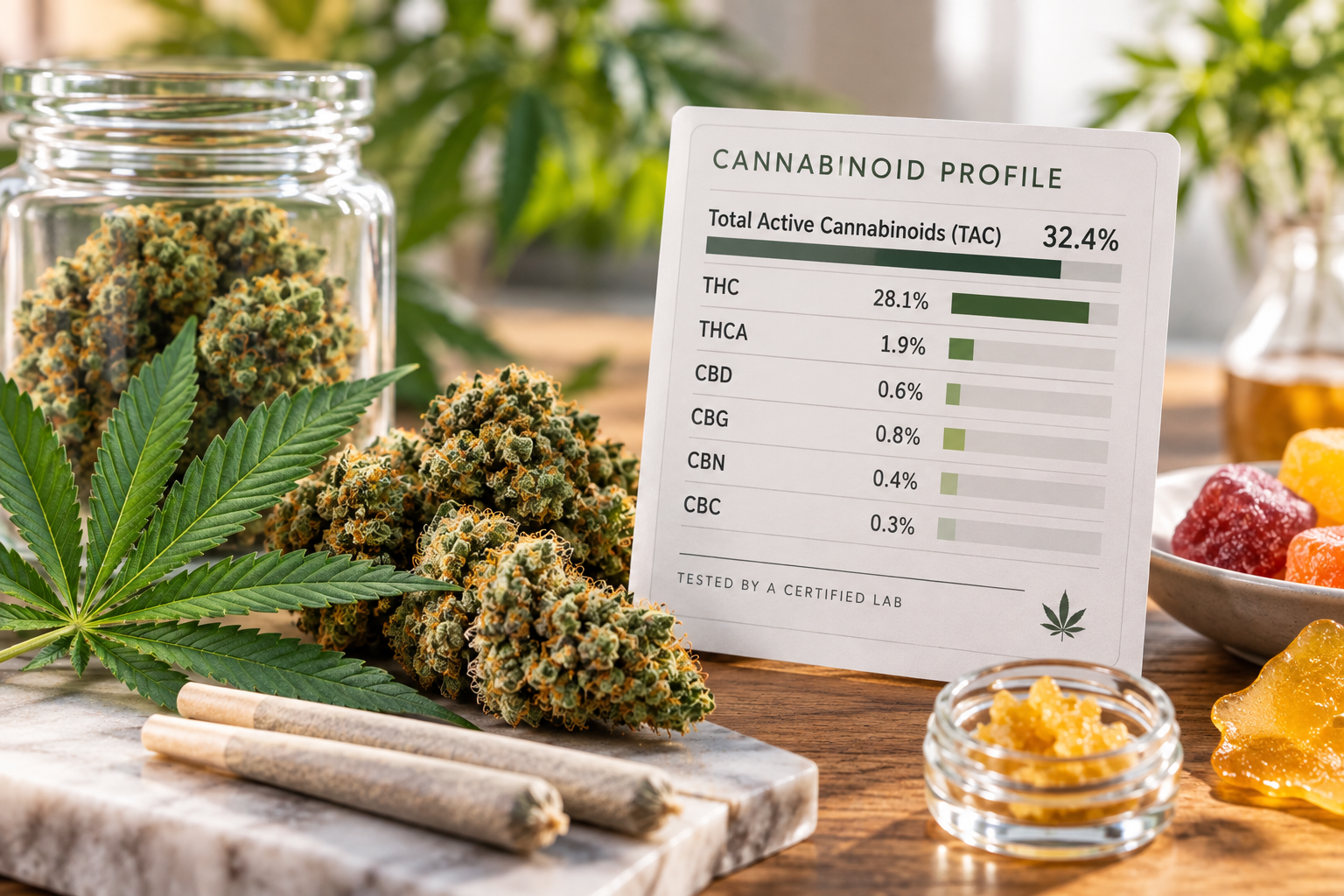
Once you know what TAC means, spotting it is easy. Find the cannabinoid panel, locate THC, then look for a total or TAC figure if the product lists one.
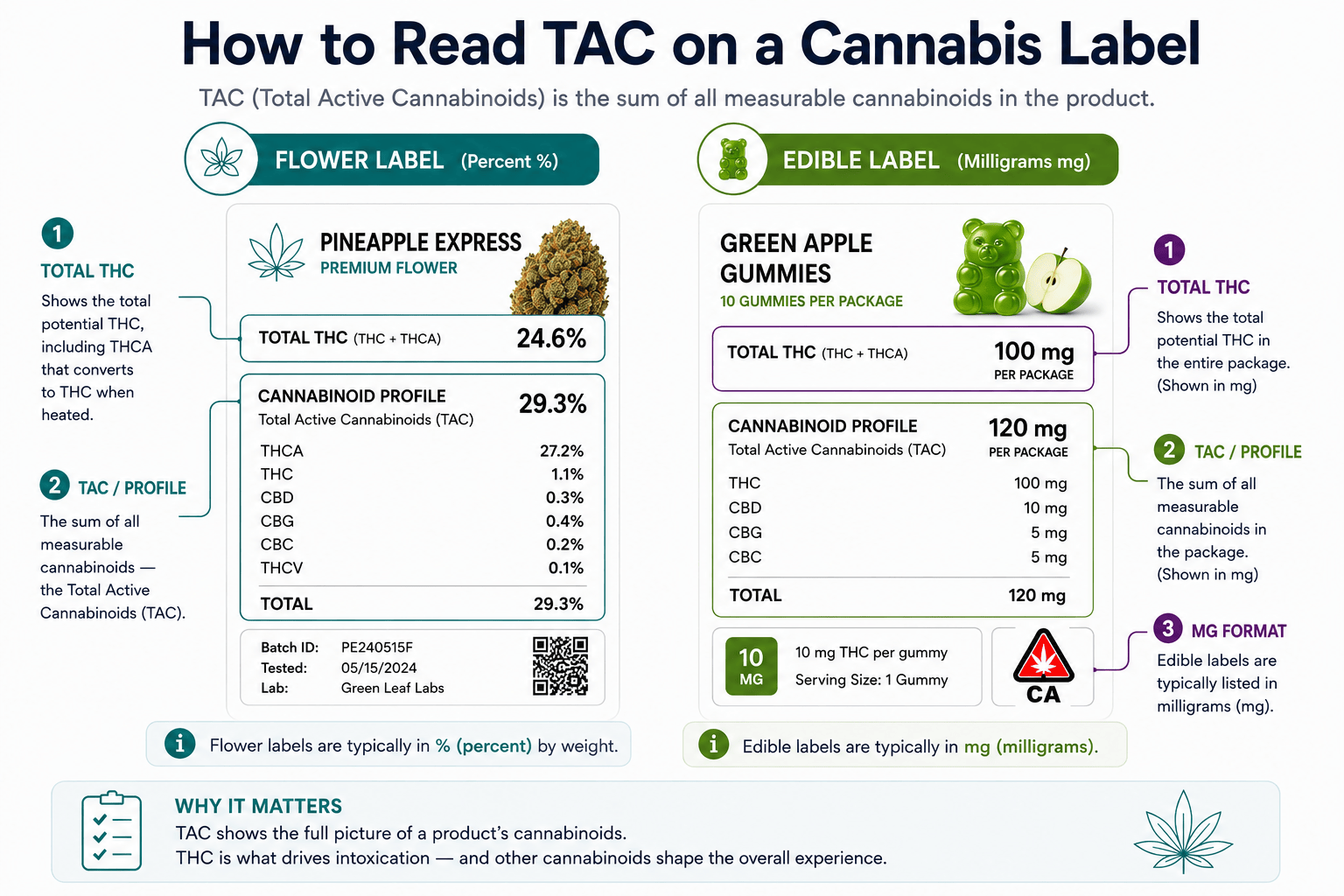
Image lightbox

What's actually printed on that panel depends on your state — labeling rules are set locally, not federally, so requirements shift. The Massachusetts Cannabis Control Commission calls it a "cannabinoid profile," not TAC, and requires labels to include THC, CBD, THCA, CBDA, and other cannabinoid levels. Other states handle it differently — don't assume your local label follows the same script.
Watch the units. Flower shows cannabinoid content as a percentage by weight. Gummies and edibles show milligrams per serving and per package. A 25% on a flower jar and 25 mg on a pack of gummies are not remotely the same thing — mixing those up is an easy way to misjudge a dose.
The label check, simplified: find THC, find TAC or total if it's listed, confirm whether you're reading a percentage or milligrams. Then weigh the cannabinoid profile against what you already know about your own tolerance.
Frequently asked questions
What does 90% TAC mean?
A 90% TAC generally means the lab calculated roughly 90% total active cannabinoid content by weight under its reporting method. You'll see numbers this high mostly on concentrates, and it doesn't mean the product contains 90% THC.
What is 95% TAC?
A 95% TAC generally means the lab calculated about 95% total active cannabinoid content by weight under its reporting method. That's an extremely concentrated result, but it doesn't mean the product is 95% THC or tell you exactly how high you'll get.
Does TAC make you high?
No, TAC itself doesn't get you high. THC is the primary intoxicating cannabinoid inside that total. Other cannabinoids can add to TAC without being intoxicating at all.
Is higher TAC better?
Not automatically. Higher TAC means a higher calculated concentration of cannabinoids under the reporting method being used. There's no magic threshold that makes one product "better." If potency is the goal, look straight at the THC level and factor in your own response to cannabis.
What is TAC vs CBD?
CBD is one cannabinoid that can contribute to a product's TAC, and it isn't intoxicating. TAC is the broader figure, which can include CBD, THC, and other cannabinoids depending on how the lab calculates it.
What is TAC in gummies?
Edibles list cannabinoid content in milligrams, not the percentages you'll see on flower. Check milligrams per serving and per package so you know exactly what that TAC number is actually telling you.
Ready to shop?
Now that you know what those numbers on the label actually mean, you can put them to use.