Zeroing makes the cloud disappear, not the risk. Here's how the trick works, why people do it, and what your lungs get out of the deal.
 Photo by: Gina Coleman/Weedmaps
Image lightbox

Somebody in every session eventually takes a hit and exhales to basically nothing, like the vapor got cold feet. That's zeroing. It's a real breath-control skill, it takes a few tries to get right, and a quiet exhale has exactly zero bearing on whether the hit was safer.
What "zeroing" actually means
Zeroing is taking a hit and exhaling little to no visible aerosol. Some circles call it zero vaping, others zeroing a hit. Same technique either way.
The mechanism is less "vapor vanishes" and more a numbers game happening in your chest. A smaller hit leaves less aerosol to exhale in the first place. A brief breath hold can shrink the visible cloud further, since aerosol deposits along the respiratory tract and the droplets change size as they travel. That's a documented process in respiratory research generally. What a faint exhale can't tell you is exactly how much stuck around versus evaporated versus never made it past your throat. The cloud disappearing is the visible symptom of several things happening at once, and nobody's built a gauge for it.
How to zero a vape: step by step
There's no lab-tested protocol here, no peer-reviewed hold time, no official wattage. This is the common technique, not a scientific standard.
- Take a smaller pull. Less vapor going in means less to deal with coming out.
- Follow it with a breath of plain air. Some people build this into the sequence, although it has no established physiological benefit.
- Hold for a beat. Some people count, some just go by feel. There's no magic number, and extending the hold solely to erase the cloud may increase respiratory deposition without making the hit safer.
- Exhale slowly. A gentler exhale disperses the remaining plume instead of pushing out one dense cloud.
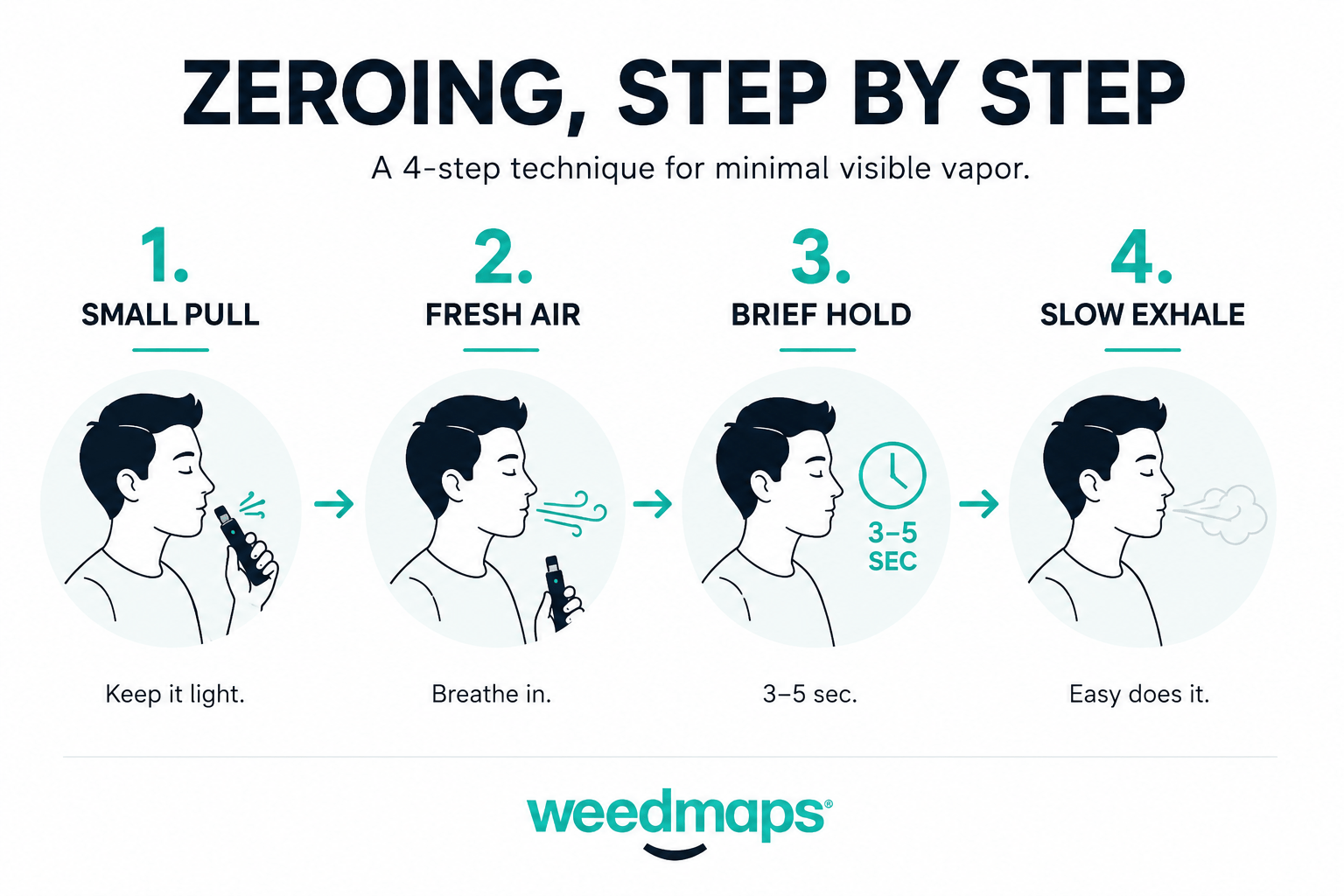
Image lightbox

That's the whole move. The learning curve is mostly about resisting the urge to rush the exhale, which is the one part everybody wants to skip.
How to zero a vape pen, cart, or dab pen
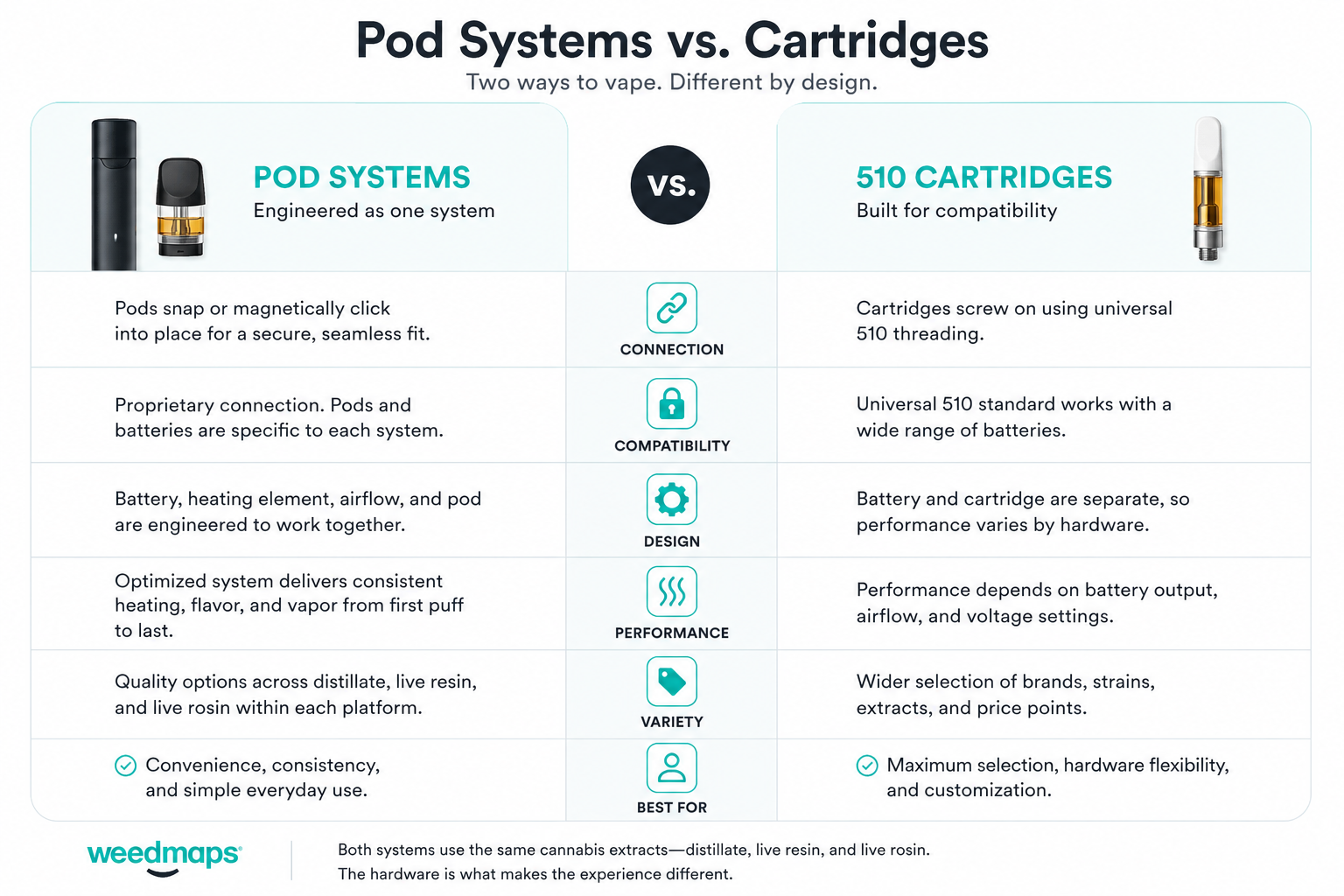
Same basic sequence whether it's a cart, a disposable, or a dab pen. What changes the math is the hardware and the oil: temperature, coil design, airflow, formulation, and how long you draw all affect how much cloud you're working with. There's no universal setting that tames every cartridge, so treat "start small" as the rule and adjust from there rather than copying someone else's wattage.
Where the product comes from matters more than any of that. During the 2019 to 2020 EVALI outbreak, most patients reported vaping THC-containing products, and among those who could specify a source, the large majority pointed to informal channels: friends, dealers, unlicensed sellers. A smaller share bought from commercial sources, and a few reported both. Vitamin E acetate was detected in many of the affected product samples and in lung-fluid samples from 48 of 51 EVALI patients studied, which is why CDC calls it strongly linked to the outbreak, though not the confirmed sole cause. (CDC EVALI overview)
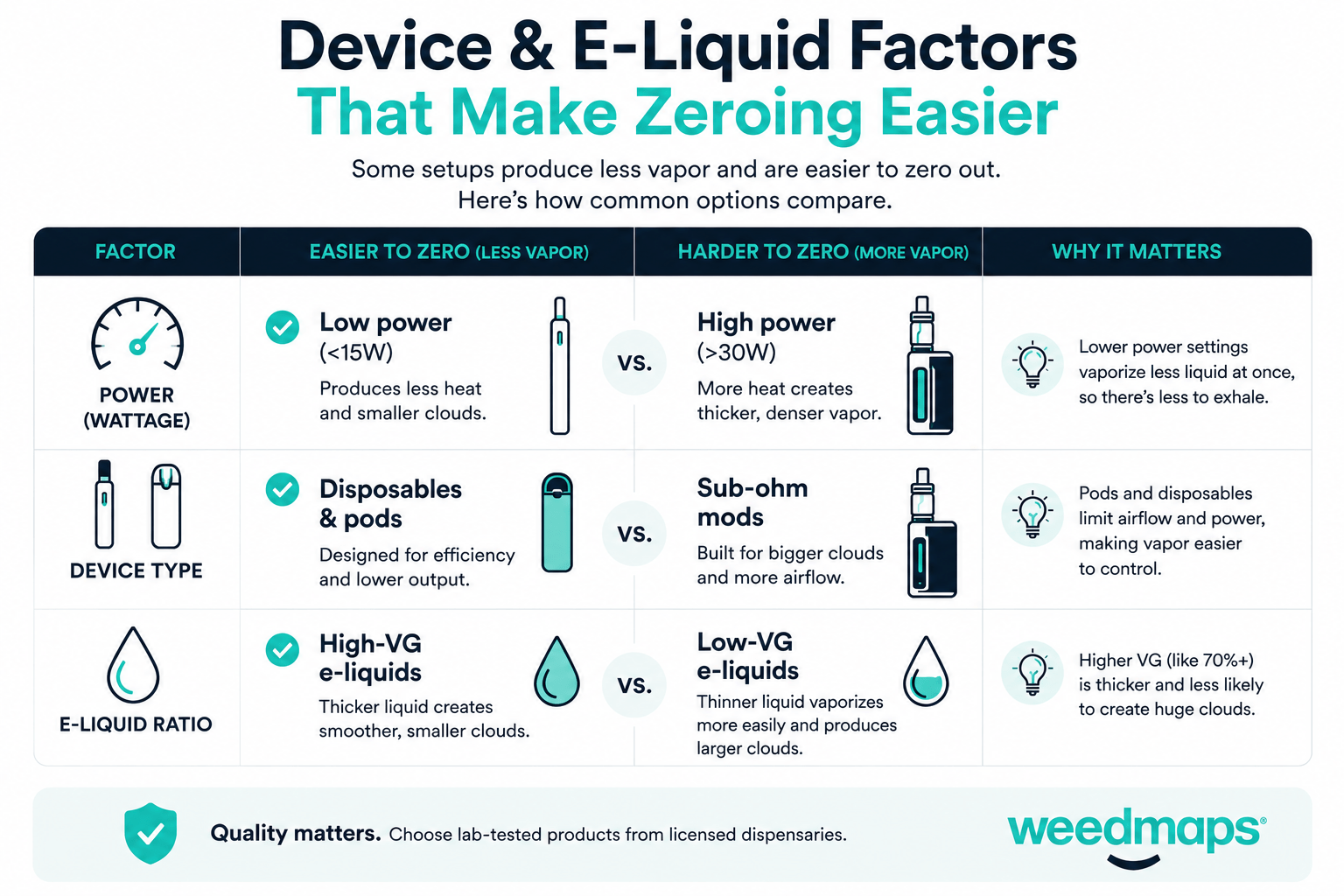
Image lightbox

Separately, a 2024 study presented at the American Chemical Society's spring meeting, from researchers at Health Canada's Office of Cannabis Science and Surveillance, found nano-sized metal particles, including lead, in cannabis vape liquids before the devices had ever been heated. Both regulated and illicit products contained metals, though some illicit samples carried up to 100 times more lead than the regulated ones tested. (ACS press release) A broader scoping review of the literature also found that device hardware itself can leach metals like nickel, chromium, lead, cadmium, and copper into the aerosol, with device age playing a role. (Heavy Metals in Cannabis Vapes scoping review)
None of that makes a licensed dispensary cart risk-free, full stop. It does mean regulated products come with manufacturing standards and contaminant testing that an informal or illicit source simply doesn't have, and that's a meaningful difference even if it's not a guarantee.
Zeroing, ghosting, and stealth vaping aren't interchangeable
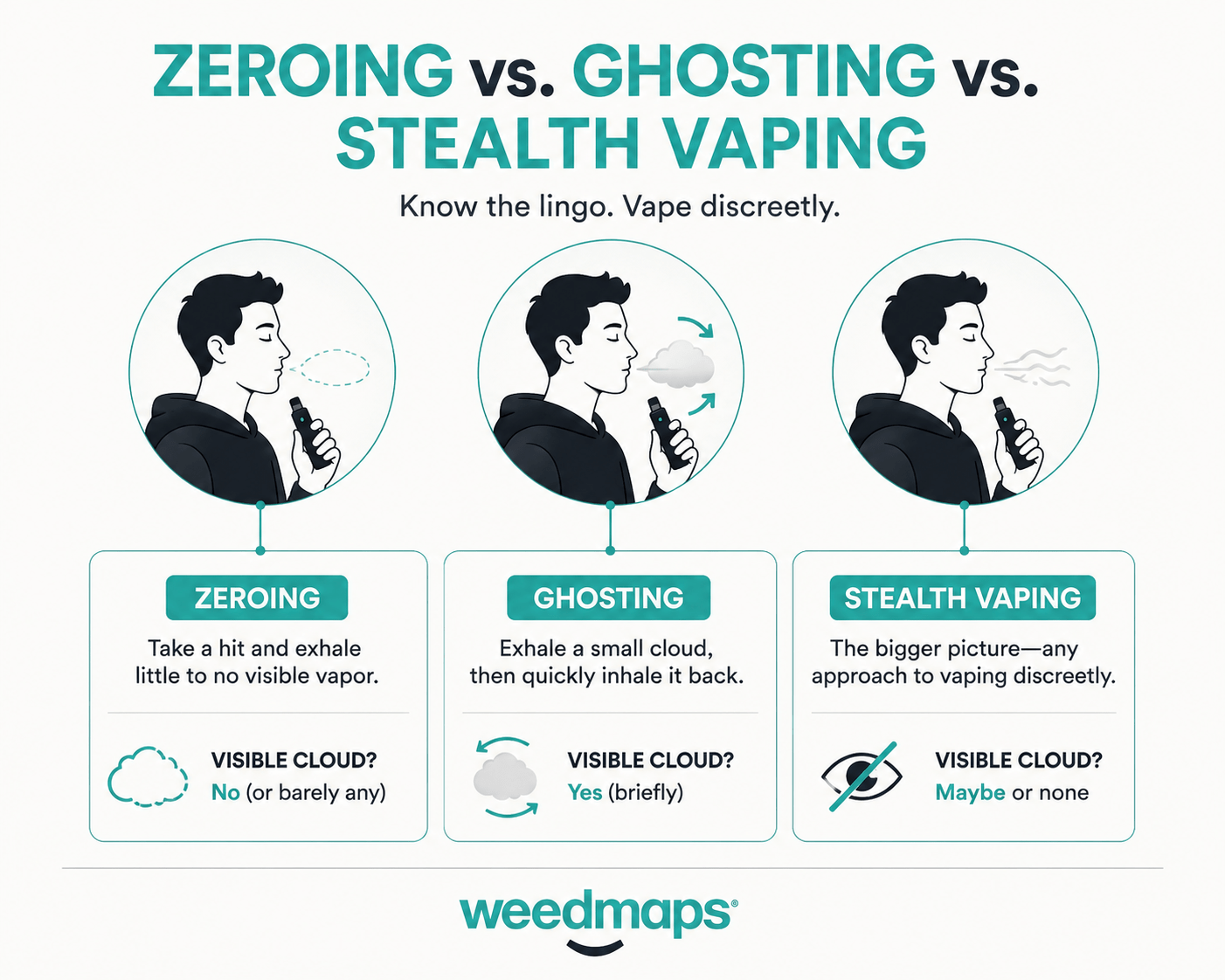
Image lightbox

- Zeroing: exhale little to no visible aerosol after a hit.
- Ghosting: let a small cloud out, then pull it back in before it drifts.
- Stealth vaping: the umbrella term covering both, plus anything else aimed at keeping vapor low-key.
Does zeroing make vaping safer?
No. A quiet exhale is a discretion trick, not a harm-reduction one. A longer breath hold may increase how much aerosol deposits in the respiratory tract instead of getting exhaled, which is plausible based on general respiratory research, though it hasn't been specifically measured for cannabis zeroing as its own thing.
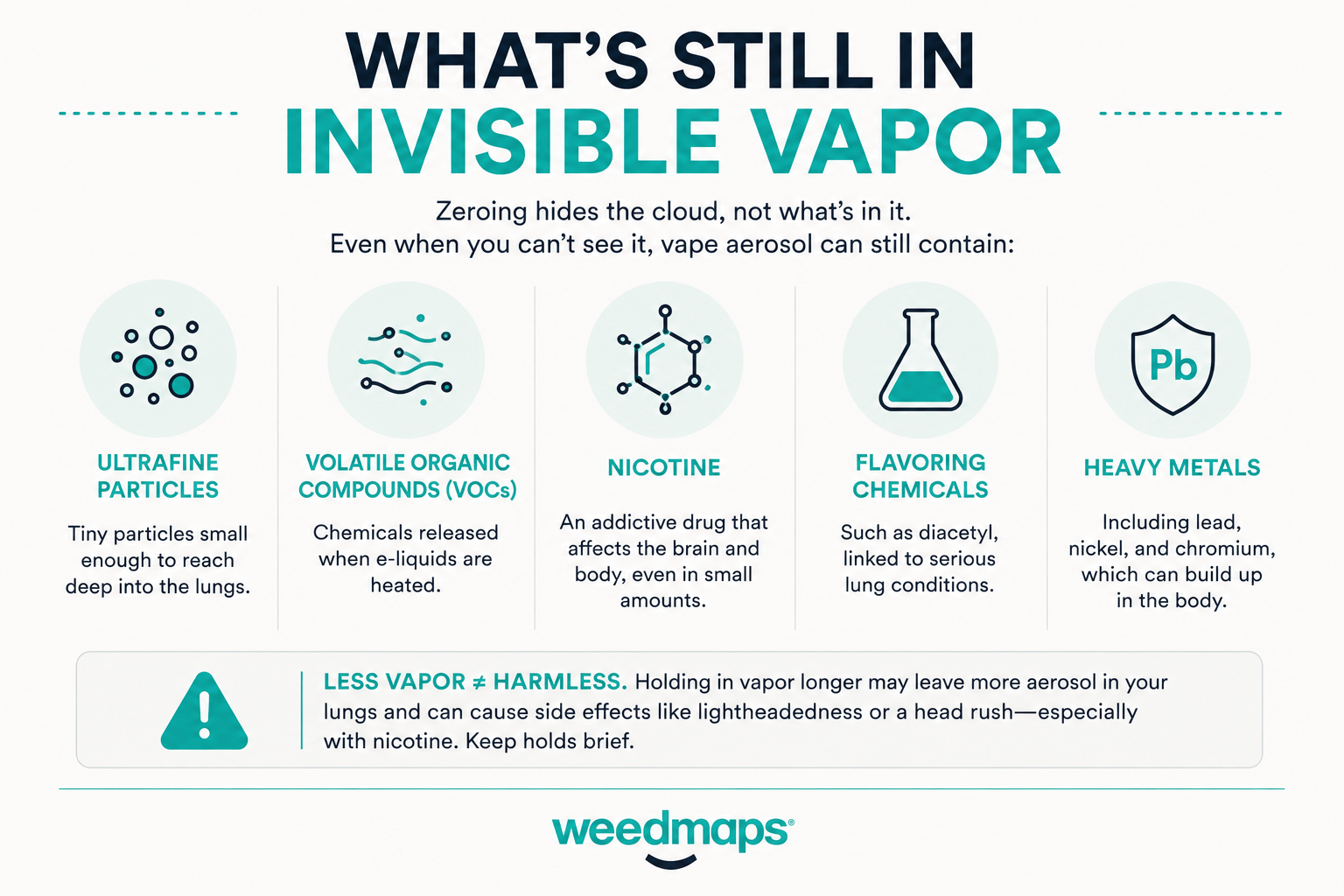
Image lightbox

Making the exhale less visible doesn't remove the substances you inhaled or turn the remaining aerosol harmless. CDC lists nicotine (in nicotine-containing products) and flavoring agents like diacetyl among what e-cigarette aerosol broadly can carry, and the American Lung Association flags formaldehyde, acrolein, heavy metals, and ultrafine particles depending on the product. For cannabis specifically, the metals findings above are the more relevant concern.
Breath holding can also just make some people feel lightheaded. The breathing pattern itself may play a role, and nicotine or a strong dose of THC can intensify the sensation. If discretion is the only goal, there's no reason to hold longer than the technique above calls for.
Zeroing doesn't rewrite the rules of the room
A quiet exhale doesn't turn a no-vaping space into a vaping space, and it doesn't clear the aerosol out of the air. CDC researchers note that secondhand e-cigarette aerosol can contain volatile organic compounds such as benzene and metals including nickel, tin, and lead. (CDC research on secondhand aerosol exposure)
Use this to keep your own hits low-key somewhere you're already allowed to vape. It's not a workaround for venue rules, house rules, or someone else's comfort.
Frequently asked questions
Does zeroing mean you're absorbing more nicotine or THC? No direct research on this exists for cannabis vapes. The closest data point comes from cigarettes: one study found smokers retained about 98% of inhaled nicotine with no hold at all, versus roughly 99.9% after a ten-second hold, which is a small bump. (Nicotine retention study) Cigarette smoke and cannabis vapor aren't the same thing, so use that number as a loose reference point rather than a fact about your cart.
Does the technique work on any device? Lower-power devices and anything built for small pulls make this easier. A device tuned to throw big cannabis clouds is fighting you the whole time, since there's just more vapor to manage on the way out.
Is there a specific hold time or wattage that works best? No. There's no clinically established hold time, and the right temperature or wattage depends on the specific cart, coil, and oil in front of you.
If you're shopping for cannabis products, licensed dispensaries near you offer the regulated route, with more oversight and contaminant testing than an informal or illicit source can promise.