High-potency edibles hit differently because your body converts THC into a stronger compound, delays when effects begin, and can stack multiple doses into a single peak. That combination changes how the experience builds, making higher doses feel more intense and less predictable than inhaled cannabis.
 Photo by: Gina Coleman/Weedmaps
Image lightbox

Edibles don't build the way most people expect. With inhaled cannabis, effects show up quickly, giving you real-time feedback and room to adjust. Edibles remove that control. THC moves through digestion, gets converted in the liver into 11-hydroxy-THC, and enters circulation on a delay. By the time anything is felt, the dose is already set.
At higher doses, that system compresses. More THC moves through the same pathway, more of it converts into the active metabolite, and the delayed onset makes it easy to take more before the first dose fully lands. What follows isn't a gradual climb—it's a peak that builds quietly and then hits all at once.
Inhaled vs ingested THC follow completely different paths
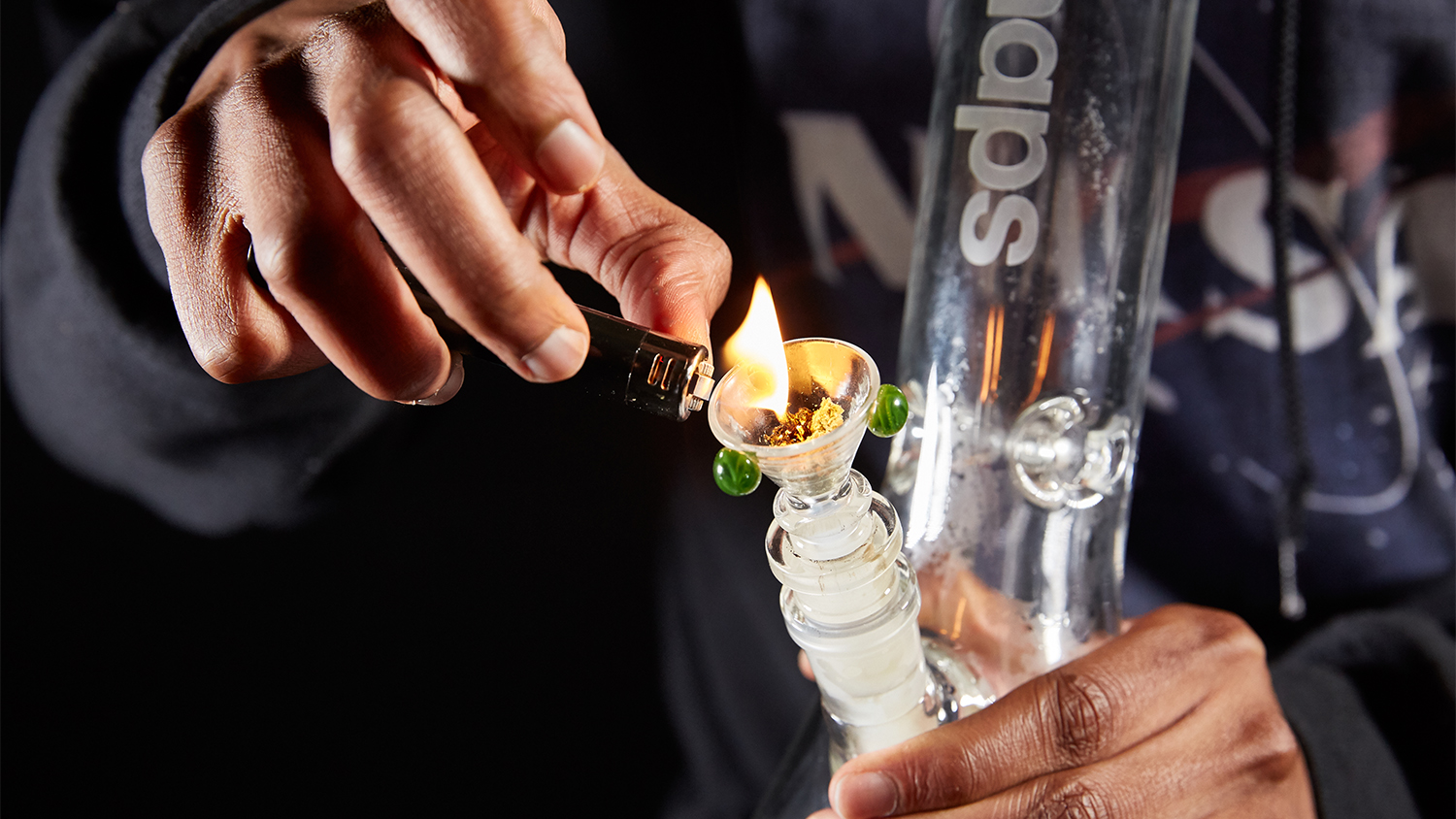
Inhaled THC moves fast. It enters through the lungs, reaches the bloodstream in minutes, and gives you immediate feedback on how it's landing.
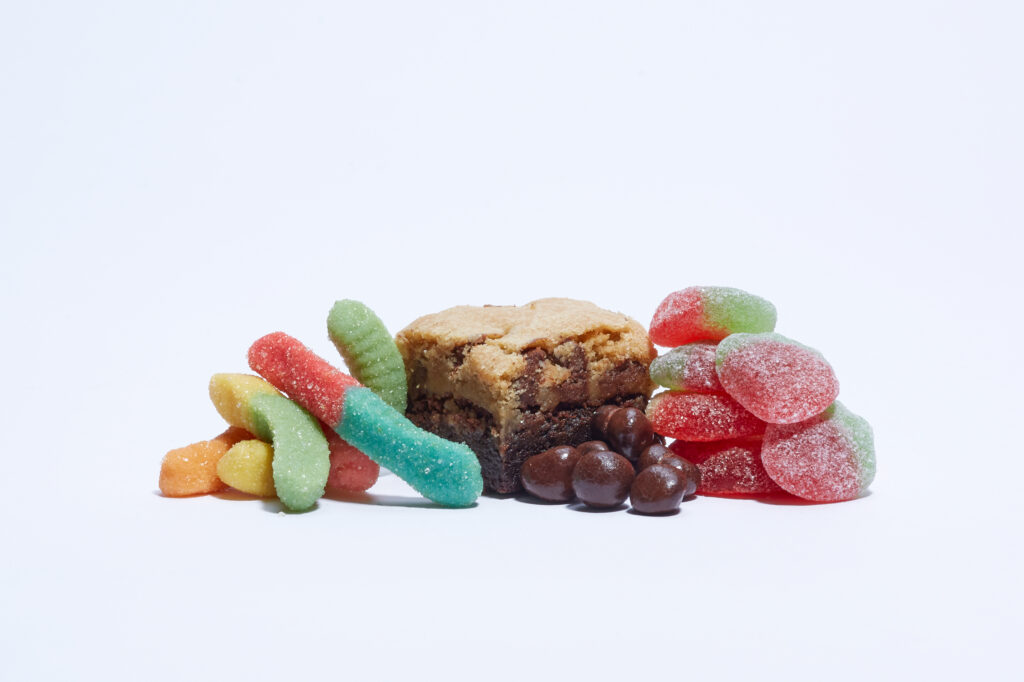
Edibles run a slower system. THC has to pass through digestion before it ever reaches circulation. There's no early signal, no quick adjustment, just a delayed build that plays out later.
Same THC. Different delivery. That gap is where most people misread what's about to happen.
What actually happens after you eat an edible
Once you eat THC, it moves through the stomach and into the small intestine, where absorption starts. From there, it travels to the liver before entering full circulation.
THC binds to fat, so absorption shifts based on what's in your system. A higher-fat edible or meal can push more THC into circulation. Lower-fat formats may process differently.
The number on the label is the input. What your body absorbs is the outcome.
The liver changes the compound before you feel it
Before THC reaches the brain, the liver converts it into 11-hydroxy-THC.
This metabolite crosses the blood-brain barrier more efficiently than delta-9 and tends to land heavier and more immersive — not just stronger, but different. You're not feeling what you consumed. You're feeling what your body made from it.
At higher doses, more THC moves through this same pathway, increasing total 11-hydroxy-THC exposure and amplifying the effect before it ever reaches your brain.
That shift is where edible intensity actually starts.
Delayed onset removes real-time control
Digestion and liver processing take time. Effects usually show up 30 to 120 minutes after dosing.
That delay changes how the experience builds. With inhaled cannabis, you adjust based on what you feel. With edibles, the decision to take more happens before anything lands.
That's the window where people overdo it. It feels quiet — until it isn't.

Image lightbox

Stacking compresses everything into one peak
If more THC is taken before the first dose fully processes, both doses move through digestion and conversion at the same time.
Instead of separate waves, they combine.
- The first dose is still building
- The second dose enters the same cycle
- Both convert and peak together
What starts as a slow build can collapse into a single peak — and once it's in motion, there's no pulling it back.
Metabolism differences change how hard edibles land
The same edible won't land the same way for everyone.
Liver enzyme activity controls how quickly THC converts. Body composition affects how cannabinoids are stored and released. Food intake shifts absorption timing.
At higher doses, small metabolic differences turn into real swings in intensity and duration — the same product can land light for one person and overwhelming for another.

Image lightbox

What this means when choosing edibles. Potency isn't just about strength, it's about how much room there is for the system to build.
Higher-dose edibles leave less space between “nothing yet” and “full effect.” Timing, format, and what you've eaten all shape how that curve plays out.
The label tells you how much THC is there. It doesn't tell you how it's going to land.
It's not just the dose, it's the process

Every edible follows the same chain: digestion → absorption → liver conversion → delayed onset → combined peak
That process defines how it feels, how long it lasts, and how hard it lands.
If you're comparing options or dialing in what works for you, Weedmaps helps you sort by dose, format, and real-world feedback, so you can choose based on how it actually performs, not just what's printed on the package.
Find edibles on Weedmaps and compare how they really land.