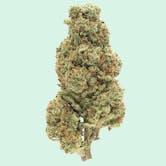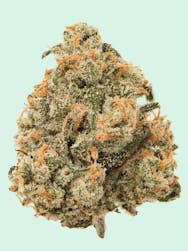
- Earthy (41% of reported flavors)
- Lemon (31% of reported flavors)
- Citrus (28% of reported flavors)
XJ-13 earned its Southern California reputation the old-fashioned way: by being passed around as a clone people actually remembered. Orange County Patient Care in Santa Ana created the line by pollinating a G-13 female with a male Jack Herer, then taking the resulting plant back to Jack Herer again to push the profile sweeter, brighter, and further toward the sativa side.
That extra Jack influence shows up immediately in the aroma. Lemon peel, sweet citrus, pine, herbs, and a little spice carry most of the profile, with enough earth underneath to keep the finish grounded. Some cuts read almost like citrus cleaner in the best possible sense, sharp, green, and unmistakably old-school.
The effect profile is where XJ-13 really separates itself from heavier G-13 descendants. Longtime fans describe a fast, upbeat head change with clear, conversational energy, followed by a calmer body feel that keeps the experience from getting too wiry. Creative, social, focused, and euphoric reports show up often, especially in well-grown examples.
The strain also has hardware behind the hype. XJ-13 took bronze for Best Sativa at the 2012 High Times Cannabis Cup and later earned silver for Best Concentrate in 2014.
For a clone-only line that came out of California’s medical era, XJ-13 still feels remarkably current. The genetics are old-school, but the combination of citrus, pine, clarity, and balance never really went out of style.
XJ-13 traces back to a G-13 female crossed with Jack Herer, followed by another Jack Herer pollination to strengthen the sweeter, more sativa-dominant side of the line.
The original Southern California version is clone-only, so modern seed offerings should be treated as recreations or approximations rather than guaranteed copies of the original cut.
Plants typically show moderate-to-tall stretch with strong lateral branching and a flowering window of roughly 8–9 weeks. The sativa influence can push height quickly after the flip, so topping, low-stress training, and early canopy control help keep vertical growth manageable.