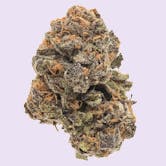
Oakland Purp puts a citrus twist on the purple tradition. Credited to Grandiflora Genetics, its likely pairing of Granddaddy Purple and Gelato 33 joins two generations of California flavor. Equilibrium Genetics identifies that same cross for the Oakland Purps it used in its breeding program.
The nose comes through sharper than the name might suggest: sour lemon and spicy herbs, with fruit underneath. Sweet berries fill out the flavor before grape-wine notes and zesty citrus take over. It’s got the grape, just enough pucker, and no interest in being mistaken for juice.
Heads who keep this strain on deck describe a happy, lifted mood with an easygoing, talkative side. The calm can arrive without taking the conversation hostage. Think shoulders dropping while somebody gets halfway through a story and remembers an even better one. Relaxation gets a seat at the table; it doesn’t have to clear the room.
Oakland Purp has also put in work beyond the jar. Equilibrium paired it with African Orange F2 to make Oakland Orange, while Purple City Genetics used it in Smac Town. That makes it breeding stock with a documented next generation, rather than just another purple name floating around a menu.
The key distinction is the pedigree. Oakland has plenty of purple history, but Oakland Purp refers here to the Grandiflora-attributed GDP × Gelato 33 line. A hometown and a color aren’t enough to make two cuts family.
Oakland Purps is recorded as a feminized release for indoor and outdoor gardens. Its flowering time, mature height, and numerical yields remain unspecified.
Dense flowers have appeared in grower observations. Its parentage also makes purple expression a reasonable possibility, although neither color nor structure is guaranteed across seed-grown plants. The individual selection will tell growers more than the “Purp” on the label.
The nine-week flowering schedule associated with Equilibrium’s Oakland Orange belongs to that offspring, not Oakland Purp.