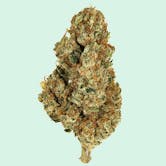
M39
M39 has an original propagation and a later remix, both rooted in the Skunk and Northern Lights families.
Origin 1: Super Sativa Seed Club crossed Skunk #1 with Basic #5, commonly identified as Northern Lights #5. The original catalog uses Basic #5, so that distinction belongs in its history. Quebec Cannabis Seeds later offered the same lineage. Earth, wood, and tobacco notes recur in consumer accounts, with fruit and lemon also described. Its Canadian “beasters” reputation includes complaints about poorly handled flower and mislabeled batches; the nickname alone cannot authenticate a cut.
Origin 2: Old School Breeders Association explicitly reworked M39 using Atomic Northern Lights and Original Roadkill Skunk. The breeder describes earthy sweetness and spice with stronger pungency, aiming for a fuller, longer-lasting experience. Same family reunion, different guest list.
Review circles describe the classic as calming, hungry, tingly, and often sleepy, though enthusiasm varies considerably between batches. The reworked version’s breeder describes a relaxed, euphoric lift with appetite stimulation and more heaviness in larger sessions. Independent feedback is stronger for the older M39 name than for that specific rework. Either way, the snack cupboard may get more attention than the to-do list.
The original SSSC release was sold as regular seed and selected for indoor and outdoor production. Its catalog emphasizes a compact, resinous Basic #5 mother. Later Quebec Cannabis Seeds stock is listed as feminized, with approximately 43 days of flowering, easy cloning, good branching, and a low profile. That short flowering estimate belongs to the later offering, not every plant carrying the name.
Old School Breeders Association lists six to seven weeks for its reworked cross, with tight growth, limited flowering stretch, and compact green buds carrying orange to brown pistils. The breeder rates yield as good to excellent without a dependable numerical benchmark. The original catalog’s unusually large yield claim is too poorly contextualized to serve as a modern harvest expectation.