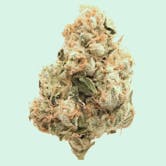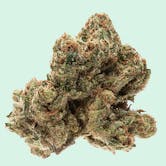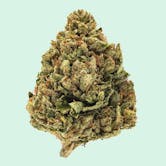
Kush Cleaner has a lemon-peel snarl and the resin to back it up. Pine and cleaner-sharp citrus crowd the nose, while big, heavily frosted flowers make a strong first impression before the jar gets anywhere near your face. The best-documented version comes from 707 Seed Bank, working with genetics originally bred by Loran.
Origin 1: Loran’s Longbottom Leaf supplies the roots: SFV OG × Jack’s Cleaner. Loran passed a male to 707, which made its own seeds and named the resulting line Kush Cleaner. Its genealogy lists Longbottom Leaf × Longbottom Leaf, a continuation of that family rather than a completely different recipe.
Origin 2: Other listings leave the Kush parent unnamed or describe different Kush selections. Those accounts lack the breeder detail behind 707’s line, so they remain alternate lineage claims. The name travels farther than the paperwork.
Jack’s Cleaner takes charge of the flavor, pushing lemon and pine through a pungent, almost solvent-like aroma. Earthy, woody, and lightly spicy notes appear in broader descriptions, but citrus does the heavy lifting. Think lemon peel crushed against fresh pine, with the sharpness turned up.
The flowers come thick and conspicuously frosty. 707 describes large buds loaded with resin and reports that extract makers have taken competition wins with the line. Specific placements aren’t identified, but its place in the breeder’s extensive crossing work is clear: Kush Cleaner has spent plenty of time on parent duty.
Kush Cleaner reportedly puts some spring in your thoughts before the Kush catches up with your body. Focus and creative energy lead, followed by a more relaxed finish that can soften the initial lift.
707’s regular-seed line grows indoors and outdoors, with an indoor flowering window of eight to ten weeks. Outdoor harvest is listed for mid-to-late October in the breeder’s conditions, so this one needs enough autumn runway to finish.
The breeder emphasizes large, heavily frosted flowers without publishing a measured yield or dependable height range. Use the specific cut’s growth habits to plan space and support, and treat the outdoor date as climate-dependent rather than a fixed appointment.