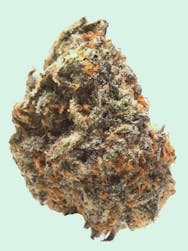
French Toast
- Honey (50% of reported flavors)
- Sweet (50% of reported flavors)
French Toast serves two different breakfasts: old-school Kush with a skunky edge, or vanilla and cinnamon with dessert-line genetics. The name travels well, but the recipe changes with the producer.
Origin 1: Archive Seed Bank. Archive’s release crosses Paris OG, also called Perris OG, with Face on Fire. Its roots run through Southern California’s OG scene, and its character follows suit: pungent, skunky Kush takes priority over the breakfast-menu promise. Archive identifies Face on Fire as the parent, rather than the Face Off OG BX2 pairing repeated in some strain accounts.
Origin 2: Verano. This version crosses Wedding Pie with Birthday Cake. Cinnamon, vanilla, and spice give it a more literal connection to its name. The pastry notes have an actual pedigree here, with both parents contributing dessert-family roots.
The flower’s defining sensory details depend on the release: Archive emphasizes skunky Kush, while Verano highlights warm spice and vanilla. A shared bud shape, color, or trichome pattern isn’t established across both lines. French Toast has more than one recipe, and the name alone doesn’t tell you what the finished plate looks like.
Menu regulars describe happiness, relaxation, and an appetite that can make the breakfast reference inconveniently persuasive. Some accounts include a euphoric lift before a slower, more settled finish. The name suggests brunch; the reported experience leaves room for a second helping and a very unhurried afternoon.
Archive’s French Toast was released as regular seeds and is cataloged for indoor and outdoor cultivation, with approximately 60 days of flowering. Reliable numerical yields, mature heights, and outdoor finishing dates aren’t established in the supplied breeder material.
Moldavite Genetix also lists a French Toast F2, produced by crossing two French Toast plants. This regular-seed continuation is cataloged for indoor, outdoor, and greenhouse cultivation, with approximately 67 days of flowering. Its supplied description and genealogy disagree about the ancestral pollen parent, so that entry does not establish an additional, independently confirmed origin.
Verano’s release lacks sufficiently documented public flowering and yield specifications to assign it Archive’s numbers.