A hash flag is a thin sheet of pressed full melt hash used to prep a dab and test how the resin behaves before it hits the banger.
The technique has become popular with full-melt hash consumers because it reveals a lot quickly. When the hash is gently pressed between parchment, good resin should warm up, grease slightly, bind together, and form a cohesive sheet.
That sheet is the flag.

Image lightbox

It is not just a cleaner way to load a dab. It is also a small quality test. If the hash flags well, it is a sign that the trichome heads are resin-rich, mature, cleanly separated, and stored properly. If it crumbles, stays sandy, smears, or refuses to bind, the material may not behave like true full melt once heat is applied.
For anyone learning how to dab full melt, the hash flag is one of the easiest ways to understand what you are actually working with before committing it to quartz.
What is full melt hash?
Full melt hash is a high-grade solventless concentrate made primarily from cannabis trichome heads.

Image lightbox

Those trichome heads are the tiny resin glands on cannabis flower that hold much of the plant's cannabinoids and terpenes. In full melt ice water hash, the goal is to separate those resin heads from the rest of the plant using ice, water, agitation, and filtration.
While consumers often refer to '6-star full melt,' it's worth noting that the star system is an informal grading convention used within the solventless community rather than a universally standardized scale. There isn't an objective threshold that defines exactly where 5-star ends and 6-star begins, so melt quality is still evaluated through experience and resin performance.
That makes full melt different from solvent-based concentrates like live resin, shatter, or wax. Those products use solvents to extract cannabinoids and terpenes from the plant. Full melt ice water hash uses water, temperature, and screens to separate the resin mechanically.
It is also different from rosin. Rosin is made by applying heat and pressure to flower, kief, or hash. Full melt hash is the loose resin collection before any rosin press.
The name comes from performance. True full melt should bubble, melt, and vaporize cleanly when dabbed at the right temperature. Lower-grade hash may still be useful, flavorful, or potent, but contains more plant material. That extra plant material does not melt like resin. It chars, darkens, and leaves residue behind.

Image lightbox

That is why trichome quality matters so much. Full melt is not about collecting the most material possible. Producing top-tier full melt requires much more than a skilled hashmaker. It starts with genetics capable of producing resin with excellent melt potential, followed by expert cultivation, careful harvest timing, gentle washing, proper freeze drying, and meticulous cold storage. Every step contributes to the final result and not every cultivar is capable of becoming true top-tier full melt, even when grown and processed perfectly. Some cultivars simply express resin differently.
What is a hash flag?
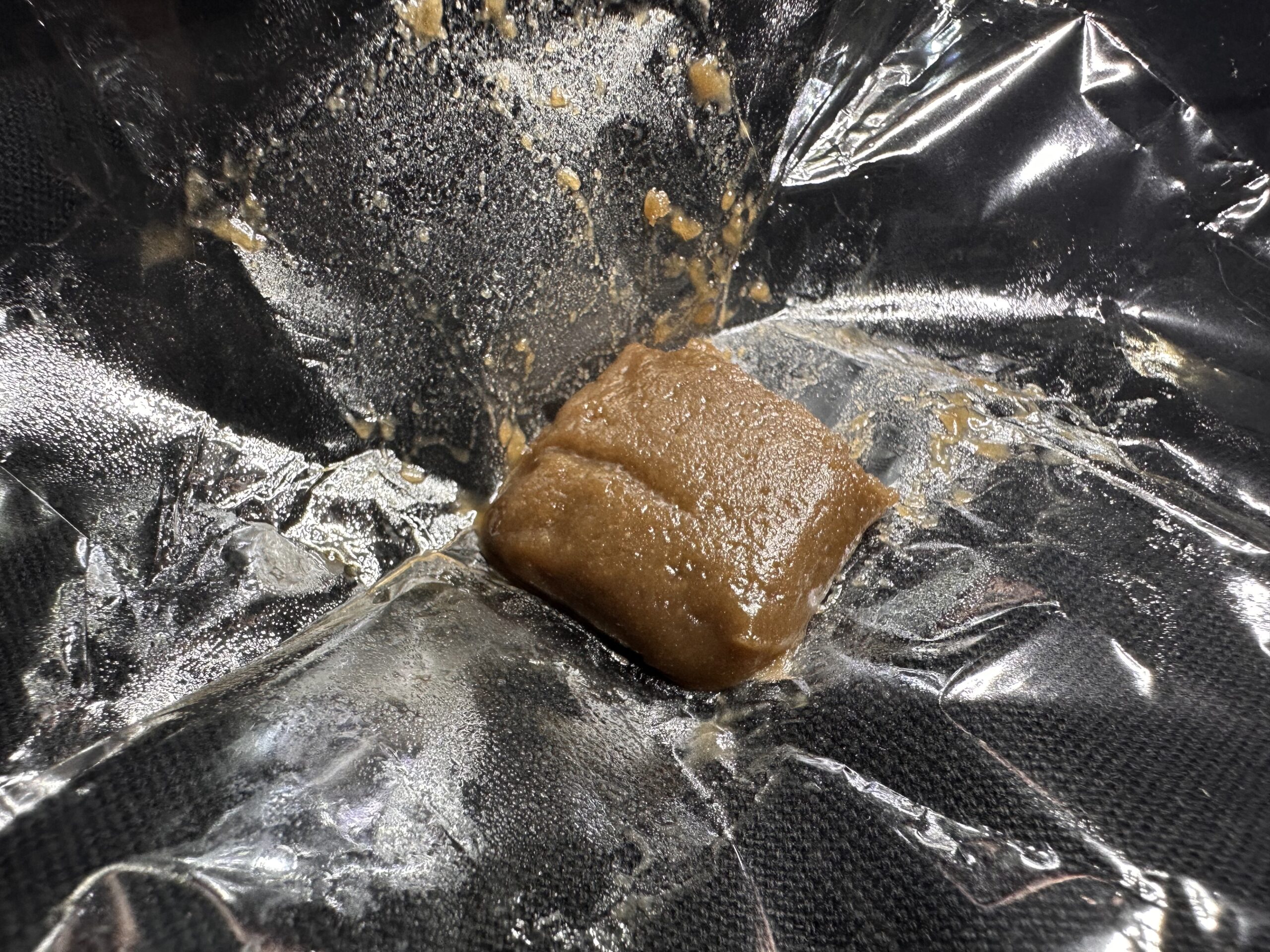
A hash flag is a thin, pressed sheet of full melt hash.
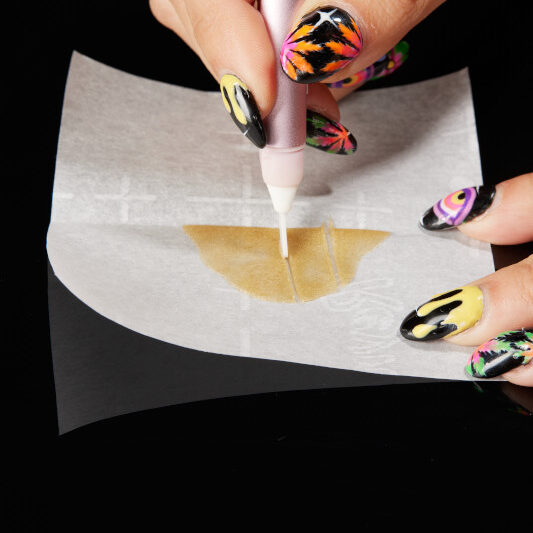
The name comes from the way the pressed resin looks after it is warmed and flattened between parchment. It becomes glossy, flexible, and flag-like, making it easier to portion and place on a dab tool.
Hash makers and solventless enthusiasts use the technique because loose full melt can be delicate. Fresh ice water hash may have a sandy or granular texture, which can make it harder to handle cleanly. Pressing it into a flag gives the resin structure.
More importantly, the flag shows how the hash responds to warmth and pressure.
Good full melt should not need to be forced. With gentle hand warmth, the trichome heads should begin to soften and grease up. The resin should bind together into one sheet instead of staying loose or dusty.
That behavior previews the dab. If the hash comes together cleanly as a flag, it has a better chance of melting cleanly in the banger.
How the hash flag test works
The hash flag test starts with a small amount of full melt hash and a clean piece of parchment paper.
Place the hash on the parchment, fold the parchment over it, and apply gentle pressure with warm fingers. The goal is not to crush the hash or heat it aggressively. The goal is to let the trichome heads soften slowly.

Image lightbox

As the resin warms, it should begin to grease up. That means the trichome heads are releasing enough resin to bind the loose grains together. The texture should shift from sandy to cohesive.
Once the hash forms a thin sheet, you can open the parchment and cut or pull off a dab-sized portion. That small piece can then be placed on a dab tool and used like any other full melt dab.
A good flag forms with patience, not force. Too much pressure can smear the hash. Too much heat can damage terpenes before you even dab it.

Image lightbox

Think of the process as coaxing the resin into shape. If the material is true full melt, it should meet you halfway.
What a good hash flag should look like
A good hash flag should grease up easily.
As it warms between parchment, the loose hash should begin to look slightly glossy. That gloss is the resin softening and moving. It should not look wet, runny, or oily in a sloppy way. It should look like the trichome heads are binding into one workable sheet.
The flag should become cohesive. It should hold together when the parchment opens, rather than falling back into sand. It may stretch slightly when handled, which is a good sign that the resin has enough integrity to behave well under heat.
It should also hold its shape long enough to portion. Full melt is delicate, but a good flag should not crumble instantly or smear across the parchment like under-dried concentrate.
Color can vary depending on cultivar, wash quality, and storage, but many strong examples land somewhere between light blonde and golden amber. A darker shade is not automatically bad, but green flecks, fibrous bits, or murky color can point to plant contamination.
The final proof comes in the banger. A good hash flag should melt cleanly at lower temperatures and leave little to no residue. If it chars heavily, the hash may not be true full melt, even if it looked decent before heat.
What a hash flag can reveal about quality
A hash flag reveals how clean and resin-rich the material really is.
If the hash greases up and binds together, that suggests the trichome heads are mature, intact, and full of resin. If it stays dry and sandy, the material may be too old, too dry, poorly stored, or made from resin that lacks full melt characteristics.
The flag can also reveal contamination. Visible green specks, fibers, or plant dust are signs that non-resin material made it through the wash. That plant material shows up again during the dab as residue, char, or rough flavor.
Trichome maturity matters too. Immature resin may not grease and stretch the same way mature resin does. Overworked or damaged resin may smear instead of forming a clean flag.
Processing quality is another part of the story. Ice water hash depends on careful washing, proper micron separation, and patient drying. If the hash was washed too aggressively, dried poorly, or stored too warm, the flag can expose those issues quickly.
Storage matters because full melt is sensitive. Heat, light, air, and moisture can all change texture and melt quality. Properly stored hash should still press cleanly. Poorly stored hash may sweat, crumble, smear, or lose aroma.
A hash flag does not replace lab testing or a clean COA, but it gives you a real-time look at how the resin behaves.
How to dab full melt without chazzing your banger
Full melt generally performs best at lower temperatures.
Too much heat can scorch the resin, flatten flavor, and leave dark residue on the quartz. That dark staining is called chazzing. Once it builds up, the banger gets harder to clean and every dab after that can taste worse.
Lower-temperature dabs help protect the terpene profile and give the hash a better chance to melt instead of burn. Excessive heat can destroy the flavor you paid for and make even good hash look dirtier than it really is.
Chazzing becomes a real risk when temperatures climb too high, especially above the range where full melt can vaporize cleanly. Around 450°F and above, it becomes easier to scorch the material rather than gently melt it.
A small dab is the better first test. Full melt can be potent, and a rice-grain-sized portion is enough to see how the flag performs. If it melts cleanly, tastes clear, and leaves little behind, the hash is doing what full melt should do.
If the flag performs, the hash is worth dabbing

A hash flag is one of the simplest ways to evaluate full melt hash before a dab. View our reel on pressing a full melt hash flag on Facebook.
If the resin greases up, binds together, stretches slightly, and melts cleanly, it points to a properly made full melt concentrate. If it crumbles, stays sandy, looks planty, smears, or leaves heavy residue, the flag is warning you before the banger does.
Shop solventless concentrates and full melt hash on Weedmaps — browse by product, find licensed dispensaries near you for pickup or delivery.