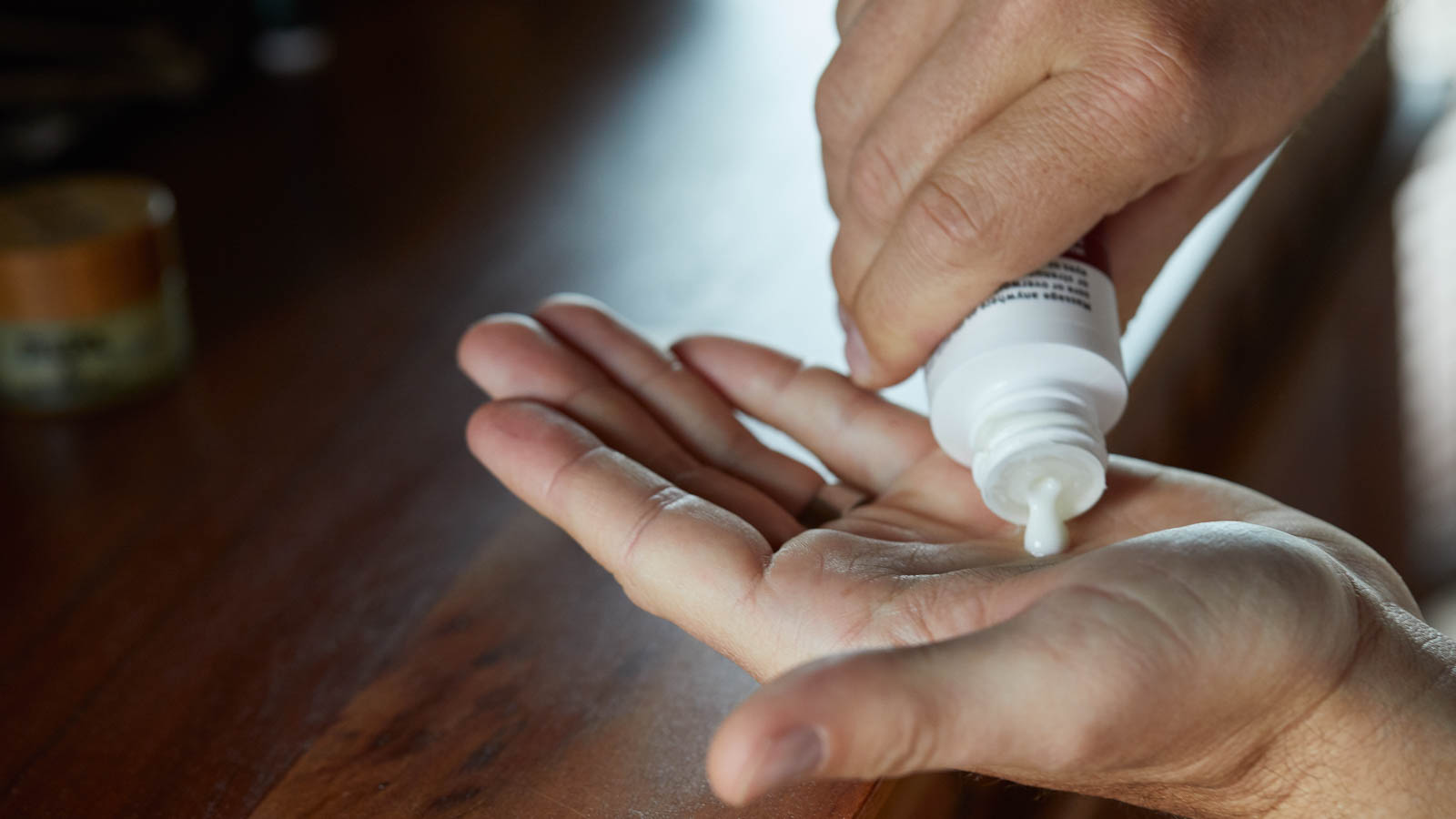
THC lotion works through the skin barrier. After application, cannabinoids interact with the outer layers of the skin and gradually move into nearby tissue, where formulation, carrier ingredients, and skin structure determine how far they go and where they land.
 Photo by: Gina Coleman/Weedmaps
Image lightbox

Unlike transdermal products, THC lotions are designed for localized skin absorption rather than systemic cannabinoid delivery. That distinction matters more than most product labels make clear. The skin barrier controls how cannabinoids penetrate, where they concentrate, and how they behave after application.
Start there.
Why the skin barrier controls everything
The skin barrier determines how any topical ingredient moves after application.
Its outermost layer, the stratum corneum, is made of tightly packed skin cells surrounded by lipids, a structure built to regulate what enters and exits the body. It's not an absolute wall, but it's an efficient one: most compounds, including cannabinoids, don't cross it fast or deep enough to reach systemic circulation.
When THC lotion hits the skin, cannabinoids work through this outer layer before reaching deeper tissue. The rate, depth, and distribution of that movement all depend on how well the formulation interacts with the barrier. In the tissue below — where CB1 and CB2 receptors associated with nerve, immune, and skin-cell signaling are present — that's where localized effects originate.
THC and skin's lipid layers
THC is lipophilic — it dissolves more readily in fats and oils than in water. That's not a minor chemistry detail. It's the reason cannabinoids can move through the skin barrier at all.
The stratum corneum contains lipid-rich pathways between its tightly packed cells. Because THC is compatible with those fatty environments, it diffuses through the outer skin layers more effectively than most water-soluble compounds. The skin's own chemistry gives it a route in.
This is why THC lotions lean on carrier oils, emollients, and other lipid-rich ingredients — they're not filler. They're the infrastructure that gets cannabinoids to the barrier and keeps them there long enough to work.
Texture changes how THC lotion behaves

Image lightbox

Texture shapes how a topical interacts with skin from the first contact.
A lightweight lotion spreads across a larger surface area and leaves a thinner layer behind. Thicker creams and balms sit heavier — more occlusive, longer contact time, slower to absorb. Those differences affect coverage, moisture retention, and how long cannabinoids stay in contact with the barrier.
Two products with identical THC content can feel completely different in use — and behave differently on the skin. Texture isn't a quality signal on its own. It's a formulation variable that shapes the experience.
How carrier ingredients shape absorption
Carrier ingredients do more than hold the formula together.
Coconut oil, shea butter, jojoba oil, sunflower oil, glycerin — each one brings different properties that influence how lotion spreads, how long it stays on the skin, and how effectively it supports cannabinoid movement through the barrier. Some increase moisture retention. Others improve texture, stability, or skin feel.
The formulation surrounding the cannabinoids is doing active work. That's why two lotions at the same THC concentration can absorb differently, feel different, and perform differently — the carrier matrix is part of the delivery.
How transdermal THC differs from topical THC
Topical and transdermal cannabis products don't just feel different — they're built for different outcomes.
THC lotion is formulated for localized skin absorption. Transdermal products are engineered to push cannabinoids past the skin barrier and into systemic circulation — which means whole-body effects, potential psychoactive changes, and a positive drug test are all on the table in a way they aren't with topicals.
Watch the packaging. Terms like transdermal, systemic delivery, patch, controlled release, or time-release signal bloodstream absorption, not localized use. If the label is using that language, it's not a topical.
Know the formula, not just the number.

THC lotion isn't a simple carrier — every formulation decision, from carrier oil to texture to cannabinoid concentration, changes how the product interacts with your skin. Two lotions at the same THC mg can absorb differently, feel different, and deliver different localized effects based entirely on what surrounds the cannabinoids.
Know what you're buying before you buy it.
Find lab-tested THC lotions, balms, and topical cannabis products near you for pick up or delivery.