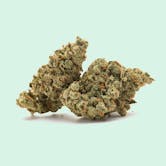
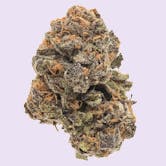
Romberry puts sweet berries on a pine-plank platter. Fruity up front and pungent underneath, this indica-dominant hybrid carries enough earthy woodland character to keep the blueberry notes from getting precious.
BC Growers Association documented the cross as a Romulan female paired with a selected Blueberry male. Its F1 release combined the mother’s large, sticky flowers with stronger stems and a fruitier aroma from the father. Freedom of Seeds also released the same named parental pairing, describing an 80/20 indica lean and a faster flowering schedule. These are separately documented breeder offerings with matching parent names, rather than conflicting genetic origins.
Large, resin-coated buds carry the family resemblance, with BC Growers Association emphasizing substantial, frosty colas. Sweet berry flavor meets sharp pine, earthy woods, and a spicy finish. The fruit softens the entrance, but the forest gets the last word. Sticky fingers are a more credible signature here than any promise of uniformly purple flowers.
Smokers who’ve stuck with this strain describe a surprisingly upbeat opening that gives way to lingering physical relaxation. Euphoria can arrive before the heavier, couch-friendly stretch, with sleepiness becoming part of the experience for some. Romberry starts with a little lift, then makes sitting down feel like a well-researched decision.
BC Growers Association’s release is a vigorous regular-seed F1 with a listed flowering window of 55–60 days and a height of 90–140 cm. Its breeder describes stronger stems, easy cloning, and beginner-friendly growth. Indoor and outdoor cultivation are both documented.
The original outdoor notes describe a clone planted in July in British Columbia that produced approximately four ounces by the end of October, with no observed bud rot. That supports the breeder’s favorable mold-resistance assessment for that grow, rather than guaranteeing resistance or the same harvest across climates.
Freedom of Seeds’ release is described as medium-height and moderately branchy, with an indoor flowering time of approximately 50 days and an outdoor finish around October 15 in suitable Northern Hemisphere conditions. Its catalog includes feminized availability. Follow the specifications for the particular release: those extra days belong to the genetics, not a typo on the calendar.