hybrid

Grapefruit Chem

aka G-Chem


Grapefruit Chem brings old-school Chem funk crashing into a wall of sharp citrus. Trade Wind Seed Company bred the strain, originally called G-Chem, from bag seed discovered in Sweet Pink Grapefruit flower. The breeder suspects a hermaphroditic Chem 91 plant supplied the pollen, making Sweet Pink Grapefruit × Chem 91 the accepted lineage.

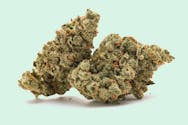
The nose wastes no time. Tart grapefruit peel and sour citrus strike first, followed by diesel, skunk, and a sweaty Chem funk that sticks around. Pine, earth, and pepper fill out the back end without dulling the fruit. Fans describe a clear, energetic lift with enough physical ease to keep the experience from feeling scattered. It is the kind of daytime smoke that keeps the conversation moving and the ideas coming.

Piff Coast Farms helped push Grapefruit Chem into the East Coast spotlight through releases grown with Piffanomics and later Hamilton Farms. Sour Family Farms has also released the cultivar in collaboration with Piff Coast. These are commercial grower partnerships, not separate breeding origins. The genetics still trace back to Trade Wind Seed Company’s G-Chem.

Published cultivation specs for Grapefruit Chem are limited, so the notes below lean on its sativa Chem-lineage genetics and early grower reports. It's generally treated as a moderate-difficulty grow that suits experienced cultivators. The reason is its slightly wild, sativa-leaning structure and long lateral branching, which sprawl more than a compact hybrid would. Indoors it tends to reach roughly 4–5 feet, while outdoors it stretches noticeably taller. Flowering runs about 9–10 weeks and finishes in dense, trichome-heavy colas shot through with bright orange pistils. Yield skews toward resin-packed, weighty flower when conditions cooperate. Growers report the best results in a warm, dry climate around 68–80°F. Keeping relative humidity near 40–50% through flowering helps those sticky, resinous buds stay clear of mold. Because these ranges trace back to parent-strain behavior and grower observation, treat them as starting points rather than a verified spec sheet.
This content is for informational purposes only.