THC can remain detectable for hours, days, or weeks depending on the drug test, your consumption habits, the dose, and your individual biology. Here's how detection windows compare across urine, blood, saliva, and hair tests.

Image lightbox

Whether you're applying for a new job, preparing for a workplace drug test, or simply curious, it's normal to wonder: how long does weed stay in your system? The amount of time THC remains detectable varies from person to person. Detection windows depend on the type of drug test, how often you consume cannabis, your body composition, and the type of product you use, whether that's flower, vapes, edibles, or concentrates.
Drug-test timelines are estimates, not countdown clocks. A result depends on the specimen, the test cutoff, your pattern of use, the THC dose, and individual biology. No chart can tell you the exact day you will test negative.
Cannabis testing laws continue to evolve, and workplace cannabis testing laws vary significantly from state to state. Understanding both the science and the legal landscape can help you make informed decisions.
(This page is for informational purposes only and not intended as medical advice. Please consult your physician before changing any medical treatment.)
Key takeaways
- Detection windows vary by test type. Urine tests can detect THC metabolites for roughly one to three days after a single use or 30 days and beyond in some chronic, heavy consumers. Those figures are estimates, not promises.
- Your habits and biology matter. How often and how much THC you use carry more weight than whether it came from flower, a vape, an edible, or a concentrate. Body composition and metabolism add more variation.
- There are no proven shortcuts. Detox drinks, supplements, and home remedies have not been shown to reliably speed up THC clearance. Abstinence allows concentrations to decline through normal elimination, but the timeline varies.
- Delta-8 THC can still trigger a positive drug test. Standard workplace drug tests generally do not distinguish between delta-8 THC and delta-9 THC metabolites during the initial screening.
- Drug test cutoffs affect your results. Federally regulated urine testing uses a 50 ng/mL screening cutoff and a 15 ng/mL confirmation cutoff for the marijuana metabolite. Other testing programs may use different thresholds.
How your body processes THC
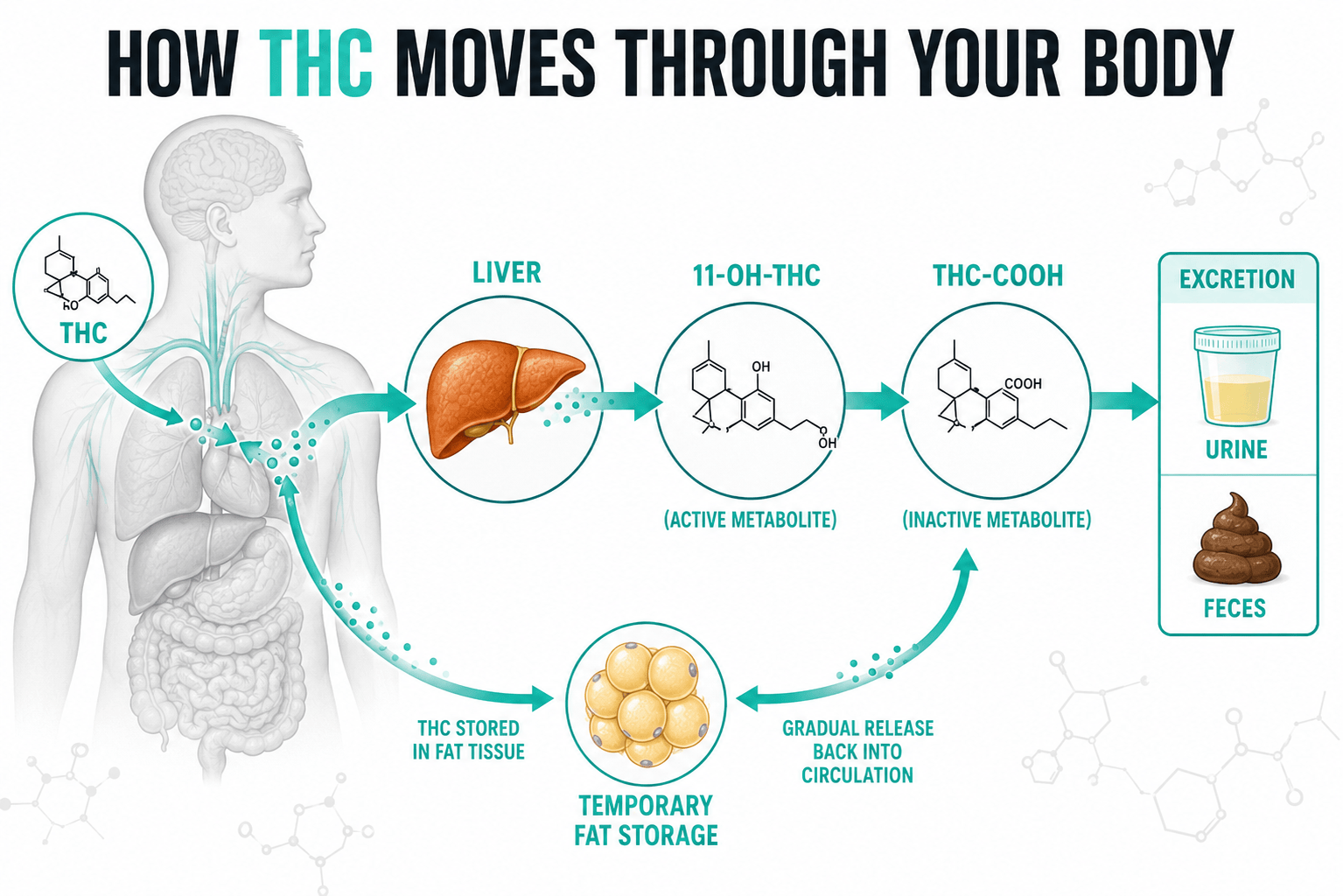
Image lightbox

Tetrahydrocannabinol (THC) is fat-soluble, which helps explain why it can remain detectable long after its effects wear off. After entering the bloodstream, THC distributes throughout the body, including fatty tissue, the liver, lungs, and spleen. The liver then converts THC into 11-hydroxy-THC, or 11-OH-THC, a psychoactive metabolite, before breaking it down further into THC-COOH. THC-COOH is inactive, but it is the primary metabolite most urine drug tests are designed to detect.
Your body clears cannabis compounds gradually. Research suggests that about 65% of cannabis-related compounds are excreted through feces and roughly 20% through urine. Scientists have identified more than 18 acidic THC metabolites, which helps explain why testing focuses on metabolic byproducts rather than only looking for active THC.
How quickly THC leaves the body depends heavily on consumption frequency. The estimated half-life is about 1.3 days for infrequent consumers, compared with roughly five to 13 days for frequent consumers. Some research has reported a terminal half-life as long as 67 days. That does not mean someone remains impaired for 67 days. It reflects how stored THC can slowly move out of fatty tissue and re-enter circulation over time. Regular consumption can increase this buildup, making fat storage one of the biggest factors limiting how quickly the body clears THC.
Consumption method also changes how THC is processed. Inhaled THC reaches the bloodstream quickly. Edibles travel through the digestive system and liver, where first-pass metabolism produces more 11-OH-THC. That changes the timing and character of the experience, but it does not create a universal drug-test window for edibles.
The amount of THC that reaches circulation also varies. Inhaled bioavailability changes with the product, device, puff pattern, and the consumer's experience. Combustion, sidestream smoke, and incomplete inhalation all reduce the dose delivered by smoking, but there is no fixed loss percentage that applies to every session. Many older detection studies used cannabis containing only 3% to 6% THC. Today's flower and concentrates can contain far more THC, so older estimates may not fully reflect modern doses.
How long does cannabis stay in your system by test type
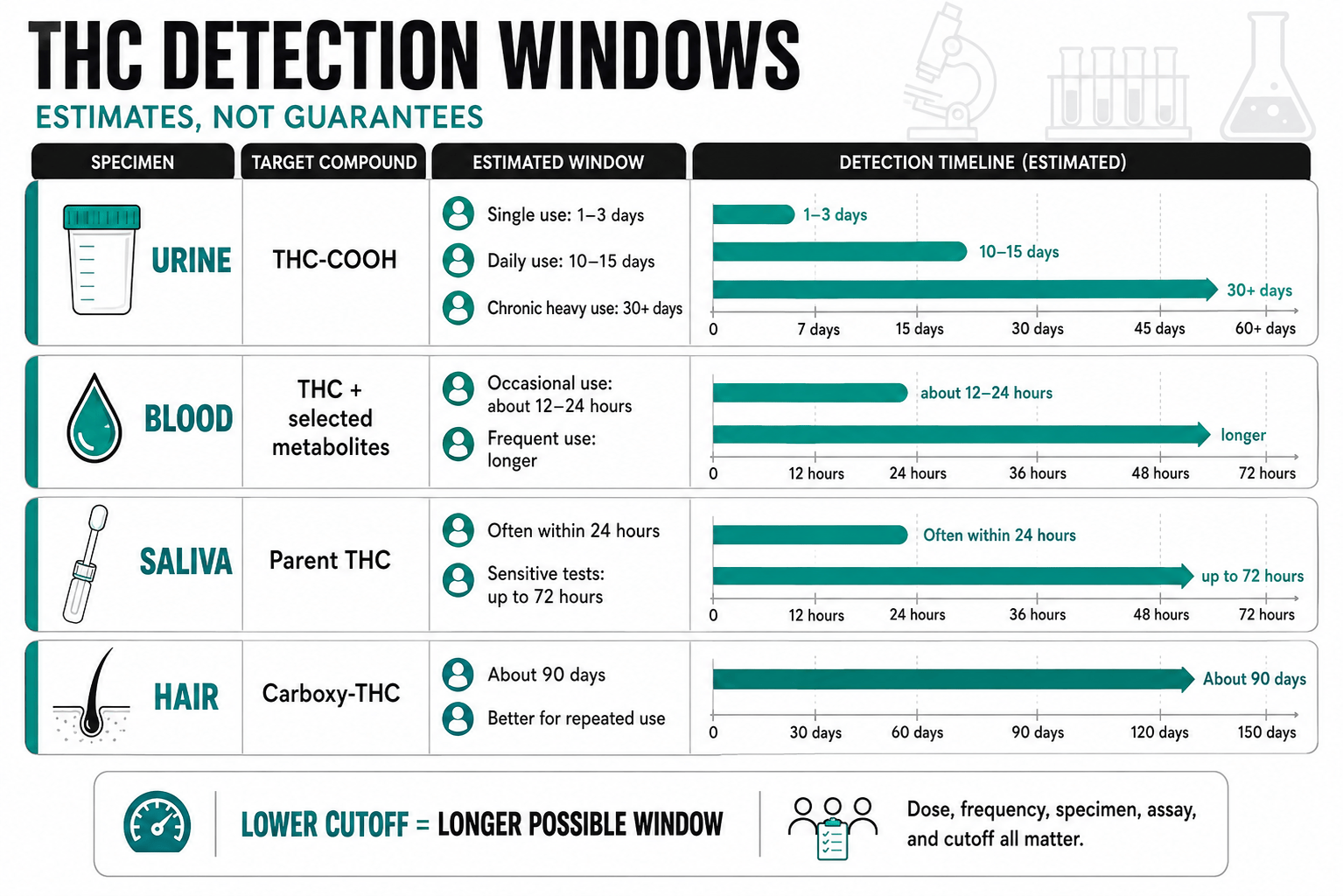
Image lightbox

The answer depends on which drug test you're taking. Every test looks for different cannabis compounds, uses different cutoff levels, and has a different detection window. While no timeline is guaranteed, understanding what each test measures can give you a better idea of what to expect.
Urine tests
Urine testing is by far the most common form of workplace drug screening, accounting for roughly 90% of employer drug tests. These tests don't look for active THC. Instead, they detect THC-COOH, the inactive metabolite your body produces after breaking down THC.
How long THC-COOH remains detectable depends largely on how often and how much you consume. At the 50 ng/mL screening cutoff used in federally regulated urine testing, the following ranges offer a rough planning guide:
| Usage frequency | Estimated detection window |
|---|---|
| Single use | 1 to 3 days |
| Occasional use (about three times per week) | 5 to 7 days |
| Daily use | 10 to 15 days |
| Chronic heavy use | 30+ days |
These are broad estimates, not guarantees. The categories do not account for dose, urine concentration, individual elimination, or differences among assays. Researchers have documented rare cases in which chronic consumers continued to test positive for 77 days, with exceptional reports extending to 95 days after stopping cannabis use. Those outliers should not be treated as normal detection windows.
Cutoff levels also matter. Lowering the screening threshold from 50 ng/mL to 20 ng/mL can extend the detection window for a single use event from just a couple of days to as long as a week. Two laboratories using different cutoffs can test the same person and report different results.
It's also common for people clearing THC to alternate between positive and negative urine tests. As stored THC slowly leaves fat tissue, metabolite levels can fluctuate around the cutoff instead of declining in a perfectly straight line. A positive result after a negative one doesn't automatically mean someone consumed cannabis again.
Blood tests
Blood panels can measure active THC along with selected metabolites. They are more useful for identifying recent exposure than urine tests, but a detectable THC concentration does not prove impairment or pinpoint when cannabis was consumed.
For occasional consumers, THC may remain detectable in blood for roughly 12 to 24 hours, depending on the test's sensitivity and the dose. Frequent consumers are a different story. One study found that 64% of chronic users had at least one THC-positive blood sample during seven days of monitored abstinence, and several participants still had detectable THC after a full week. Detection in a frequent consumer still does not establish current impairment.
Blood testing is uncommon for routine workplace screening. Instead, it's more often used following traffic stops, workplace accidents, or other situations where investigators are trying to determine whether cannabis was used recently.
Saliva tests
Saliva tests also look for parent THC rather than THC metabolites. Because THC can remain in the mouth after smoking or vaping, these tests generally reflect recent use.
Saliva tests generally have a shorter window than urine tests, but there is no single 24-to-72-hour rule. At a 2 ng/mL cutoff, research found detection times of up to 30 hours for frequent consumers and 26 hours for occasional consumers after a single smoking session. More sensitive laboratory methods using a 0.5 ng/mL cutoff may detect THC for longer, with some reports extending to 72 hours.
Federal rules now authorize oral fluid as an alternative specimen for regulated testing. The U.S. Department of Transportation adopted its oral-fluid rule in 2023 and amended related procedures in 2024. DOT employers still cannot begin oral-fluid testing until the federal government certifies at least two laboratories, including one that can test the split specimen.
Hair follicle tests
Hair testing provides the longest detection window of any common drug test. A standard 1.5-inch hair sample represents roughly 90 days of hair growth, making these tests useful for identifying patterns of long-term cannabis use rather than recent consumption.
THC metabolites do not appear in a collectable hair segment immediately. Hair testing therefore misses very recent use and performs better at identifying repeated exposure than a single event. Detection rates vary widely with use frequency, hair characteristics, collection practices, washing procedures, and laboratory methods. Body hair may reflect a longer and less clearly defined period than scalp hair, but its growth cycle cannot support a precise month-by-month timeline.
When a hair test confirms carboxy-THC, it provides stronger evidence of consumption because the metabolite forms in the body. Testing for parent THC alone is more vulnerable to questions about external contamination. Hair testing is relatively uncommon and is typically reserved for legal proceedings, child custody cases, or high-security employment screening.
Factors that affect how long THC stays in your system
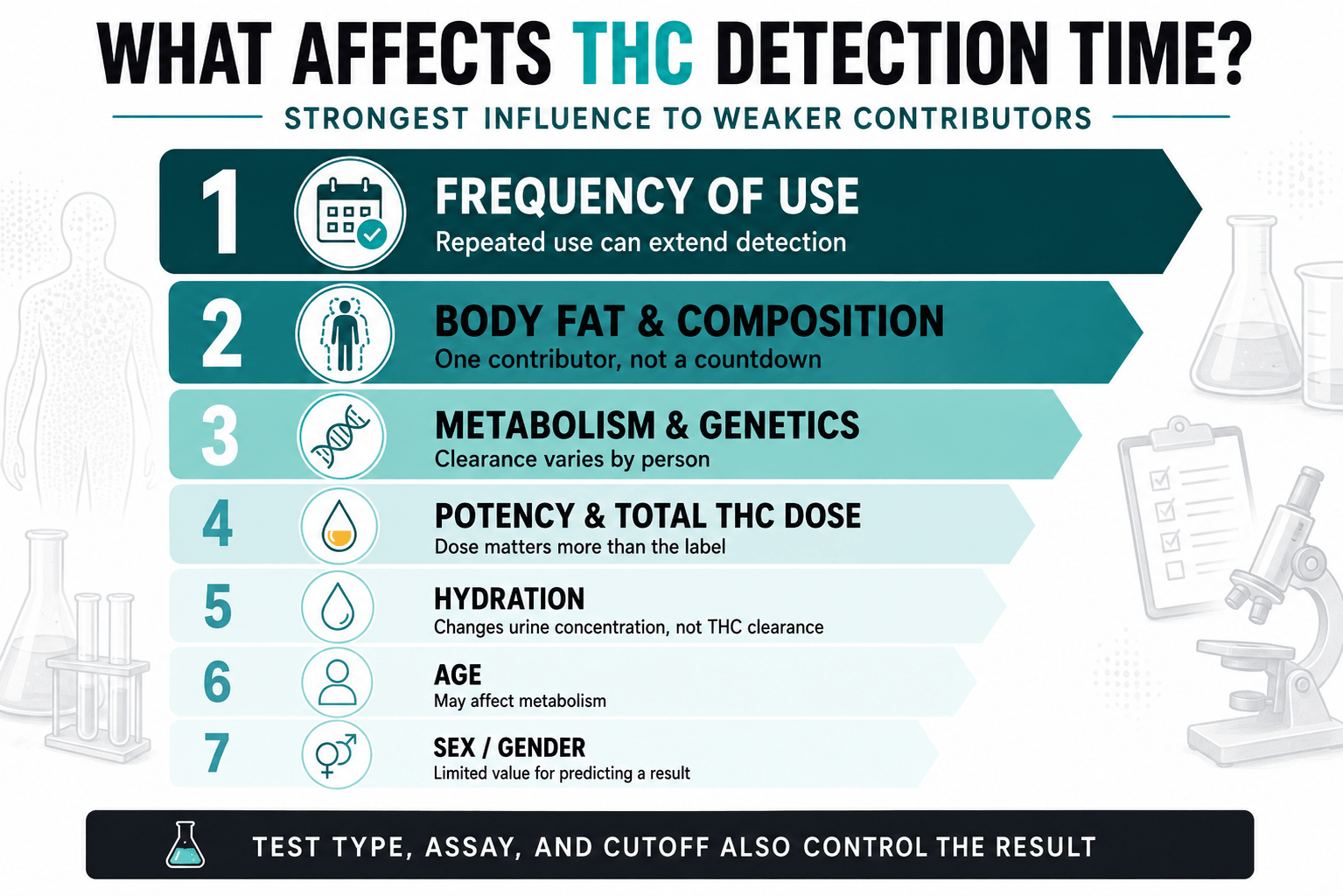
Image lightbox

There's no formula that can predict exactly how long THC will stay in your system. Two people who consume the same product on the same day may have very different detection windows based on how their bodies process and store THC. Some factors have a major impact, while others make only a small difference.
Frequency and amount of use
How often you consume cannabis is the single biggest factor affecting how long THC remains detectable.
Each time you consume cannabis, your body stores some THC in fat tissue. With occasional use, those stores are relatively small and are cleared more quickly. With regular or heavy use, THC accumulates over time, creating a larger reservoir that slowly releases back into the bloodstream even after you stop consuming cannabis.
Research shows the elimination half-life of THC metabolites can increase from about 1.3 days in infrequent consumers to as long as 12.6 days in chronic consumers, helping explain why frequent users often test positive for weeks after their last session.
Body fat and composition
THC is fat-soluble, so body composition may contribute to differences in its distribution and elimination.
Because THC is fat-soluble, body composition may contribute to differences in distribution and elimination. That does not mean a person's body-fat percentage can predict when a test will turn negative. Claims that cannabis consumers carry more visceral fat do not establish that visceral fat extends a drug-test window, so the connection should not be used as a clearance rule.
Body composition cannot predict a detection window. At most, it is one possible contributor to the variation between people with similar consumption habits.
Metabolism and genetics
Your metabolism determines how efficiently your body breaks down and eliminates THC, but genetics also play a role.
Liver enzymes known as CYP2C9 and CYP3A4 are responsible for metabolizing THC. Some people naturally carry genetic variations that process THC more quickly, while others metabolize it more slowly. Age, liver health, and overall metabolic function can also influence clearance rates.
Sex-related differences may affect THC pharmacokinetics, but the evidence is not strong enough to turn sex or gender into a useful detection calculator. Consumption pattern, dose, specimen type, assay, and cutoff matter more in practice.
Potency and THC content
Modern cannabis products are much stronger than the products used in many of the studies that established today's detection timelines.
Much of the published research involved cannabis containing just 3% to 6% THC, or about 16 to 34 milligrams of THC per cigarette. Today, many flower products contain 20% to 30% THC, while concentrates commonly exceed 80% THC.
Potency matters only in combination with the amount consumed. A small inhalation from a high-potency product may deliver less THC than a large amount of lower-potency flower. The relevant variable is the dose that enters the body, not the product label by itself.
Hydration
Drinking more water does not remove THC from your body.
THC stored in fat cells isn't flushed out through hydration. Drinking excessive amounts of water may temporarily dilute your urine, but modern drug testing laboratories routinely measure markers such as creatinine and specific gravity to identify diluted samples. If a sample appears overly diluted, it may be flagged as invalid or require another test.
Staying hydrated is part of overall health, but it should not be viewed as a reliable way to shorten THC detection times.
The exercise paradox
Exercise has a surprising relationship with THC clearance.
Exercise does not "sweat out" THC. A small study of regular cannabis consumers found that a 35-minute moderate-intensity workout produced a modest, temporary increase in plasma THC. The finding matters most when blood THC is being interpreted. It does not prove that exercise causes a positive urine test or establish a universal number of exercise-free days before testing. Animal research also suggests that stress-related fat breakdown can release stored THC, but that result should not be presented as a confirmed human drug-testing rule.
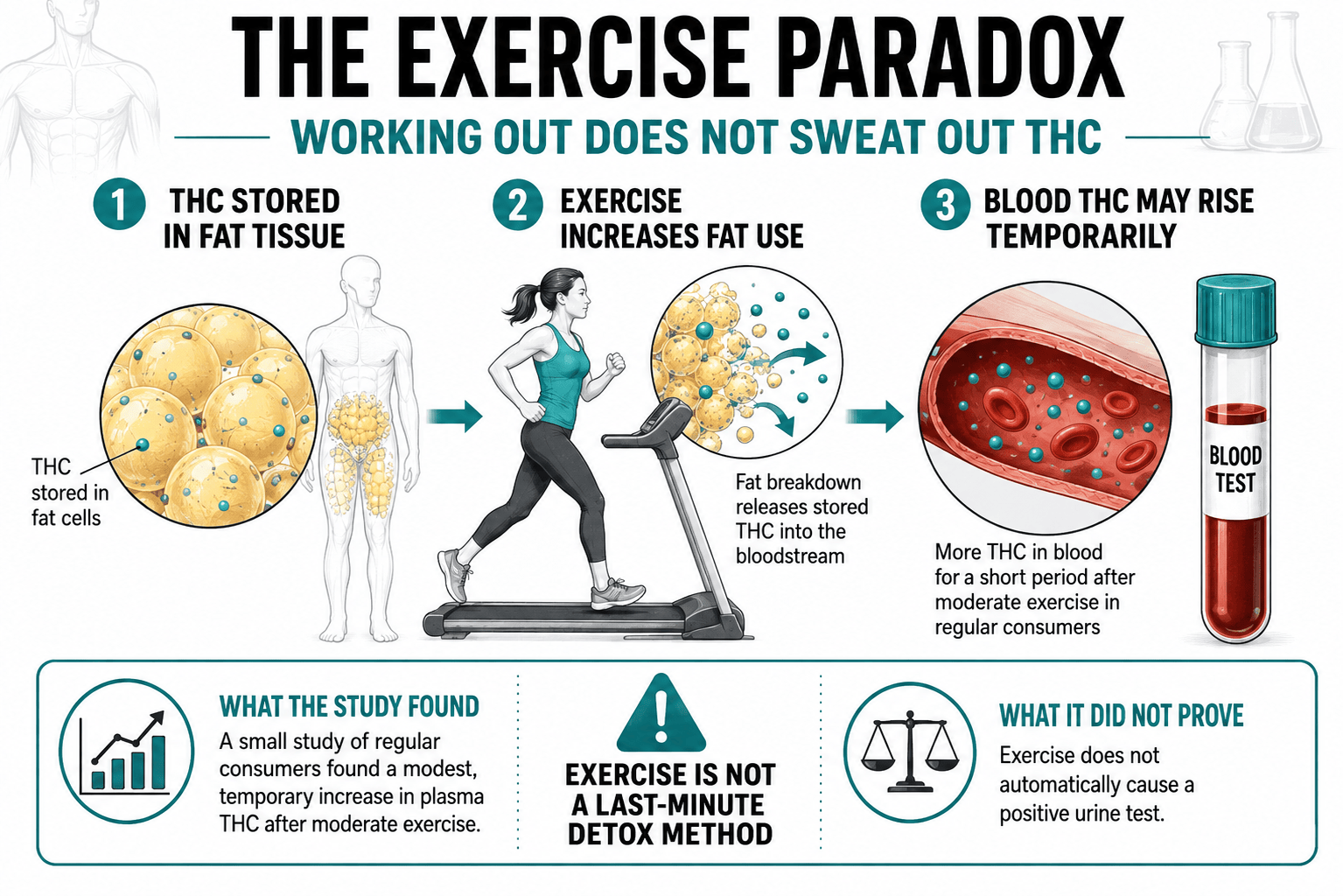
Image lightbox

Exercise supports health, but an intense last-minute workout is not a detox strategy. The evidence does not support using exercise to beat a test.
How product type affects detection
Product type affects dose delivery and metabolism, but it does not create a dependable detection ranking. A drug test responds to the target compound or metabolite above its cutoff. It does not know whether the THC came from flower, a gummy, a vape, or a dab. Frequency, dose, specimen, cutoff, and individual elimination still control the result.
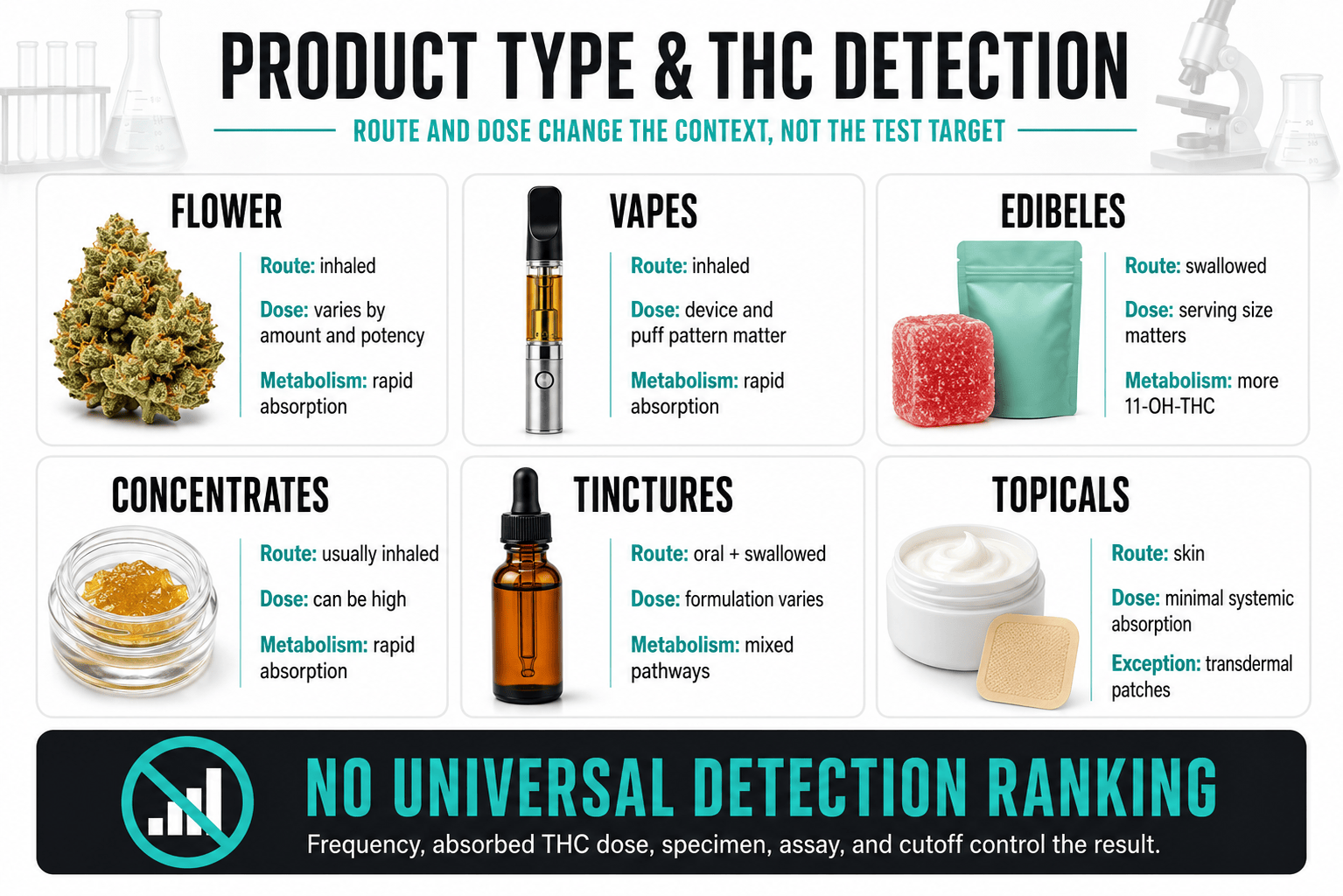
Image lightbox

Concentrates
Concentrates such as wax, shatter, badder, live resin, and rosin can contain substantially more THC than flower, although potency varies widely by product and extraction method. Distillates may reach or exceed 80% THC, while many resin, rosin, hash, and badder products test below that mark.
Although there is limited detection research on today's concentrates, a larger absorbed THC dose can produce a larger metabolite burden. That does not mean every concentrate session creates a longer window than every flower session. Amount and frequency still decide the dose.
Learn more about the different types of cannabis concentrates and how they're made.
Flower
Most published research on THC detection is based on smoked cannabis flower. However, much of that research used flower containing only 3% to 6% THC, far below the 20% to 30% THC commonly found in today's legal market.
Smoking loses some THC through combustion, sidestream smoke, and incomplete inhalation, but the percentage varies with the product and smoking behavior. The detection timelines cited throughout this guide are still based largely on flower consumption because that is what researchers historically studied.
Edibles
Edibles follow a different metabolic pathway than inhaled cannabis.
Instead of entering the bloodstream through the lungs, THC passes through the digestive system and liver, where it's converted into 11-hydroxy-THC (11-OH-THC) before reaching circulation. This metabolite is more potent than THC itself and is produced in greater amounts after eating cannabis than after smoking or vaping.
First-pass metabolism changes the metabolite profile and helps explain why edible effects differ from inhaled cannabis. It does not prove that an edible always remains detectable longer than an equivalent inhaled dose. Controlled studies use specific products, doses, cutoffs, and collection schedules, so their results cannot support a universal edibles-versus-smoking rule.
Vapes
Vaping heats cannabis without burning it, avoiding the combustion losses associated with smoking. The absorbed dose still varies with the device, formulation, temperature, puff duration, and user behavior.
Detection time depends on the THC dose and frequency of use, not the cartridge alone. Frequent vaping can sustain detectable metabolites just as frequent use of another THC product can.
Tinctures
Tinctures can use more than one absorption route.
When held under the tongue, some THC may be absorbed through oral tissues, while the swallowed portion travels through the digestive system and liver. Product formulation, dose, and swallowing behavior vary too much to place tinctures at a fixed point between inhaled cannabis and edibles.
Topicals
Cannabis topicals are designed to work on the skin rather than enter the bloodstream. Creams, balms, and lotions typically produce minimal systemic absorption, making them unlikely to trigger a standard drug test when used as directed.
One exception is transdermal patches, which are specifically formulated to deliver cannabinoids into the bloodstream over time.
Delta-8 THC and other cannabinoids
Many people assume hemp-derived cannabinoids won't show up on a drug test because they're federally legal in some circumstances. Unfortunately, that's not how most workplace drug tests work.
Standard immunoassay screening cannot reliably distinguish delta-8 THC from delta-9 THC. Research has found nearly 100% cross-reactivity across major commercial screening assays, meaning delta-8 products are likely to produce the same initial positive result as traditional THC. Only confirmatory laboratory testing using LC-MS/MS can differentiate between the two compounds.
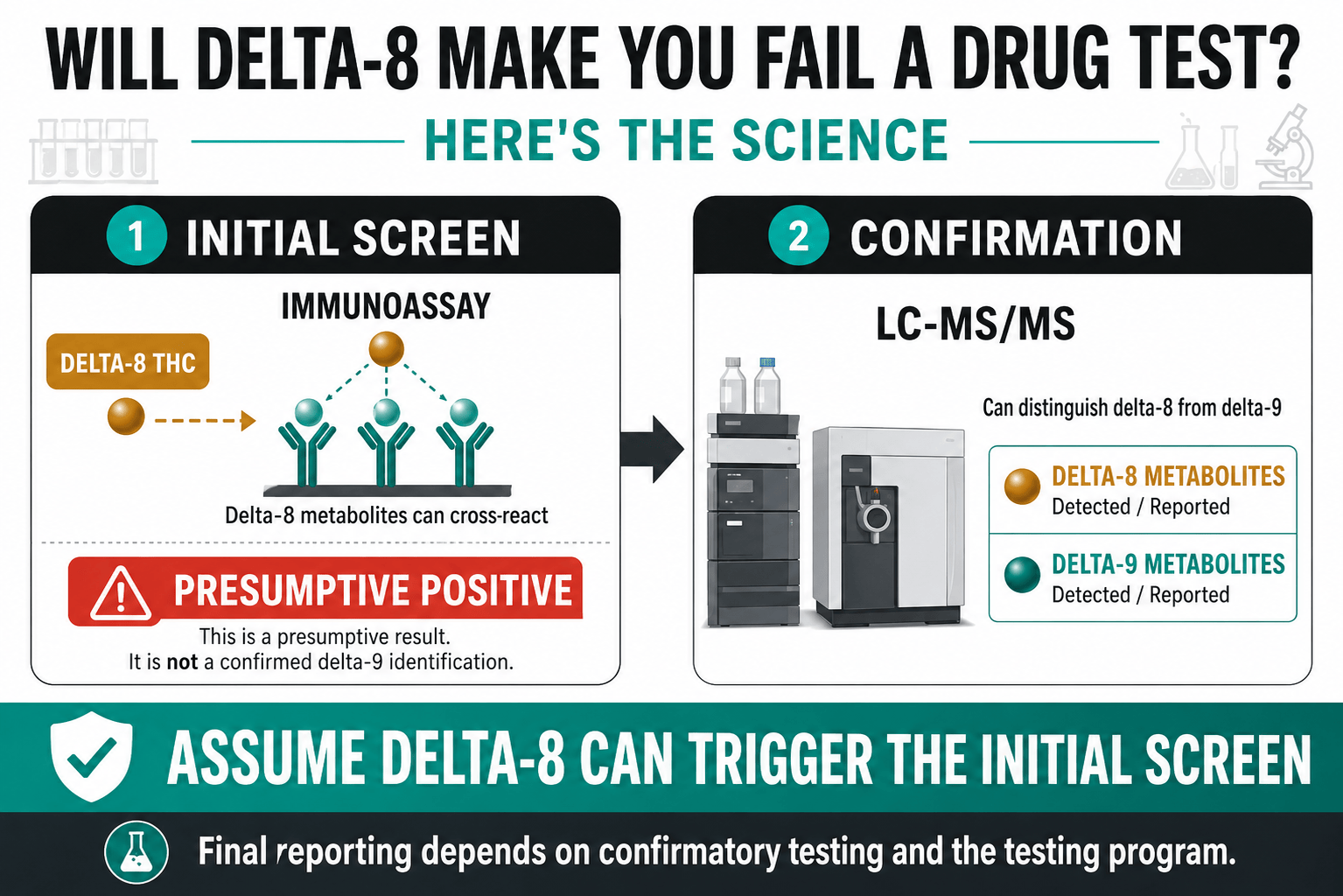
Image lightbox

If you use delta-8 THC, HHC, or other intoxicating hemp-derived cannabinoids, you should assume they can trigger a positive drug test.
What about CBD?
CBD itself is not the compound most workplace drug tests are looking for. However, some CBD products contain trace amounts of THC, particularly full-spectrum formulations. Regular use of products containing enough THC may lead to detectable THC metabolites over time.
If you're wondering whether CBD can cause a positive drug test, we've covered that topic in a separate guide.
There is no evidence-based product ladder from shortest to longest detection. Start with the absorbed THC dose, frequency of use, specimen type, assay, and cutoff. Product category supplies context, not a countdown.
Types of drug tests explained
Knowing how drug testing works can help you better understand your results. Most workplace drug testing doesn't rely on a single test. Instead, it uses a two-step process designed to quickly identify possible positives and then verify them with a more precise laboratory analysis.
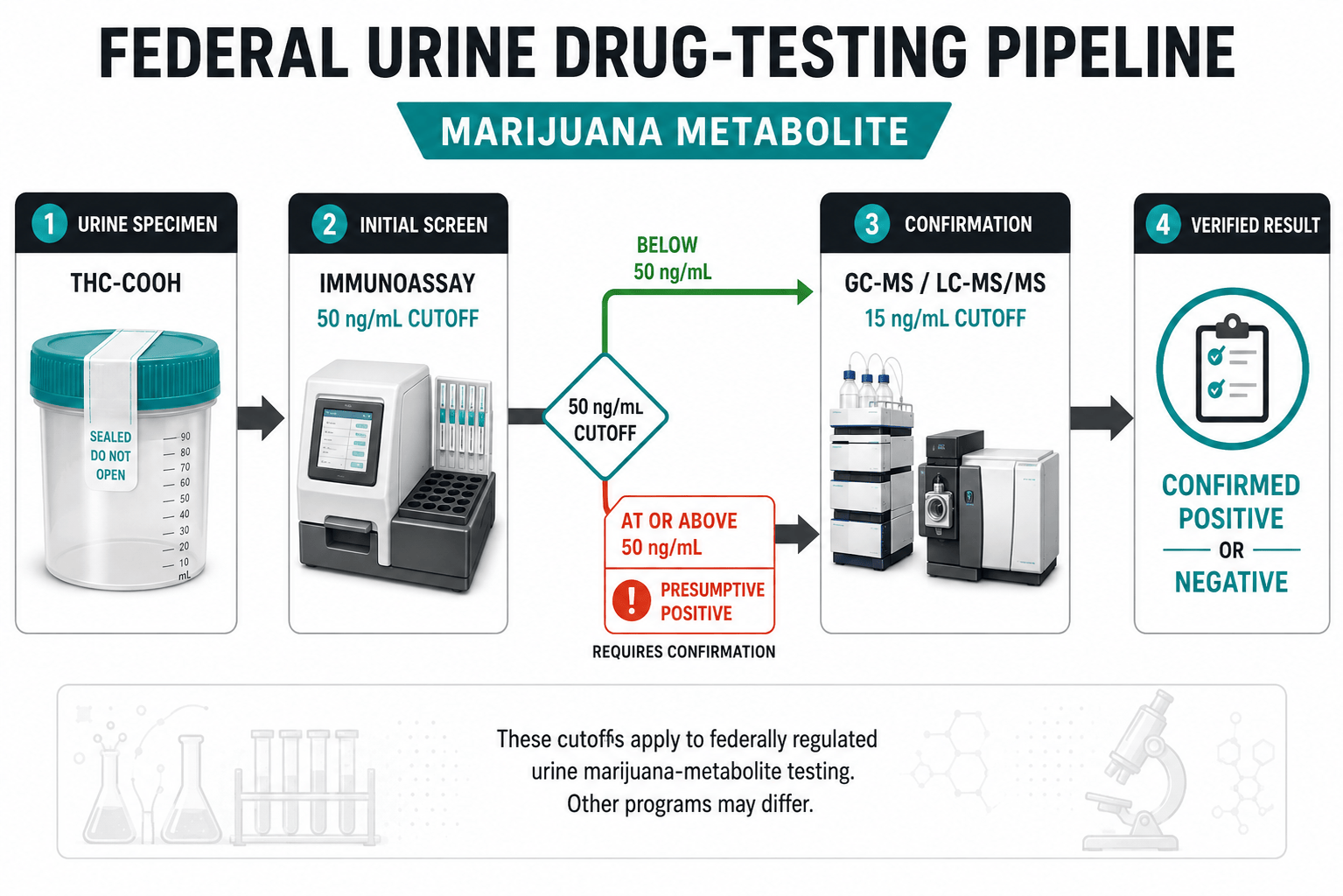
Image lightbox

Initial screening: Immunoassay testing
Most urine drug tests begin with an immunoassay screening, a fast and relatively inexpensive test that uses antibodies to detect THC-COOH, the primary THC metabolite found in urine.
For federally regulated workplace testing, including U.S. Department of Transportation (DOT) programs, the standard screening cutoff is 50 ng/mL. Samples below that concentration are reported as negative, while samples at or above the cutoff move on to confirmatory testing. The federal screening threshold was lowered from 100 ng/mL to 50 ng/mL in 1994, making tests more sensitive and extending the detection window for many consumers.
Immunoassays rely on antibodies rather than identifying specific molecules, so they can react to compounds with similar chemical structures. Delta-8 THC metabolites can therefore trigger an initial cannabinoid-positive result.
Confirmation testing: GC-MS and LC-MS/MS
A positive immunoassay is a presumptive result, not a confirmed identification. In federally regulated programs and other testing systems that follow the same model, presumptive positives are sent to a laboratory for confirmation using highly specific analytical techniques such as gas chromatography-mass spectrometry (GC-MS) or liquid chromatography-tandem mass spectrometry (LC-MS/MS). Employer policies and non-federal programs vary, so the consequences of an initial result depend on the testing program.
Under federal DOT guidelines, confirmation testing verifies delta-9-THC-COOH at a cutoff of 15 ng/mL. LC-MS/MS can also distinguish between delta-8 THC and delta-9 THC, something standard screening tests cannot do.
Why cutoff levels matter
Drug tests don't simply ask whether THC is present. They measure whether the concentration exceeds a predetermined threshold.
For example, a single cannabis use event may be detectable for only one to two days using a 50 ng/mL cutoff, but detection can extend to up to seven days if a laboratory uses a more sensitive 20 ng/mL threshold. Some employers, researchers, and specialized testing programs use lower cutoffs than the federal standard, which can increase the likelihood of a positive result.
Sample validity and dilution
Drinking excessive amounts of water doesn't fool modern drug testing.
Laboratories routinely measure creatinine, specific gravity, and other indicators to determine whether a urine sample has been diluted. Samples that appear overly diluted may be reported as invalid or flagged for recollection rather than automatically reported as negative.
Other types of drug testing
Although much less common, some employers and legal programs use sweat patch testing. These patches are typically worn for seven to 14 days and use much lower detection thresholds than urine testing, with screening cutoffs around 0.8 ng/mL and confirmation cutoffs of 0.5 ng/mL.
Screening and confirmation answer different questions. An immunoassay flags a sample that may contain a drug class above its cutoff. Confirmation identifies and measures a specific target compound before a regulated program reports a verified positive.
Can you speed up THC clearance?
If you're searching for how to get weed out of your system fast, skip the miracle claims. No supplement, drink, or home remedy has been shown to reliably accelerate the way your body processes and eliminates THC. Metabolite concentrations decline with abstinence and normal elimination, but the timeline varies.
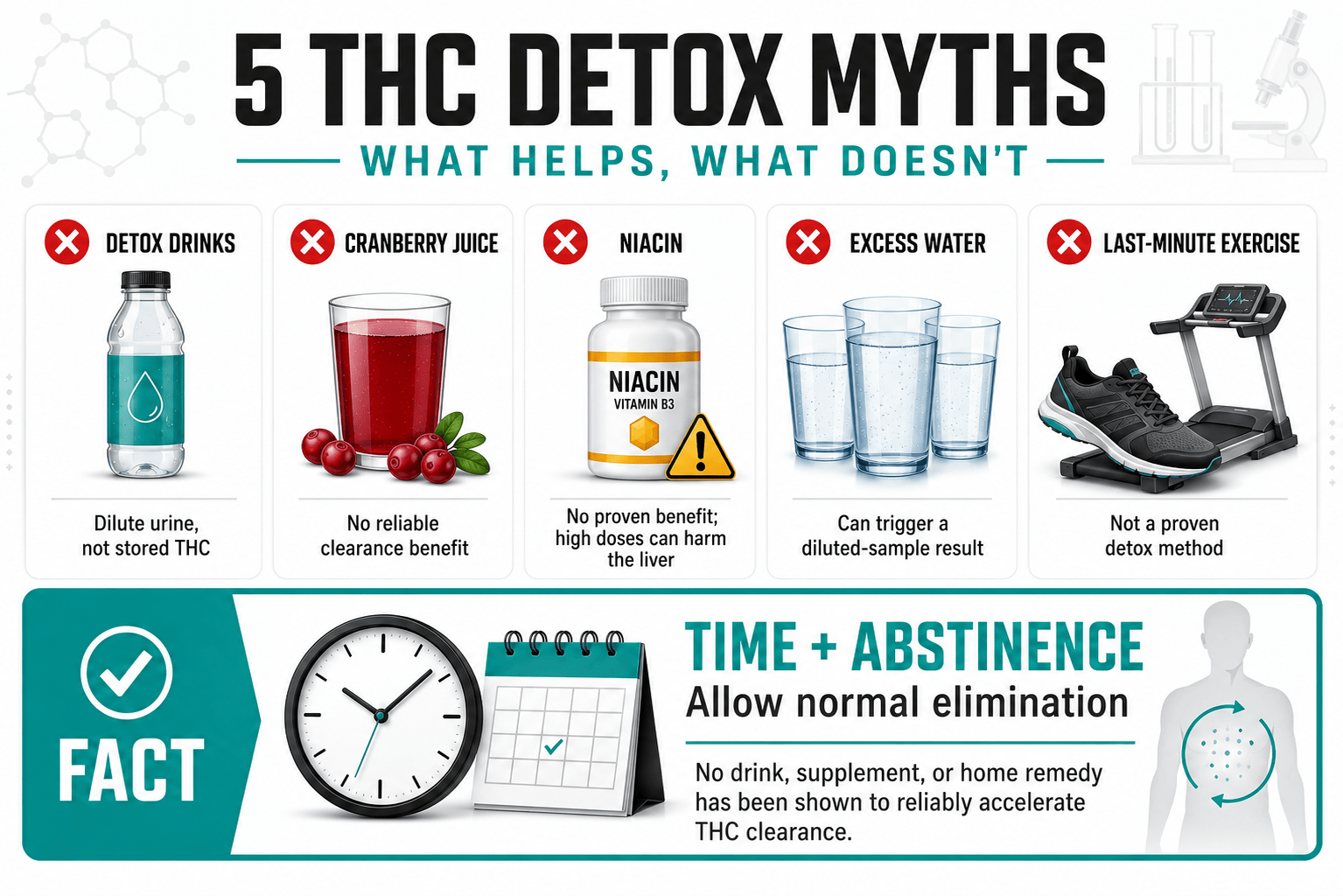
Image lightbox

Detox drinks and cleanse kits
Most detox drinks don't remove THC from fat cells. Instead, they're designed to temporarily dilute urine by increasing fluid intake.
Modern drug testing laboratories account for this by measuring creatinine, specific gravity, and other indicators of urine concentration. If a sample appears overly diluted, it may be flagged as invalid or require another collection.
Drinking lots of water
Staying hydrated is good for your overall health, but it won't flush THC out of your body.
THC metabolites are released gradually from fat tissue as your body naturally processes them. Drinking excessive amounts of water may temporarily lower the concentration of metabolites in urine, but it doesn't increase the rate at which THC leaves your fat cells. As with detox drinks, overly diluted samples are often identified during laboratory testing.
Cranberry juice, niacin, and other home remedies
Popular internet remedies such as cranberry juice, vinegar, activated charcoal, and niacin aren't supported by strong clinical evidence.
Niacin deserves special mention because high doses can cause serious side effects, including liver damage. Taking large amounts in an attempt to pass a drug test carries real health risks without reliable evidence that it improves your chances.
Exercise
Exercise is one of the few strategies that has a nuanced answer.
A small study found that moderate exercise can temporarily increase blood THC levels in regular consumers as stored cannabinoids move back into circulation. The reported change was modest and temporary, and the study did not establish that exercise causes a urine-test failure. Circulating THC concentrations increased by about 25% under the study conditions.
Do not treat exercise as a last-minute detox method. The evidence supports caution when interpreting blood THC after recent exercise, not a universal rule requiring several workout-free days before every drug test.
What actually helps?
There aren't any shortcuts, but there are a few realistic ways to support your body's normal processes:
- Allow as much time as possible between your last cannabis use and your test
- Stay normally hydrated, but don't intentionally overhydrate
- Maintain a healthy lifestyle over time, including regular exercise when you don't have an imminent drug test
- Avoid relying on detox products or internet remedies that promise guaranteed results
If you're wondering whether you can get THC out of your system in one week, the answer depends on your starting point. For someone who consumed cannabis once or only occasionally, testing negative within a week may be possible under standard workplace testing cutoffs.
For daily or heavy consumers, one week often is not enough. Repeated use can sustain metabolite concentrations, and testing may remain positive for several weeks or longer. Setting realistic expectations is far more reliable than chasing products that promise a quick fix.
Frequently asked questions
How long does a single joint stay in your system?
For someone who consumes cannabis only once, a single joint is typically detectable in urine for one to three days using the standard 50 ng/mL workplace cutoff. More sensitive tests using a 20 ng/mL cutoff may detect THC metabolites for up to seven days. In blood, THC is generally detectable for about 12 to 24 hours, while saliva tests detect recent use for 13 to 26 hours. Hair testing is less reliable after a single use because occasional consumers have much lower detection rates than daily users.
Can secondhand cannabis smoke cause a positive drug test?
Under normal, well-ventilated conditions, secondhand cannabis smoke is unlikely to produce enough THC metabolites to exceed the standard 50 ng/mL workplace cutoff. In controlled studies, non-consumers exposed to cannabis smoke generally remained below that threshold.
Extreme exposure is different. In unventilated environments, such as prolonged "hotboxing," researchers have documented THC-COOH concentrations exceeding the standard screening cutoff. While this type of exposure isn't typical, it shows that environment can matter under unusual circumstances.
Do edibles show up on drug tests?
Yes. Any cannabis product containing THC can produce metabolites that are detectable on a drug test.
Edibles produce the same THC-related targets that drug tests are designed to find. First-pass liver metabolism also produces more 11-hydroxy-THC than inhalation. That difference helps explain the edible experience, but it does not guarantee a longer detection window than an inhaled dose. Dose, frequency, specimen, and cutoff still control the comparison.
For a deeper explanation, see our guide on how edibles are metabolized.
Will delta-8 THC make me fail a drug test?
In most cases, yes.
Standard workplace drug tests cannot reliably distinguish delta-8 THC from delta-9 THC during the initial screening. Research has found that the major commercial immunoassay tests show nearly complete cross-reactivity with delta-8 metabolites. Only confirmatory laboratory testing using LC-MS/MS can differentiate the two cannabinoids.
If you use delta-8 products, it's safest to assume they can trigger a positive drug test.
Learn more in our guide to delta-8 THC.
Does exercising before a drug test help or hurt?
Not as a detox method.
Exercise is not a shortcut for THC clearance. A small study found a modest, temporary increase in circulating THC after moderate exercise among regular consumers. The result may complicate interpretation of a blood sample, but it does not prove that exercise triggers a positive urine test or support a universal two-to-three-day restriction.
Can drinking a lot of water help me pass a drug test?
Not reliably.
Drinking water can temporarily dilute the concentration of THC metabolites in urine, but it doesn't remove THC from your body or speed up metabolism. Modern laboratories also measure creatinine and specific gravity to identify diluted samples. If a sample appears excessively diluted, it may be flagged as invalid or require another collection rather than being reported as negative.
Explore more on Weedmaps to learn about cannabis products, find licensed dispensaries near you, and browse trusted educational resources.