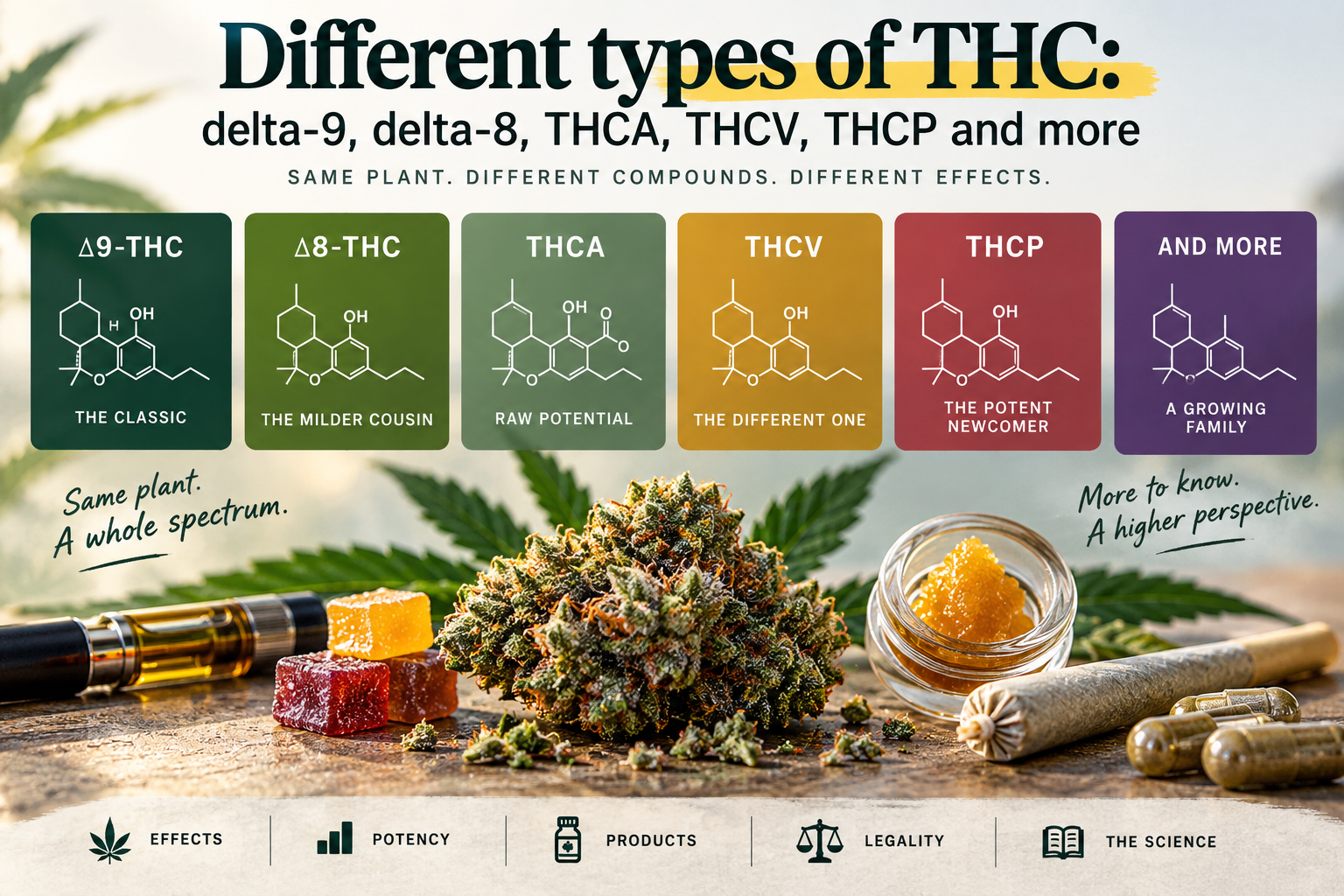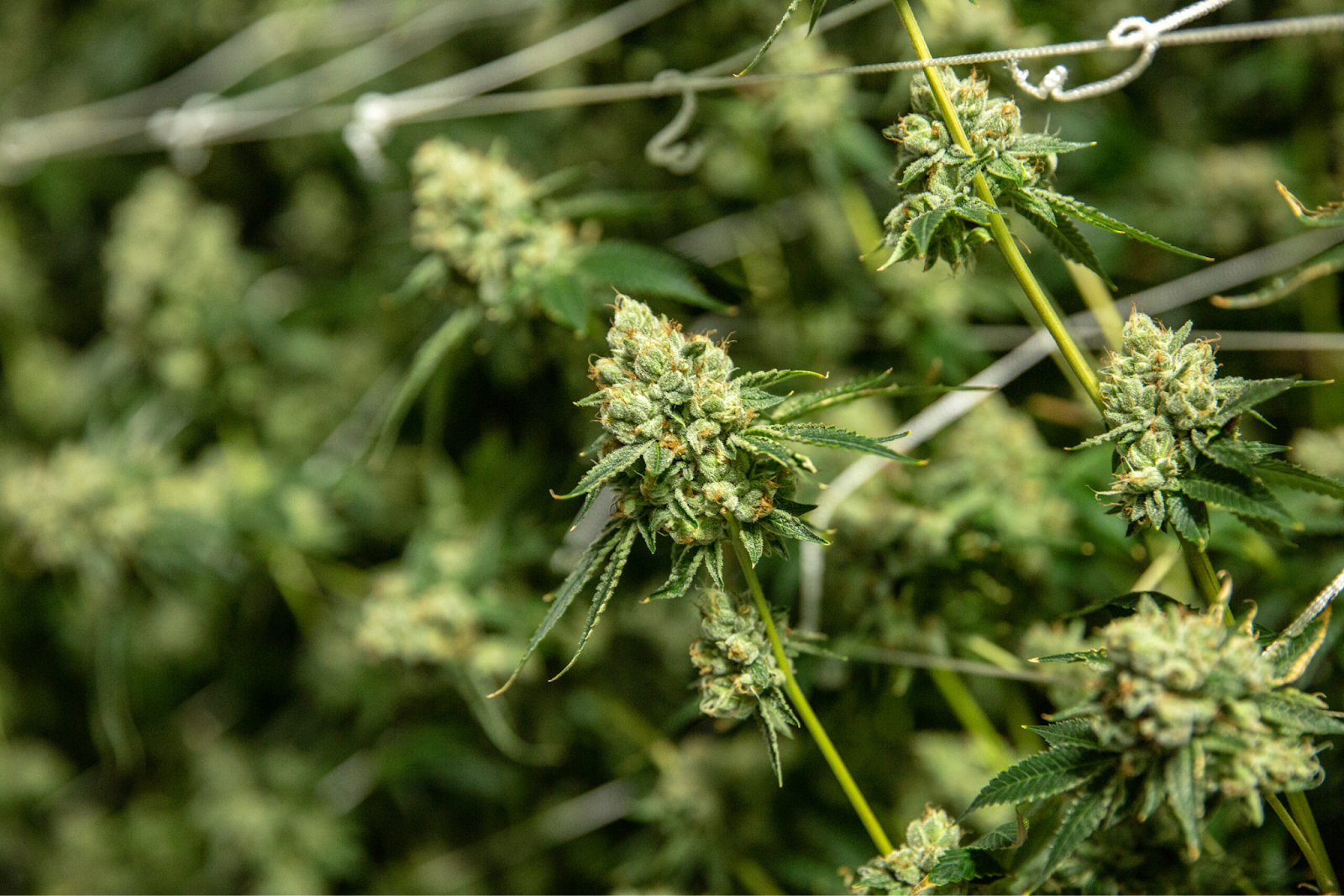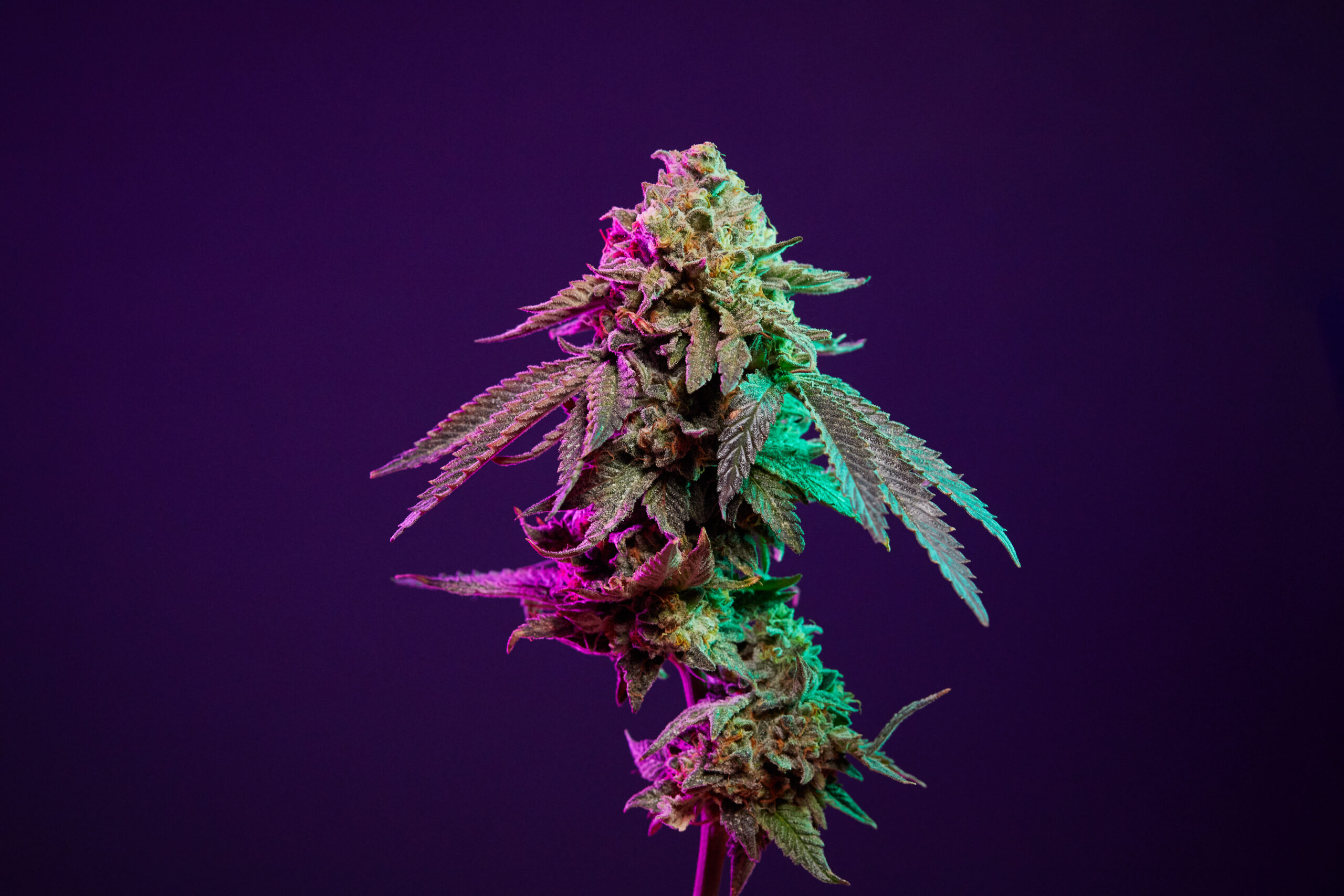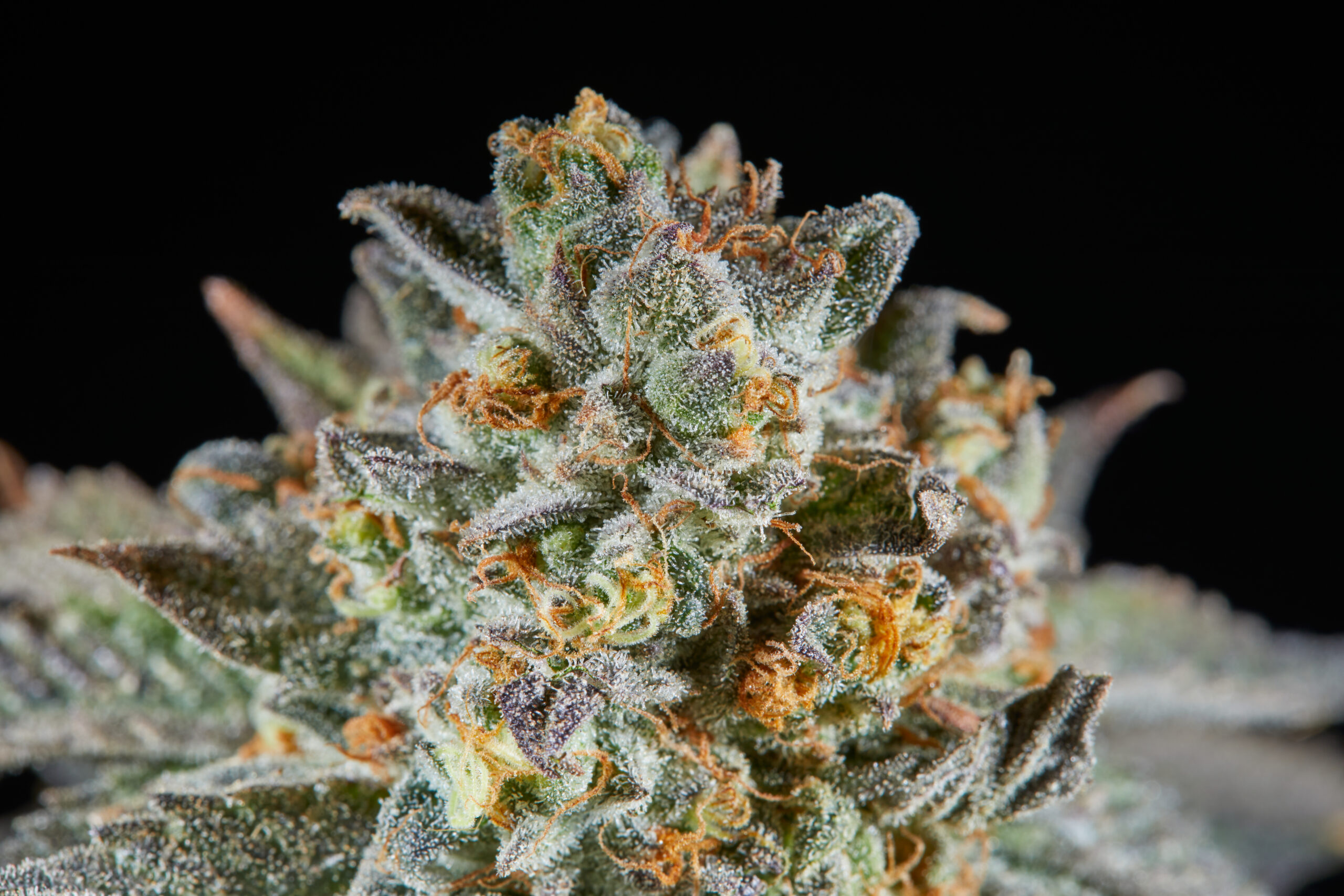
One double bond's position separates delta-8 from delta-9. What separates the products on the shelf is a bigger story: potency, processing, and what the label leaves out.
 Photo by: Gina Coleman/Weedmaps
Image lightbox

Delta-8 and delta-9 are both forms of THC, but one small shift in their chemical structure changes how hard they hit. Delta-9 generally produces stronger effects at the same dose. Most commercial delta-8 is made by converting hemp-derived CBD, while the THC in conventional cannabis products largely starts with the plant's THCA.
Delta-8 gets called “diet weed,” but that nickname leaves out a lot. It can still get you high, impair you, and trigger a positive drug screen. A lighter reputation doesn't cancel out the dose, the manufacturing process, or the law.
Delta-8 vs delta-9 at a glance
Here is a quick look at how delta-8 and delta-9 differ:
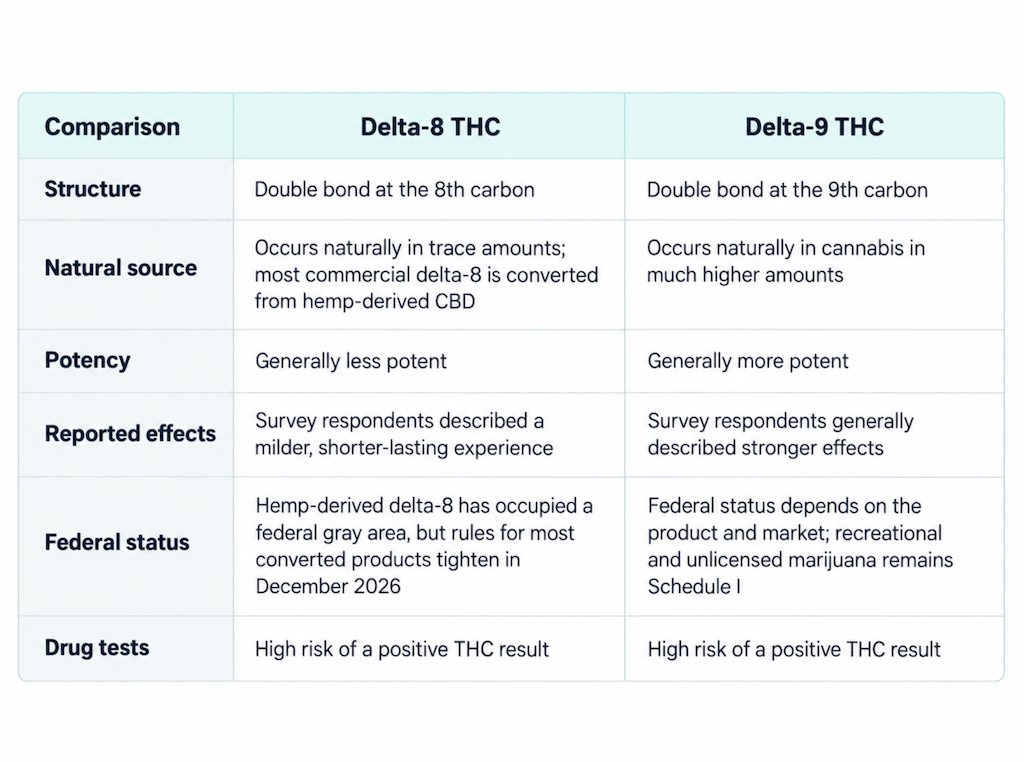
Image lightbox

What are delta-8 and delta-9 THC?
They share a chemical formula and a family name. Both are tetrahydrocannabinols, and both can get you high. The number tells you which version of THC you're dealing with.
What is delta-9 THC?
Delta-9-tetrahydrocannabinol is the main compound responsible for the familiar cannabis high. When someone says THC, this is usually what they mean.
In raw THC-rich flower, much of that potential potency is still THCA. Smoking, vaping, or heating cannabis converts THCA into delta-9 THC through decarboxylation. That's why a flower's lab report can list plenty of THCA alongside relatively little delta-9. The THCA-to-THC conversion is doing the heavy lifting.
What is delta-8 THC?
Delta-8 is a related form of THC found naturally in very small amounts in cannabis. Those traces aren't enough to supply the commercial market, so manufacturers typically convert hemp-derived CBD into delta-8 for gummies, vapes, and other products.
Calling it “fake THC” misses the chemistry. Calling it harmless misses the effects. Delta-8 is an intoxicating cannabinoid, and how it's manufactured matters to the finished product. The FDA's delta-8 guidance explains the conversion and its potential risks.
The core difference: chemistry
Same atoms, slightly different arrangement. Delta-8 and delta-9 are isomers: their chemical formulas match, but one double bond sits in a different position. Delta-8 places it between the eighth and ninth carbon atoms; delta-9 places it between the ninth and tenth. That distinction is described in published cannabis research.
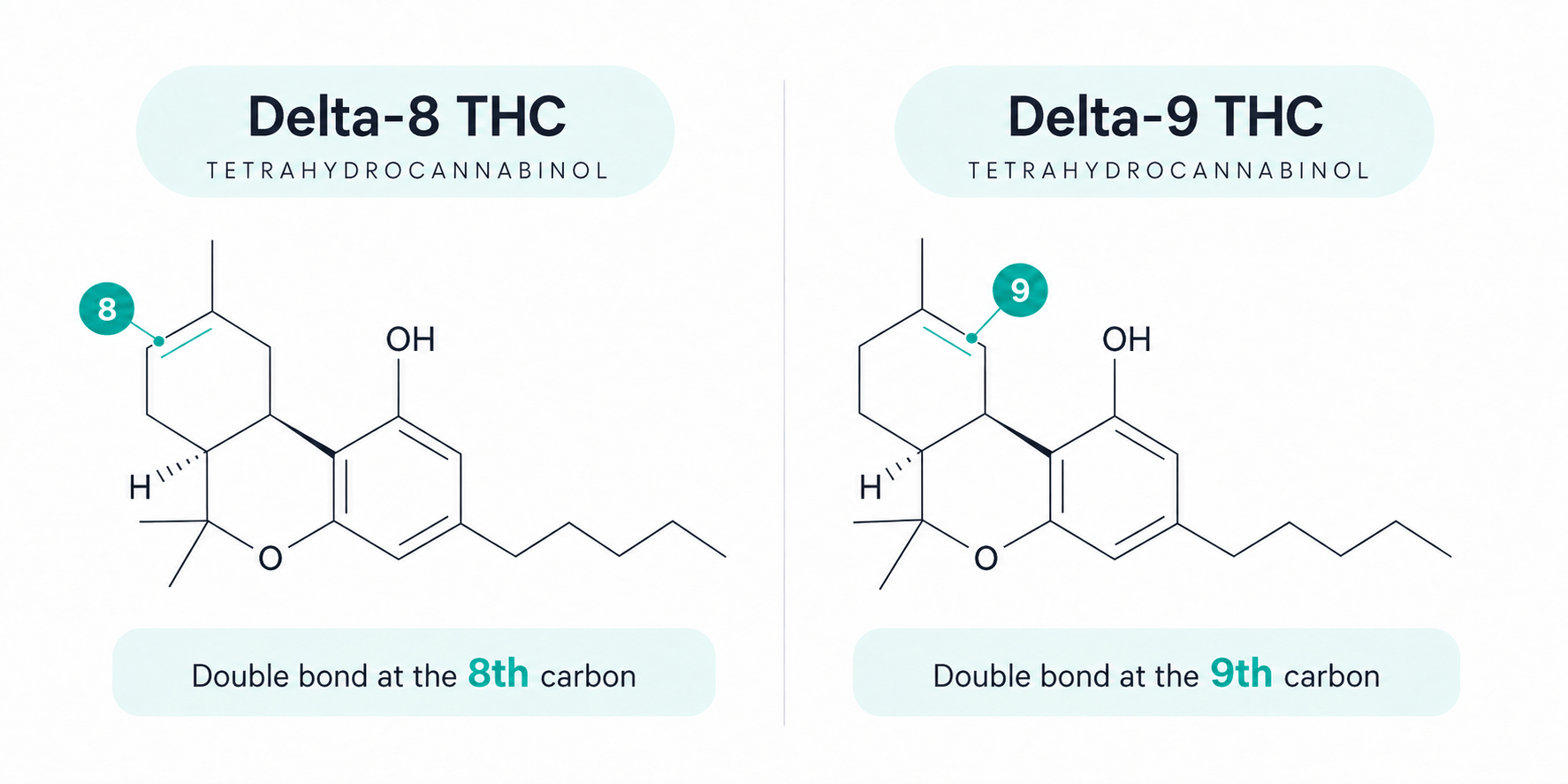
Image lightbox

The shift affects how the molecules interact with cannabinoid receptors, including CB1 receptors involved in intoxication. Small structural change, noticeable difference in potency. It still doesn't let you predict an entire session from the number on the label.
Which is stronger? Potency compared
Milligram for milligram, delta-9 generally hits harder. A 2025 controlled trial gave 19 adults brownies containing delta-8, delta-9, or placebo across separate sessions. At 20 milligrams, delta-8 produced weaker overall drug effects and less cognitive and psychomotor impairment than the same amount of delta-9. At 40 milligrams, delta-8 produced similar measured effects to 20 milligrams of delta-9.
That finding supports lower potency, not a universal two-for-one dosing rule. It came from a small study of oral products, and individual responses vary.
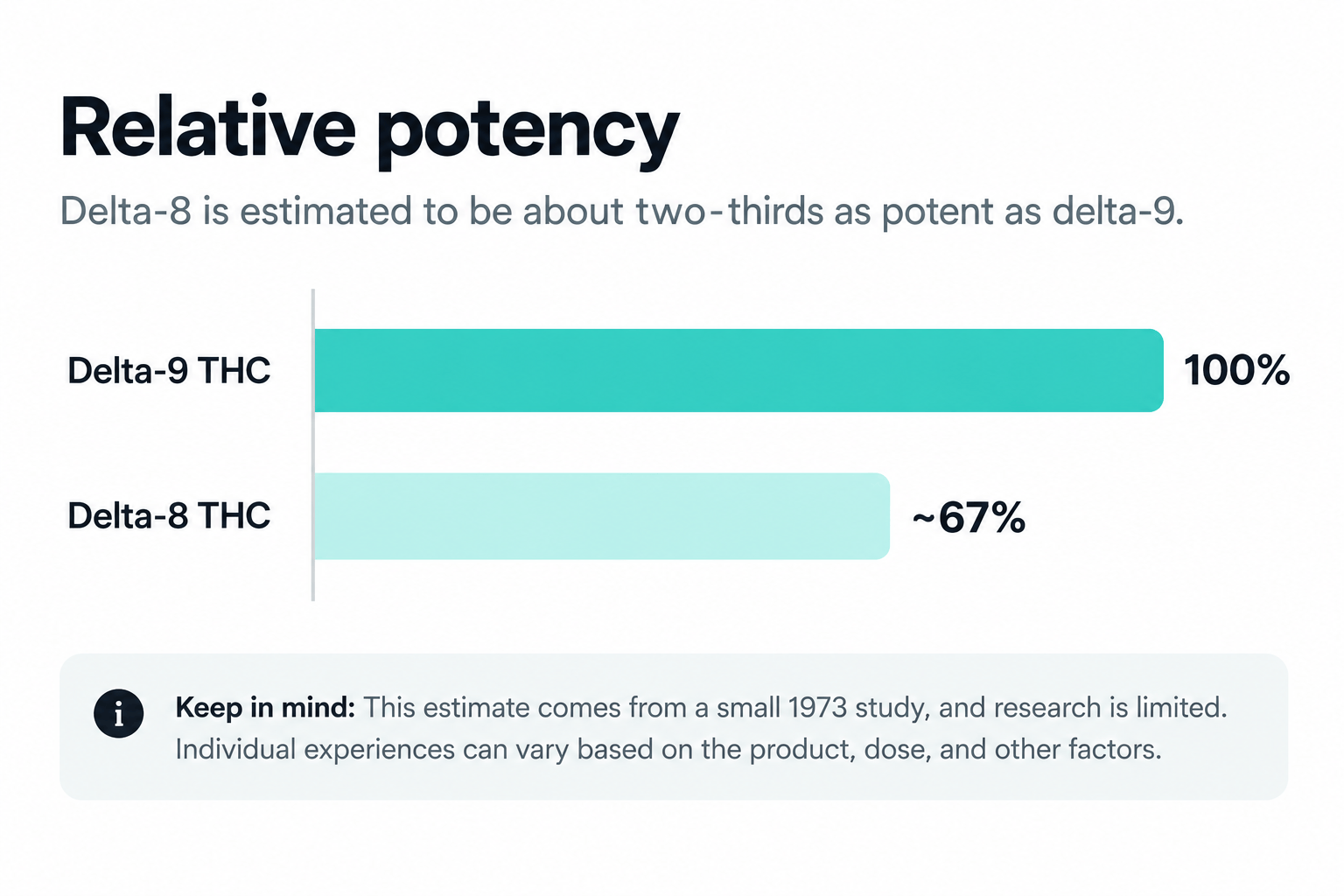
Image lightbox

The often-repeated claim that delta-8 is “two-thirds as strong” traces to a 1973 study involving six participants. It's a historical estimate, not a conversion chart for your next gummy. Taking more delta-8 can erase the difference you expected from choosing a milder cannabinoid.
How they feel: effects
Delta-8 can bring on euphoria and relaxation, but it can also leave you foggy or impaired. In a 2022 survey of 521 delta-8 users, 71% reported a lot or a great deal of relaxation, and 68% reported euphoria. Most reported no anxiety or paranoia, although memory and concentration difficulties also appeared in the results.
Those are accounts from a self-selected group, partly recruited through a manufacturer's network. They don't establish that delta-8 prevents anxiety or delivers a consistently clearer high.
The newer controlled trial also found dose-dependent intoxication and impairment. “Milder” describes a comparison at a given dose. It isn't a promise about how you'll feel, how functional you'll be, or how quickly the effects will wear off. 2025 trial
How they're made and where they come from
For conventional cannabis products, delta-9 production usually starts with THCA-rich plant material. Heat converts that THCA into THC during consumption or processing. Extraction concentrates cannabinoids; decarboxylation changes THCA into delta-9. Those are different steps, even when both happen along the way to a finished product. THCA and decarboxylation
Commercial delta-8 usually takes another route: manufacturers chemically convert hemp-derived CBD. The resulting mixture needs purification and testing. Poorly controlled conversion can leave unwanted compounds behind. FDA manufacturing guidance
The cannabinoid name alone doesn't prove how a product was made. A “hemp-derived” label is a sourcing claim, not a quality seal.
Safety and side effects
A milder experience doesn't automatically make delta-8 safer. Intoxication and product contamination are separate concerns, and a product can carry both.
The FDA has received reports involving vomiting, dizziness, confusion, hallucinations, and loss of consciousness after delta-8 use. From December 2020 through February 2022, it received 104 adverse-event reports; 55% involved medical intervention or hospital admission. Poison control centers recorded 2,362 exposure cases from January 2021 through February 2022, with 41% involving people under 18.
Those figures describe reported incidents from specific periods. They don't measure the odds of harm per use or establish a direct safety ranking against delta-9.
Both cannabinoids can impair you. Don't drive after using either one, and keep intoxicating products away from children and pets. Treat delayed edible effects as a reason to wait, not evidence that the first serving didn't work.
Legality: where each stands
“Hemp-derived” isn't a nationwide permission slip. Federal classification, state restrictions, and the product's composition all matter.
The 2018 Farm Bill defined hemp using a limit of no more than 0.3% delta-9 THC by dry weight. That distinction helped create the market for intoxicating hemp products, including delta-8 and hemp-derived delta-9. It did not give every resulting product blanket approval under food, drug, or state law.
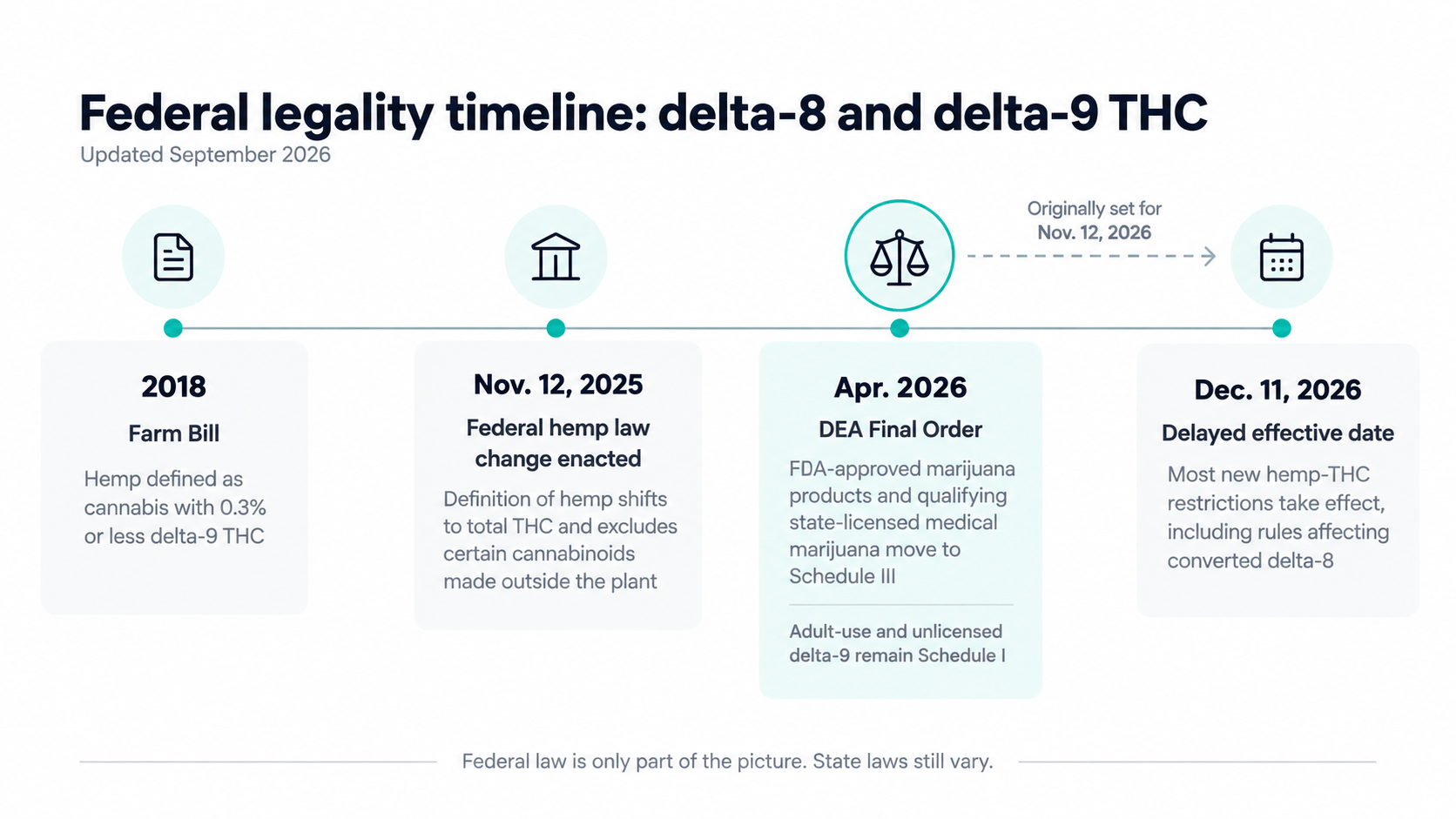
Image lightbox

Federal legislation enacted in November 2025 narrows the hemp definition, including restrictions on cannabinoids manufactured outside the plant and a 0.4-milligram combined limit per container for total THC and other cannabinoids with similar effects in final hemp-derived cannabinoid products. These changes reach beyond delta-8 to many intoxicating hemp gummies and drinks. Enacted federal legislation, Section 781
As of September 17, 2026, the Rhode Island Cannabis Control Commission lists December 11, 2026, as the effective date for the new federal hemp-product THC limit. Check the current regulatory notice and applicable state rules before relying on a product's hemp status.
Marijuana has a separate federal framework. On April 23, 2026, the Justice Department announced Schedule III treatment for FDA-approved marijuana products and marijuana covered by qualifying state medical licenses. That action did not broadly move adult-use marijuana into Schedule III or eliminate federal controls. Official federal announcement
State restrictions can be tighter and operate on their own timelines. Check the cannabis laws in your state, including rules specific to intoxicating hemp. A website accepting your order doesn't settle the legal question.
Will they show on a drug test?
Yes. Delta-8 and delta-9 can both trigger a positive THC result on a standard urine screen. “Made from hemp” won't change what the test detects.
Initial urine screens react to THC metabolites and don't reliably tell delta-8 use from delta-9 use. Specialized confirmatory methods can distinguish the relevant metabolites, but the method used matters. A laboratory's explanation of delta-8 and delta-9 testing details that distinction.
If you're subject to THC testing, delta-8 is not a dependable workaround.
How to buy safely
Start with a batch-matched certificate of analysis, or COA. “Lab tested” on the package is a claim. An identifiable report gives you something to check.
Look for the testing lab's name, the batch or lot number, a testing date, and results covering potency and relevant contaminants. Compare the cannabinoid amounts with the label, including whether the package lists milligrams per serving or per container.
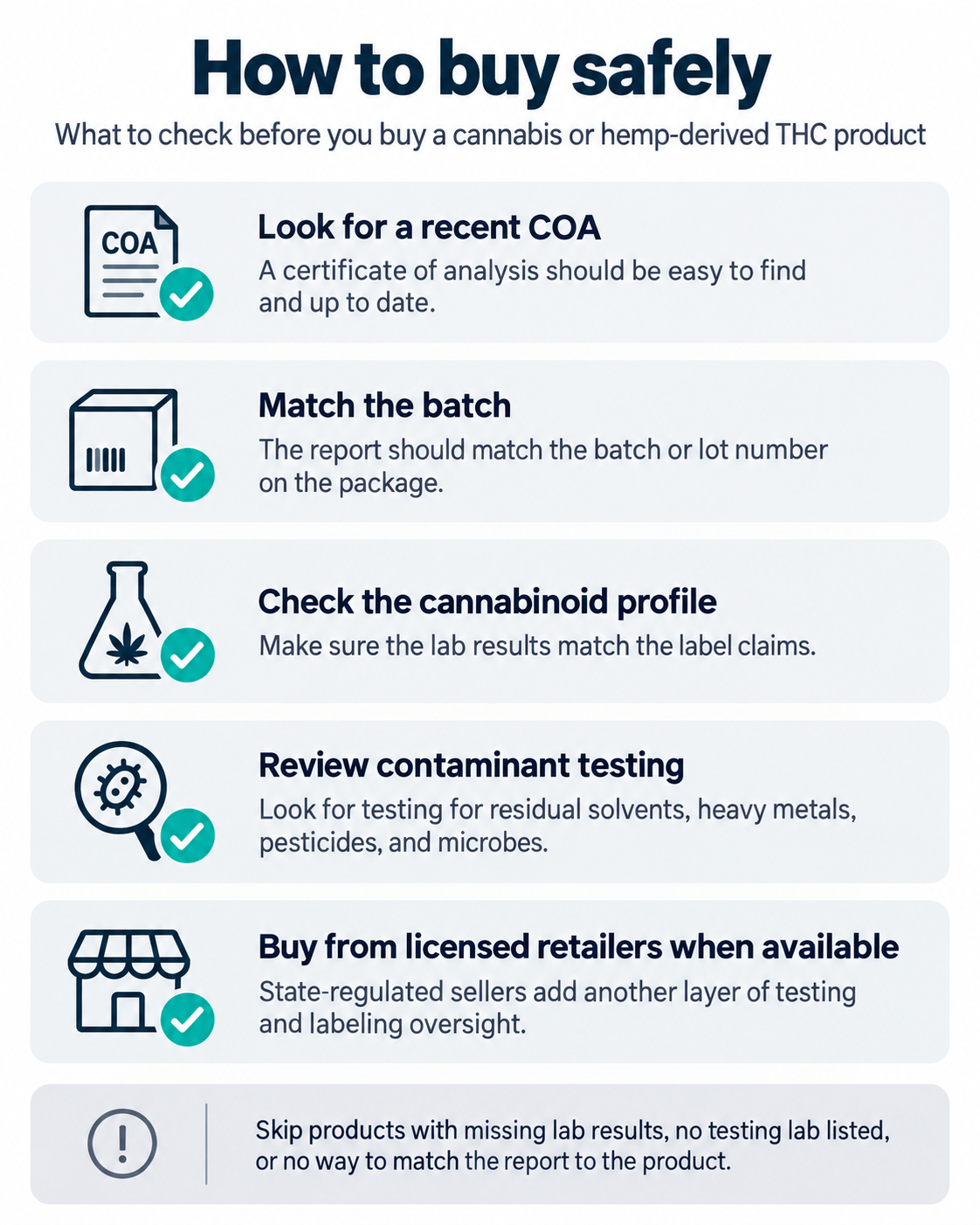
Image lightbox

Read what was actually tested. A potency report alone doesn't establish contaminant testing, and a COA isn't proof that every possible conversion by-product was screened out. Missing results, a mismatched batch number, or a report you can't verify with the lab are reasons to keep shopping.
Where legal, buy through licensed cannabis retailers subject to applicable state testing and labeling requirements. You can find dispensaries near you and check the retailer's license with your state regulator.
Which one is right for you?
Don't choose by nickname. Choose by the dose, product, testing, and rules that apply where you live.
If your goal is a less intense experience, delta-8's lower potency doesn't guarantee one. The serving size can undo that advantage. If your priority is avoiding a positive THC screen, neither is a reliable choice.
If you're comparing products, put milligrams per serving and verified lab results ahead of “light,” “legal,” or “natural” on the package. Those words don't tell you how hard the product will hit.
Frequently asked questions
Which delta is the strongest?
Between delta-8 and delta-9, delta-9 is generally more potent at the same dose. That comparison doesn't rank every THC isomer or establish a universal dosing ratio. Controlled comparison
Is delta-8 or 9 better for anxiety?
Neither is established as the better treatment for anxiety. Favorable reports from delta-8 users don't amount to clinical proof, and an intoxicating experience can still become uncomfortable. The delta-8 survey describes user experiences, not a treatment recommendation.
How much delta-9 is equal to THC?
Delta-9 is a form of THC, so there's no separate conversion when a product uses “THC” to mean delta-9. Flower labels require a closer look: “total THC” can include the potential THC available after THCA converts, rather than just the delta-9 already present. Understanding THCA and total THC
Does delta-9 make you feel the same as THC?
Usually, those names refer to the same intoxicating cannabinoid. But the same cannabinoid doesn't guarantee the same experience across products, serving sizes, or methods of consumption.
Does THCa give you the same high as delta-9?
Unheated THCA doesn't produce the classic delta-9 high. Smoking, vaping, or cooking converts it into delta-9 THC, which is why THCA-rich flower can be intoxicating when heated. See the THCA explainer for how that conversion works.
Which is better, delta-8 or delta-9?
That depends on the product and your priorities. Delta-8's lower potency isn't a guarantee of fewer unwanted effects, better quality, or legal access. Compare the actual serving, testing, and local rules before treating either as the better buy.
Will delta-8 show up on a drug test?
It can. Standard urine screening can react to delta-8 metabolites, so a hemp-derived label doesn't protect you from a positive THC screen. How laboratories test THC metabolites
For a broader comparison, read about other cannabinoids like delta-10.
The bottom line
Delta-8's lighter reputation isn't a free pass. The dose still counts, the testing still matters, and “hemp” on the label doesn't settle the law. Give the fine print the same attention as the flavor name before you shop your local dispensary.