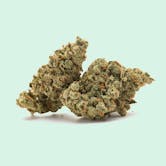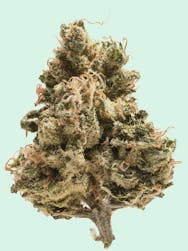
- Earthy (40% of reported flavors)
- Citrus (30% of reported flavors)
- Honey (30% of reported flavors)
Papaya has been around long enough for two different Nirvana Seeds pedigrees to circulate under the same tropical name. Both versions chase ripe fruit and spice, but their family trees are distinctly different.
Origin 1: The legacy Nirvana Seeds Papaya is documented as a cross of Jack Herer and Skunk #1. This is the lineage historically attached to the Weedmaps strain page and remains part of Papaya's established identity.
Origin 2: Another Nirvana Seeds Papaya, and the version widely circulating in contemporary flower and solventless circles, crosses Citral #13 with Ice #2. Nirvana reportedly set out to build its own take on a Mango-style cultivar, only for the selected offspring to throw such a convincing papaya profile that the new name stuck.
Whichever family tree is behind the jar, Papaya lives up to the produce-section name. Ripe papaya, mango, and sweet tropical fruit dominate, followed by citrus, earthy herbs, and a peppery-spice finish. The Citral #13 × Ice #2 version has become particularly prized in extraction circles, where its resin production and loud tropical character translate especially well into hash and rosin.
Folks who swear by this one describe a happy, easygoing start that can keep some energy and creativity in the mix before the heavier side begins settling in. Relaxation tends to build as the session stretches out, giving Papaya considerably more weight than its sunny tropical flavor lets on.
The balanced hybrid is a bit difficult to grow, as it produces heavy, dense colas but the relatively thin stems and branches. To ensure an optimal harvest, Nirvana Seeds recommends supporting the branches with the Sea of Green (SOG) method and feeding the plant potassium. In a nine-to-10-week flowering cycle, Papaya plants yield frosty light green colas with wispy orange stigma hairs. Growers should expect yields between 350 to 450 grams per square meter when grown indoors, which is the best environment for this particular strain.