- Honey (50% of reported flavors)
- Lemon (50% of reported flavors)
Lemon Sorbet sounds like one strain until you start digging into the genetics. Then the name melts fast. At least four distinct versions circulate under the Lemon Sorbet banner, spanning everything from Lemon OG and Sherbet to Chem, Larry OG, and Dolato genetics.
Origin 1: Gabriel Cannabis crossed Lemon OG with Sherbet. Gabriel's pheno hunt produced numbered selections #1 through #3, with Lemon Sorbet #3, sometimes shortened to LS3, becoming the most commercially distributed cut. This is also the lineage most commonly associated with Lemon Sorbet on major consumer strain databases.
Origin 2: Silent Seeds / World of Seeds crossed Lemon Tree with Larry OG. This line is generally described as a slightly indica-leaning hybrid at roughly 55% indica / 45% sativa, putting a different OG-heavy spin on the Lemon Sorbet name.
Origin 3: Verano's Lemon Sorbet crosses Chemdawg with Sunshine Daydream. Marketed as a sativa-leaning strain, this version has circulated primarily through Illinois and other Midwestern dispensary markets.
Origin 4: In House Genetics crossed Black Lime OG with Dolato. This version is generally positioned as a balanced hybrid and shares little genetic ground with the Gabriel, Silent Seeds, or Verano cuts beyond the name.
With four family trees fighting over the same freezer door, there isn't one aroma, appearance, or experience that defines every Lemon Sorbet. Citrus is the closest thing to common ground. Depending on the version, that can mean sour lemon and creamy citrus layered with earthy herbs, spice, diesel, or straight-up fuel. Cinnamon and pepper can creep into some cuts, while others lean harder into OG earth or Chem funk.
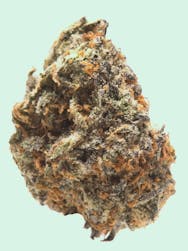
The flower can vary just as much, though Lemon Sorbet is commonly described with medium-sized, conical buds ranging from lime to jade green, sometimes streaked with purple and finished with orange pistils and a thick coat of trichomes.
Word around Lemon Sorbet gets euphoric and uplifting fast, often with a creative, heady buzz leading the charge. Give it some time and the experience starts settling into the body, with fans describing a calmer turn that can drift toward heavier relaxation or sleepiness depending on the version. And that's the catch with Lemon Sorbet: this many unrelated strains are wearing the same name, so what's actually in your jar matters a hell of a lot more than the label slapped on it.