hybrid
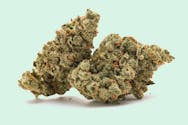
Lemon Fatman is a sativa-dominant hybrid strain crossing Bodhi Seeds' Lemon Hashplant V2 (Lemon G x 88 G13 Hashplant) with Fatso, pairing old-school hash genetics with modern funk — and you can smell it immediately. The aroma hits with sharp lemon zest and dank, peppery hash undertones that carry a skunky edge. On the inhale, expect sour citrus up front followed by a spicy, hashy finish that lingers. The strain has circulated widely on the East Coast under retail branding like Island Reserve and No. 9 Collection.
Reviewers frequently describe the experience as uplifting and creatively focused, making it a popular pick for daytime projects or brainstorming sessions. The nugs themselves are fluffy, grape-shaped clusters of emerald green with thin orange hairs and a generous coating of golden-white crystal trichomes. Under cooler temperatures, you might catch faint lavender hues on the leaves. It's a strain that looks as loud as it smells, and fans of the cultivar say it delivers a clear-headed, euphoric energy without the jittery overstimulation some sativas can bring.
Lemon Fatman is a moderate-difficulty strain that stays compact at 3–4 feet indoors with a stout central stem and strong lateral branches, making it a good fit for growers working with limited vertical space. Outdoors, it stretches to 5–6 feet and thrives in warm Mediterranean climates with temperatures between 68–80°F. The compact internodal spacing responds well to topping and low-stress training, and its favorable calyx-to-leaf ratio makes SCROG setups particularly effective for maximizing light penetration. Nutrient sensitivity is moderate, so a conservative feeding schedule with gradual increases works best to avoid tip burn during peak flowering. Humidity should stay around 40–50% during the 8–10 week flowering period to prevent mold on its dense, resin-heavy colas. Growers often report yields of 400–500 g/m² indoors and 14–18 oz/plant outdoors when conditions stay consistent. Under cool nighttime temperatures, buds may develop faint lavender or plum coloration alongside their characteristic apricot-to-honey-gold pistils.
This content is for informational purposes only.


Browse Strains A to Z