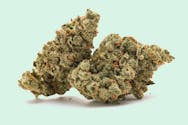
Lazer Jet
Origin 1: The Colorado version pairs GMO, also called Garlic Cookies, with Jet Fuel Gelato. 14er lists the cross as a hybrid with limonene, caryophyllene, and myrcene leading the terpene profile. Sweet leather, sharp chem, and jet fuel drive the nose, with citrus and savory garlic funk cutting through the heavier gas. Fans describe the effects as euphoric, cerebral, intense, and uplifting.
Origin 2: Qwest sells a separate Lazer Jet in Canada made from Gary Payton and Falcon 9. That genetic pairing matches Lazer Fuel from Exotic Genetix, which suggests Qwest is working with a renamed selection or selling the cross under a market-specific name. Canadian listings classify it as a hybrid and report diesel, citrus, earth, rubber, and fermented cherry across the aroma and flavor profile. One verified batch tested at 28.1% THC with caryophyllene, humulene, and selinadiene as its leading terpenes.
Check the cultivator before buying. Colorado Lazer Jet brings GMO and Jet Fuel Gelato together for a chem-heavy blast, while Qwest's Canadian version runs on the same Gary Payton and Falcon 9 genetics associated with Lazer Fuel.