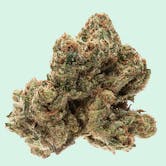
Goji OG
- Happy (39% of reported effects)
- Relaxed (31% of reported effects)
- Uplifted (31% of reported effects)
- Spicy/Herbal (53% of reported flavors)
- Citrus (27% of reported flavors)
- Earthy (20% of reported flavors)
Goji OG gave the OG family a red-fruit streak without sanding off the funk. Bodhi Seeds created the strain by crossing Nepali OG with Snow Lotus, pairing a Kush-heavy mother line with one of Bodhi’s most recognizable breeding males.
The name comes from the goji berry, and the profile earns it. Tart red berries, cherry, sweet fruit, and citrus sit over pine, earth, wood, and a light licorice-like spice. Some expressions push deeper into black cherry and Kush funk, while others stay brighter and fruitier.
That mix also translated well beyond flower. Goji OG took first place in concentrates and third place in hash at the 2013 Seattle High Times Cannabis Cup, helping establish the cultivar as more than another fruity OG offshoot.
People who keep Goji OG in rotation tend to describe the experience as upbeat, euphoric, mentally spacious, and occasionally a little floaty. The body side stays present without immediately dragging the session downward, which gives the strain a livelier feel than many OG-heavy hybrids.
Crimson and reddish tones can show up in the flowers, but Goji OG’s real signature is the contrast between tart berry brightness and the darker pine-and-earth backbone underneath.
Goji OG combines Nepali OG with Snow Lotus, a pairing that produces vigorous, sativa-leaning plants with noticeable stretch once flowering begins.
Indoor flowering typically finishes in about 9 weeks, with roughly 63 days commonly cited for the original Bodhi Seeds line. Plants can gain significant height after the flip, so topping, low-stress training, and early canopy control help keep the structure manageable.
Branches may need support as resin-heavy flowers gain weight late in bloom. Good airflow is especially useful around the denser colas, while an open canopy helps light reach lower flower sites.