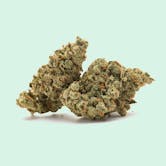
Durban Cookies
- Sweet (75% of reported flavors)
- Earthy (25% of reported flavors)
Durban Cookies puts spice in the cookie jar, with two distinct genetic recipes sharing the name.
Origin 1: The widely circulated version is commonly identified as Durban Poison × GSC, with the original breeder unconfirmed. Sweet, nutty flavors meet woody earth, herbs, and pepper, while citrus and vanilla soften the edges. Some accounts instead describe a Durban-forward selection of GSC; that conflicting attribution does not establish a separate breeding program.
Origin 2: pHeno pHarm Strains created its Durban Cookies from (Durban Poison × Deep Chunk) × (Black Lime Reserve × GSC). The breeder identifies this four-parent release as sativa-dominant. Its specific aroma and effects are not sufficiently documented to give it the same tasting notes as the more familiar cross.
For the widely circulated version, sweetness makes the introduction, but the herbal finish gets the last word. Cookie-like richness sits beside pine and earthy spice, with a licorice note appearing in some descriptions. It has a savory streak beneath the sweeter surface, keeping the profile from becoming all vanilla and no personality.
People who’ve spent real time with the commonly circulated cut describe an energizing mental lift with focus, creative interest, and an upbeat mood. Physical relaxation can develop alongside that head buzz, giving the experience a softer edge without necessarily ending the conversation. Some sessions become more tranquil as they progress. The cookie name suggests a treat; the reported opening brings more get-up-and-go.
pHeno pHarm’s release is documented for indoor, outdoor, and greenhouse cultivation, with flowering around 62 days, or approximately nine weeks. Its seed offering is non-feminized, so growers should expect both male and female plants. Reliable mature-height and yield figures are not supplied for this version.
Other seed vendors market Durban Cookies as feminized photoperiod or autoflowering stock. Those offerings require their own cultivation schedules and confirmed parentage. The eight-to-ten-week flowering estimates attached to some photoperiod listings should not be treated as an autoflower’s total life cycle or as a fixed schedule for pHeno pHarm’s cross.