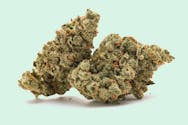
Bloody Mary
aka Thunder Bloody Mary
Origin 1: Samsara Seeds bred Thunder Bloody Mary as a cross of Mazar and White Dwarf, crafted as a fast-finishing autoflower ready in roughly 60 days. The nose leans piney and woody, with fresh fir and a green, herbal edge. Reviewers describe a relaxed, slow-building calm, with some noting a talkative, cerebral lift early on before the body settles — a strain fans reach for late in the day.
Origin 2: Dirty Bird Genetics' Bloody Mary, sold through North Atlantic Seed Co., runs on entirely different genetics — a cross of Dirty Sangria and Maui True Blood, released as part of their Alpha Series. Phenotypes vary widely, with some plants stacking dense colas and others growing more open and boutique, about half showing purple in the leaves and calyxes by late flower. Reviewers describe a cerebral lift from the Maui True Blood side paired with a relaxing body effect from the Dirty Sangria side, ranging from energetic to sedating depending on the phenotype.
Reviewers tend to describe a relaxed, calming experience that settles in slowly and lingers. Others mention a talkative, cerebral headspace early on before the body unwinds, part of why fans reach for it late in the day. It grows dense, compact buds on a short, hardy plant. Consumers who've tried it often point to that long-lasting quality as its calling card.


