
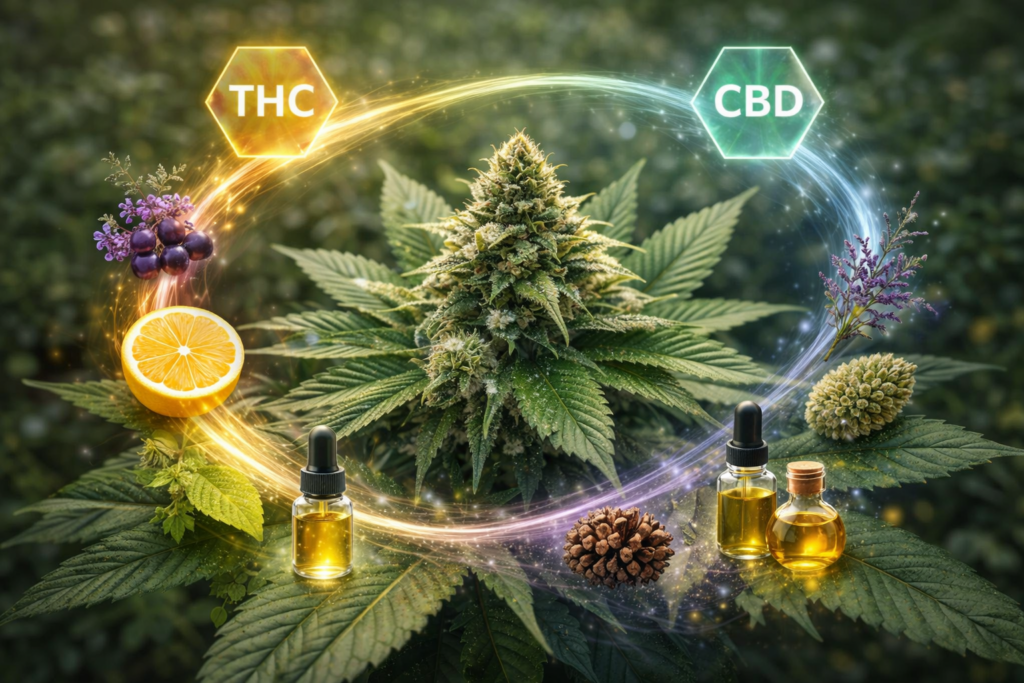
entourage effect (n.) — The theory that the full spectrum of compounds present in the cannabis plant — cannabinoids, terpenes, flavonoids, and other phytochemicals — work synergistically to produce an effect greater than the sum of their individual parts. Under this model, THC does not operate in isolation; rather, terpenes like myrcene, caryophyllene, and limonene, alongside minor cannabinoids such as CBD, CBG, and CBN, interact with and modulate how the primary cannabinoids bind to receptors in the endocannabinoid system.
The practical implication is that a whole-plant cannabis product may deliver a qualitatively different experience than a THC isolate at the same potency level — and that terpene profile and cannabinoid ratios matter as much as raw THC percentage when evaluating a strain or product. First proposed by Israeli researcher Raphael Mechoulam and pharmacologist Shimon Ben-Shabat in 1998. Remains an active area of scientific inquiry; robust human clinical trials are limited, but preclinical research and widespread consumer reporting have made the entourage effect one of the most discussed concepts in modern cannabis science
The role of terpenes and cannabinoids enhances the entourage effect and magnifies therapeutic benefits.
CBD and THC act together to boost benefits while subduing negative effects to deliver a balanced entourage effect.
