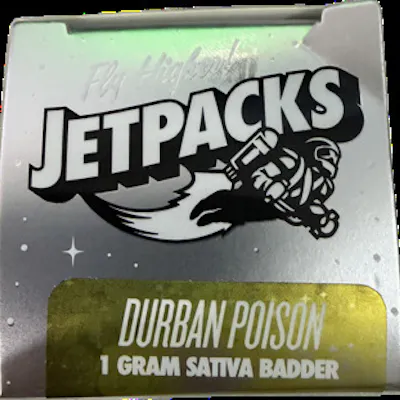
Jetpacks | Badder | Durban Poison
$40.00 1 g
Ed Rosenthal discovered this South African landrace in Durban's port city during the late 1970s, launching decades of legendary genetics. Users report an energetic, creative buzz that keeps focus sharp. Expect earthy, spicy flavors with citrus and pine notes threading through each hit.
Quantity
1
Product description
Jetpacks Durban Poison Badder (1g) is a pure sativa cannabis concentrate known for its high-energy effects, strong potency, and classic terpene profile. With a smooth, whipped badder consistency, it delivers flavorful, fast-acting dabs ideal for daytime use. Strain Profile – Durban Poison (Sativa) Origin: South African landrace sativa Flavor: sweet, spicy, earthy with hints of citrus and anise Aroma: herbal, piney, slightly sweet citrus Dominant terpenes often include terpinolene, myrcene, and ocimene Overall vibe: bright, zesty, slightly spicy classic sativa Concentrate Type – Badder Texture: creamy, whipped, buttery Use: dab rigs or concentrate vaporizers Onset: fast and potent due to high cannabinoid concentration Designed for smooth hits with strong terp flavor Effects Energetic & uplifting Creative, focused mindset Happy / euphoric mood boost Clear-headed cerebral high Best for: Daytime use Productivity, creative work, or social settings Users who want energy without heaviness or couch-lock Overall Experience Expect a sweet citrus-spice inhale with a slightly earthy, piney exhale, followed by a fast, motivating head rush that keeps you alert and inspired. Think: “pure daytime energy with classic haze-like clarity”
BadderDurban Poison
THC
74.77%
Prices, both original and discounted price, are set by the retailer and not set or verified by Weedmaps.