This item is not available for pickup nearby.
SeaWeed Co. - SWC - Durban Poison Shatter 1g - 1

SWC - Durban Poison Shatter 1g

Users report feeling uplifted.
Uplifted
Energetic
Happy

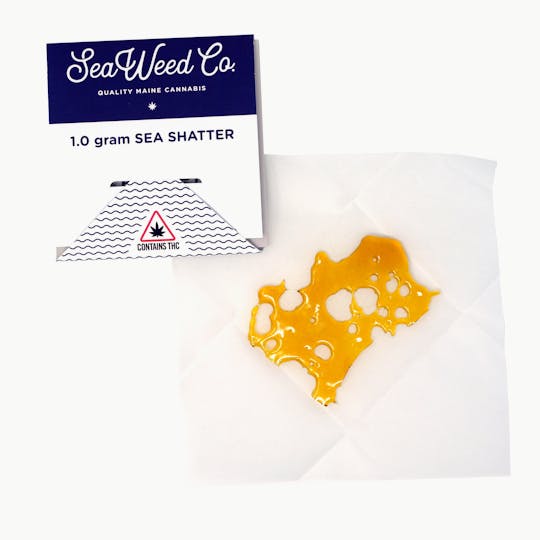
Shatter is the most stable concentrate, but you have to treat it right. We package ours in a silicone parchment and gently fold it into a custom envelope so you can re-close the package take it with you and still have some for later. By keeping our shatter strain specific, we maintain the unique benefits of each particular strain.


Flavors
  • Earthy
  • Woody
  • Spicy/Herbal
Effects & flavors are reported by users on our site. This is for informational purposes only and not intended as medical advice. Please consult your physician before changing any medical treatment.

SeaWeed Co.
373 Favorites

SeaWeed Co. is a Maine owned recreational cannabis company. We believe that cannabis can enhance well-being and that the effects of cannabis are best experienced when used the right way, with the right dose, at the right time—and we know this is highly personalized, varying by individual, experience, place and state of mind.


Our mission is rooted in a love for the Maine community and culture – People oriented, community driven, education-based.

Visit one of our beautifully designed stores in Portland and South Portland to meet with our welcoming and knowledgeable budtenders. Come say high!

Shop SeaWeed Co.

Durban Poison
sativa

Durban Poison has deep roots in the Sativa landrace gene pool. The strain’s historic phenotypes were first noticed in the late 1970s by one of America’s first International strain hunters, Ed Rosenthal. According to cultivation legend, Rosenthal was in South Africa in search of new genetics and ran across a fast flowering strain in the port city of Durban. After arriving home in the U.S., Rosenthal conducted his own selective breeding process on his recently imported seeds, then begin sharing. Rosenthal gave Mel Frank some of his new South African seeds, and the rest was cannabis history.


Frank, who wrote the “Marijuana Grower’s Guide Deluxe" in 1978, modified the gene pool to increase resin content and decrease the flowering time. In search of a short-season varietal that could hit full maturation on the U.S. East Coast, Frank’s crossbreeding efforts resulted in two distinct phenotypes, the “A” line and “B” line. The plant from Frank’s “A” line became today’s Durban Poison, while the “B” line was handed off to Amsterdam breeder David Watson, also known as “Sam the Skunkman.”


Durban Poison has a dense, compact bud structure that’s typical of landrace Indica varieties, but the flowers’ elongated and conical shape is more characteristic of a Sativa.


Have a question?
We're here to help.